
Goal Setting Examples And Strategies That Will Help You Achieve More
Clear goals create clarity, direction, and momentum. But honestly, many people struggle with goal setting because their goals feel overwhelming, unrealistic, or disconnected from what they truly want. The right goal setting strategies can help you build sustainable progress in your finances, career, personal growth, and daily habits. Whether you’re focusing on financial goal planning or creating more intentional life goals, the key is learning how to create goals that genuinely support the life you want to build.
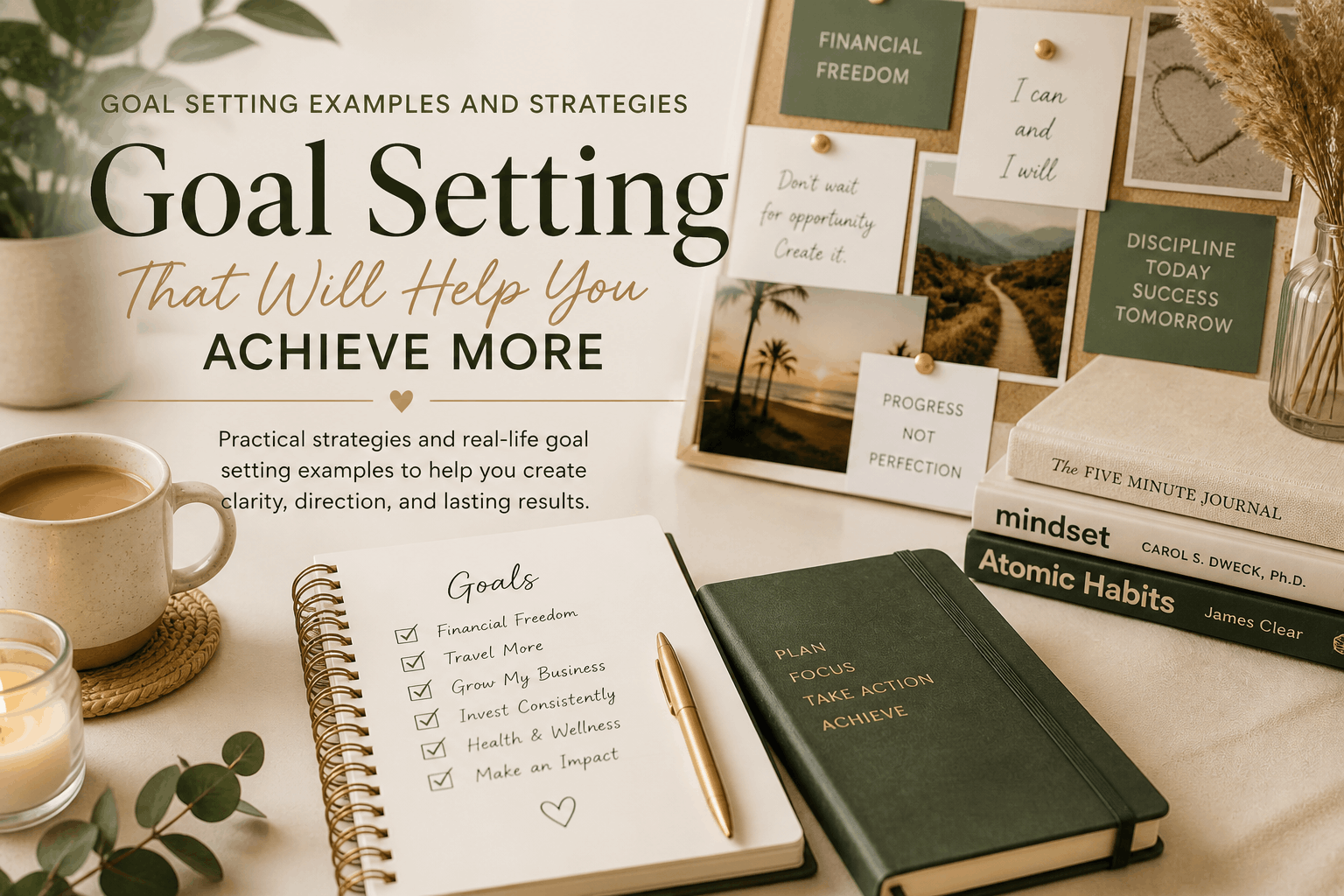
There’s something about the start of a new year, a new season, or even a new chapter in life that naturally makes us reflect on where we are and where we want to go.
And honestly, goal setting can feel both exciting and overwhelming at the same time.
Part of us feels inspired by possibility and growth. Another part of us feels intimidated by how much we want to change, accomplish, or improve. I think a lot of people quietly carry pressure around goals because we’re constantly surrounded by messages telling us to do more, achieve more, and become more productive all the time.
But over the years, I’ve realized meaningful goal setting is not really about becoming a completely different person overnight.
It’s about creating intentional direction.
For me personally, some of the biggest shifts in my life didn’t happen because of one massive breakthrough. They happened because I slowly started making smaller decisions that aligned with the future I wanted to create. Financial habits. Boundaries. Career choices. Daily routines. Small consistent actions eventually changed my entire life over time.
And honestly, I think that’s what people often miss about goal setting.
Progress is usually much slower, quieter, and more consistent than social media makes it seem.
Research from psychology studies on habit formation and behavioral change consistently shows that smaller, sustainable actions tend to create longer-lasting results than extreme short-term motivation alone. This is also why realistic goal setting strategies matter so much emotionally and practically.
Because goals should support your life.
Not constantly make you feel behind in it.

Why Most Goals Fail
I think one of the biggest reasons goals fail is because people often create goals from pressure instead of alignment.
Sometimes we set goals because:
society tells us we should
social media makes us feel behind
we compare ourselves to others
we feel guilty
we think success should look a certain way
we chase someone else’s version of achievement
And honestly, goals that aren’t genuinely connected to your own values usually become difficult to maintain long term.
I’ve absolutely experienced this myself before. There were seasons where I set goals that sounded impressive externally but internally felt exhausting, forced, or disconnected from what I actually wanted. And every time, I struggled to stay motivated because the goal itself wasn’t truly aligned.
That’s why self-awareness matters so much in goal setting.
The clearer you become about what genuinely matters to you, the easier it becomes to create goals that feel sustainable instead of overwhelming.

Goal Setting Strategies That Actually Work
One of the most effective goal setting strategies is creating goals that feel both realistic and emotionally connected to your life.
This is where SMART goals can be incredibly helpful.
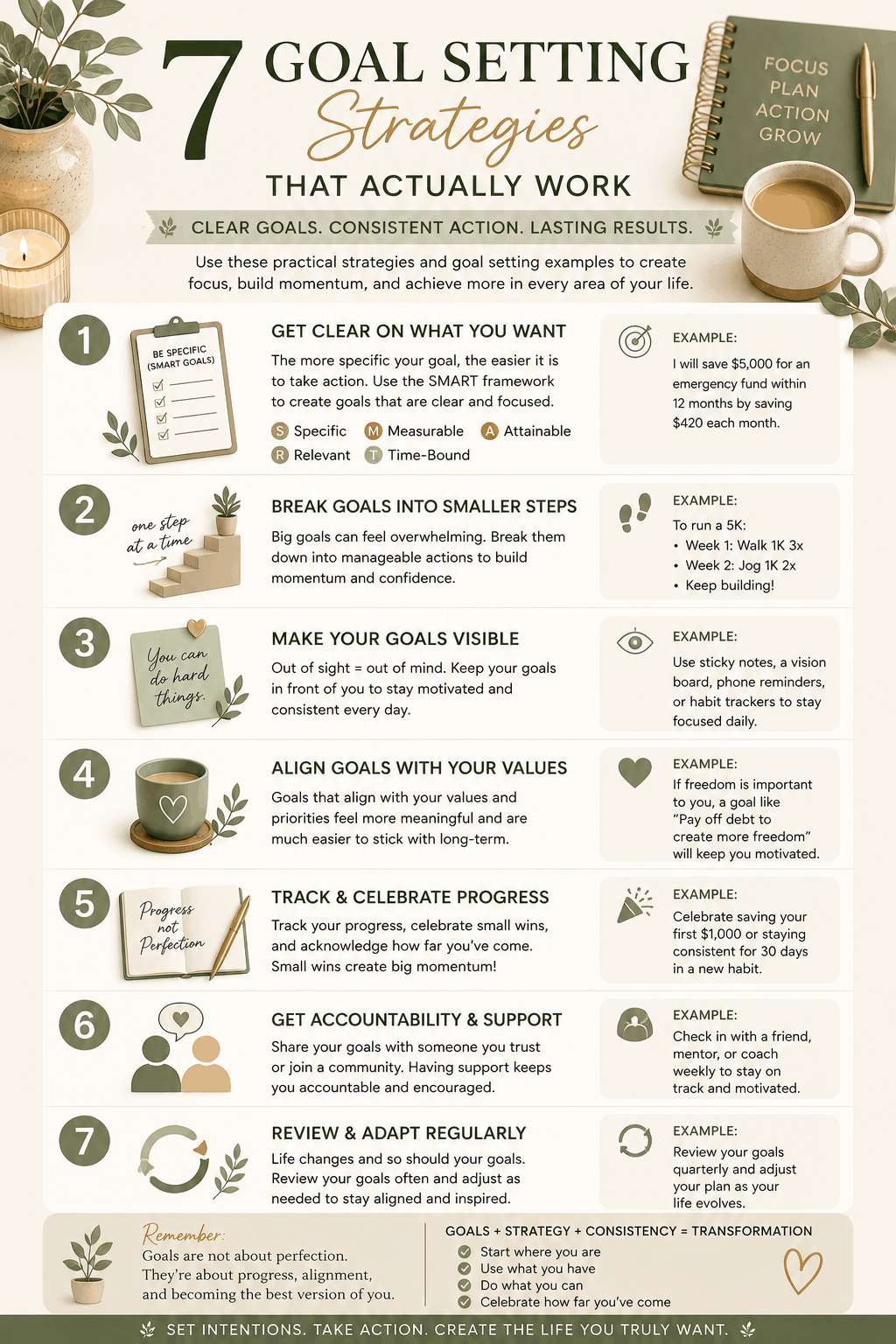
SMART goals are:
specific
measurable
attainable
relevant
time-bound
For example, instead of saying:
“I want to save money.”
You could shift the goal toward:
“I want to save $5,000 for my emergency fund within the next 12 months by automatically saving $420 each month.”
That goal creates:
clarity
structure
measurable progress
emotional direction
And honestly, clarity reduces overwhelm significantly.
Because vague goals often create vague results.
✨ Gentle Reminder
Small Progress Still Counts
You do not need to completely transform your life overnight in order to make meaningful progress. Small consistent actions often create more sustainable change than extreme motivation that disappears after a few weeks.
Give yourself permission to grow gradually. Progress that feels supportive is usually the kind that lasts.
Breaking Goals Into Smaller Steps
One of the most powerful shifts I made with goal setting was learning how to break large goals into much smaller steps.
Because honestly, big goals can feel emotionally overwhelming very quickly.
For example, if your goal is:
paying off debt
saving for a home
building a business
improving your health
starting investing
growing your income
…the full goal itself may feel intimidating at first.
But smaller milestones create momentum.
Instead of focusing only on the final destination, focus on:
weekly actions
monthly habits
daily systems
consistent routines
This is something I also explore more deeply in “How to Build Wealth: 7 Simple Strategies That Actually Work,” especially around how small financial habits compound over time.
The more manageable a goal feels emotionally, the easier it becomes to stay consistent.

Financial Goal Planning Matters
Financial goal planning is one of the most impactful forms of goal setting because money influences so many areas of life emotionally and practically.
And honestly, financial goals become much easier to maintain when they feel connected to your actual life instead of abstract numbers alone.
For example:
saving for freedom
paying off debt for peace of mind
investing for long-term security
building emergency savings for emotional safety
increasing income for flexibility
budgeting for reduced stress
Those emotional connections matter.
Because goals tied to meaning usually create stronger long-term motivation.
I personally noticed my financial habits changed dramatically once I stopped viewing money goals as punishment and started viewing them as tools for creating more peace, flexibility, and alignment in my life.
Embedding Goals Into Your Environment
One thing that genuinely helped me stay more consistent with my goals was making them visible.
Because honestly, it’s very easy to forget goals when life becomes busy, stressful, or emotionally overwhelming.
Some simple ways to keep goals visible include:
sticky notes
habit trackers
vision boards
calendar reminders
journaling
budgeting apps
phone alerts
goal check-ins
The more your environment supports your goals, the less energy you spend relying purely on motivation.
And honestly, systems usually work better than willpower long term.
Reassessing Your Goals Is Healthy
One thing I think people don’t talk about enough is that goals are allowed to change.
Life changes.
You change.
Priorities shift.
And honestly, adjusting your goals does not mean you failed.
There were seasons in my life where certain goals no longer aligned with who I was becoming, and learning to let go of them actually created more clarity, not less.
Sometimes reassessing goals is part of growth.
That’s why I think flexibility matters so much in goal setting. Goals should evolve alongside your life instead of making you feel trapped inside outdated expectations.
Further Reading
Continue Building Intentional Habits
If you're working toward clearer goals, healthier financial habits, and more intentional growth, these posts may support you further.
Resource to Start With
If you’re currently working on creating healthier financial habits and more intentional goals, I’d start with the Wealth Well Tracker. It’s designed to help you organize your finances, track progress, and create sustainable routines that support long-term growth.
Product Recommendation
One tool that has genuinely helped me stay more intentional with goal setting and planning is Notion. What I appreciate most is how flexible it feels for organizing goals, tracking habits, creating financial plans, and building systems that actually support daily life instead of creating more overwhelm.
Goal setting becomes much easier when your systems feel simple, supportive, and realistic enough to maintain consistently over time.
FAQs
What are some good goal setting examples?
Good goal setting examples include saving for an emergency fund, paying off debt, improving health habits, increasing income, starting investing, or building a business.
What are SMART goals?
SMART goals are goals that are specific, measurable, attainable, relevant, and time-bound.
Why do most goals fail?
Many goals fail because they are unrealistic, emotionally disconnected, overly vague, or based on external pressure instead of personal alignment.
What are effective goal setting strategies?
Effective goal setting strategies include breaking goals into smaller steps, tracking progress, creating realistic timelines, and aligning goals with your values.
What is financial goal planning?
Financial goal planning involves creating intentional money goals related to saving, investing, debt repayment, budgeting, and long-term financial wellbeing.
How do I stay motivated toward my goals?
Staying motivated often becomes easier when goals feel emotionally meaningful, manageable, visible, and connected to consistent daily habits.
If you’d like to keep journeying together…
→ Start Here: free tools and reflections to help you feel grounded, clear, and more confident with your money.
→Work With Me: private coaching, strategy sessions, and programs designed to help you build wealth that feels aligned, stable, and sustainable.
→ Subscribe to the Channel: If this resonated, come hang out with me on YouTube where I break this down in real life — the habits, the mindset shifts, and what this actually looks like day-to-day.
→ Or Join My Email List: This is where I share deeper insights, behind-the-scenes thoughts, and the kind of conversations we don’t always have publicly.
