
The Benefits of Minimalism for Your Life and Finances
The benefits of minimalism aren’t just about getting rid of stuff or creating an aesthetic-looking apartment on Pinterest. Real minimalism is about learning how to live with intention, spend with purpose, and create space for the things that genuinely matter to you. When we embrace a minimalist lifestyle, we often experience less financial stress, more mental clarity, and a deeper sense of fulfillment.
In a world that constantly tells us to buy more, upgrade more, and become more, choosing simple living can feel almost rebellious. But honestly? Some of the happiest and most grounded seasons of my life came from slowing down, decluttering, and realizing I didn’t actually need as much as I thought I did.
Minimalism isn’t just about owning fewer things. It’s about living intentionally and aligning your lifestyle with what truly matters. These minimalist lifestyle benefits show how simple living can improve both your finances and your overall wellbeing.
In a world driven by consumption and excess, the minimalist philosophy offers a refreshing perspective. It teaches us that a higher quality of life can be achieved with less—less clutter, less spending, and less attachment to material possessions.
I think a lot of us have been conditioned to believe that happiness is waiting on the other side of our next purchase. A bigger home. A nicer car. More clothes. More skincare. More productivity tools. More subscriptions. More things to organize the other things we already own.
But eventually, there comes a point where all the “more” starts to feel heavy.
I’ve personally gone through seasons where I was spending emotionally without even realizing it. Shopping became entertainment, stress relief, and sometimes even validation. And while there’s absolutely nothing wrong with enjoying nice things, I started noticing how much mental energy was being consumed by maintaining, organizing, paying for, and thinking about things I didn’t truly need.
That’s when minimalism started shifting from a design aesthetic into a lifestyle philosophy for me.
Research actually shows that clutter can significantly increase cortisol levels, particularly in women, leading to higher stress and mental fatigue. At the same time, studies on consumer behavior have found that material purchases often provide only temporary boosts in happiness before we return to our baseline emotional state.
Minimalism invites us to pause and ask a deeper question:
What if the life we’re looking for isn’t hidden inside more possessions, but inside more intention?
The Modern Addiction to Consumption
In today’s fast-paced world, many of us are addicted to consumption. Society constantly bombards us with messages that equate happiness with acquiring more—more possessions, more experiences, and more status symbols. This relentless pursuit of “more” not only drains our wallets but also leaves us feeling unfulfilled and stressed.
Social media has amplified this even more. We’re constantly exposed to curated lifestyles, luxury routines, and endless product recommendations that quietly convince us we’re lacking something.
And financially? That pressure adds up.
According to a recent survey from PwC, financial stress remains one of the leading sources of anxiety for adults, with many people feeling overwhelmed by rising living costs and consumer debt. It’s hard to feel peaceful when your money is constantly leaving your account for things that don’t truly add value to your life.
The illusion that material wealth defines self-worth has been perpetuated for generations. However, true happiness comes from within, not from accumulating things. The minimalist philosophy challenges this narrative, urging us to embrace simplicity and focus on what truly matters.
This is something I break down further in How to Improve Your Relationship With Money (So It Finally Feels Safe), especially when it comes to recognizing the emotional triggers behind overconsumption and impulse spending.
What Is Minimalism?
Minimalism is more than just a trend; it’s a way of life. At its core, it’s about intentional living—removing distractions and aligning your life with your values.
By embracing minimalism and simple living, we free ourselves from the clutter, both physical and mental, that hinders our wellbeing.
And no, minimalism doesn’t mean living in an empty white apartment with two forks and one chair.
Minimalism looks different for everyone.
For some people, it means creating a capsule wardrobe. For others, it means reducing debt, limiting subscriptions, simplifying their calendar, or becoming more intentional about how they spend their energy.
The goal isn’t deprivation.
The goal is alignment.
When your spending, environment, habits, and priorities align with the life you actually want to build, everything begins to feel lighter.
Benefits of Minimalism for Your Mental Health
One of the biggest minimalist lifestyle benefits is the mental clarity that comes with simplifying your environment.
Have you ever noticed how hard it is to focus when your space feels chaotic? Clutter creates visual noise, decision fatigue, and overwhelm. Even unfinished piles around the house can quietly weigh on your nervous system.
Minimalism creates breathing room.
When your home feels calmer, your mind often follows.
Research from UCLA’s Center on Everyday Lives and Families found that women living in cluttered homes experienced higher stress hormone levels throughout the day. That’s such an important reminder that our environments deeply affect our emotional wellbeing.
Simple living can also help reduce comparison and perfectionism. Instead of constantly chasing the next thing, you start appreciating what’s already in front of you.
And honestly, gratitude changes everything.

Reducing Overconsumption: A Minimalist Perspective
One of the foundational principles of minimalism is reducing overconsumption. Many of us accumulate far more than we need, which creates waste, clutter, and financial strain.
Food waste remains a massive global issue, with millions of tons of food discarded every year while many families struggle with food insecurity.
Fast fashion has also created a culture of disposable consumption. Trends move so quickly that clothing is often worn only a handful of times before being tossed aside.
Minimalism encourages us to slow down and ask ourselves:
Do I actually need this?
Will this truly improve my life?
Am I buying this intentionally or emotionally?
Those small questions can completely transform your spending habits over time.
If this is something you’re working through, I dive deeper into it in 5 Easy Ways to Save Money and Build Wealth, especially around creating intentional spending routines that still allow you to enjoy life.

Saving More by Spending Less
Minimalism and financial wellbeing go hand in hand.
When you consciously spend less on unnecessary items, you free up money to focus on what truly matters. Imagine redirecting the funds you might have spent on impulse buys toward meaningful goals—whether it’s saving for a home, investing in your future, traveling, or building an emergency fund that helps you feel safe and supported.
One of the most surprising benefits of minimalism is how quickly your financial goals can accelerate when you stop constantly consuming.
It doesn’t mean you never buy anything again.
It simply means your spending becomes more intentional.
Research from Northwestern Mutual found that people with clear financial plans generally report feeling more financially secure and confident about their future. Minimalism naturally supports this because it encourages clarity around priorities.
I also think many people underestimate how expensive clutter actually is.
We pay for storage bins, larger homes, subscriptions we forget about, duplicate items we can’t find, impulse purchases, late fees, and emotional shopping habits that slowly drain our income.
Minimalism helps interrupt that cycle.
This is something I also talk more about in “Simple Budgeting Strategies for Beginners Who Feel Overwhelmed,” because budgeting becomes so much easier when you’re no longer trying to maintain an unsustainable lifestyle.
Achieving Goals Faster Through Minimalism
By decluttering your life and embracing simplicity, you can gain clarity on what’s most important to you.
Minimalism empowers you to make purposeful decisions about how to spend your time, energy, and money.
When you’re less influenced by societal pressures and distractions, you can focus wholeheartedly on your aspirations. Whether your goals involve financial freedom, personal growth, starting a business, or improving your relationships, a minimalist approach helps you align your resources with what truly matters.
One thing I’ve noticed personally is that every time I simplify my life, I become more connected to myself.
I make clearer decisions.
I stop chasing things I don’t even genuinely want.
And I create more room for rest, creativity, and abundance.
That’s the beautiful thing about simple living. It doesn’t just improve your finances. It changes the way you experience your entire life.

The Environmental Benefits of Minimalism
Another often overlooked benefit of minimalism is the positive impact it can have on the environment.
Mindful consumption naturally reduces waste, packaging, unnecessary purchases, and overproduction.
Buying fewer but higher-quality items can reduce your environmental footprint while also saving money long-term.
This doesn’t mean you have to become perfectly sustainable overnight.
It simply means becoming more conscious.
Maybe that looks like buying secondhand more often, creating a capsule wardrobe, repairing items instead of replacing them immediately, or unsubscribing from marketing emails that constantly tempt you to spend.
Tiny shifts truly add up.
Minimalism Creates More Time and Energy
One of the most underrated minimalist lifestyle benefits is how much time and energy you get back.
Less clutter means less cleaning.
Fewer purchases mean fewer financial worries.
Simpler routines create more space for rest, relationships, hobbies, and personal growth.
Sometimes we think we need better time management when really we just need less unnecessary noise in our lives.
Minimalism creates room to actually enjoy your life instead of constantly maintaining it.
The Life-Changing Benefits of Minimalism
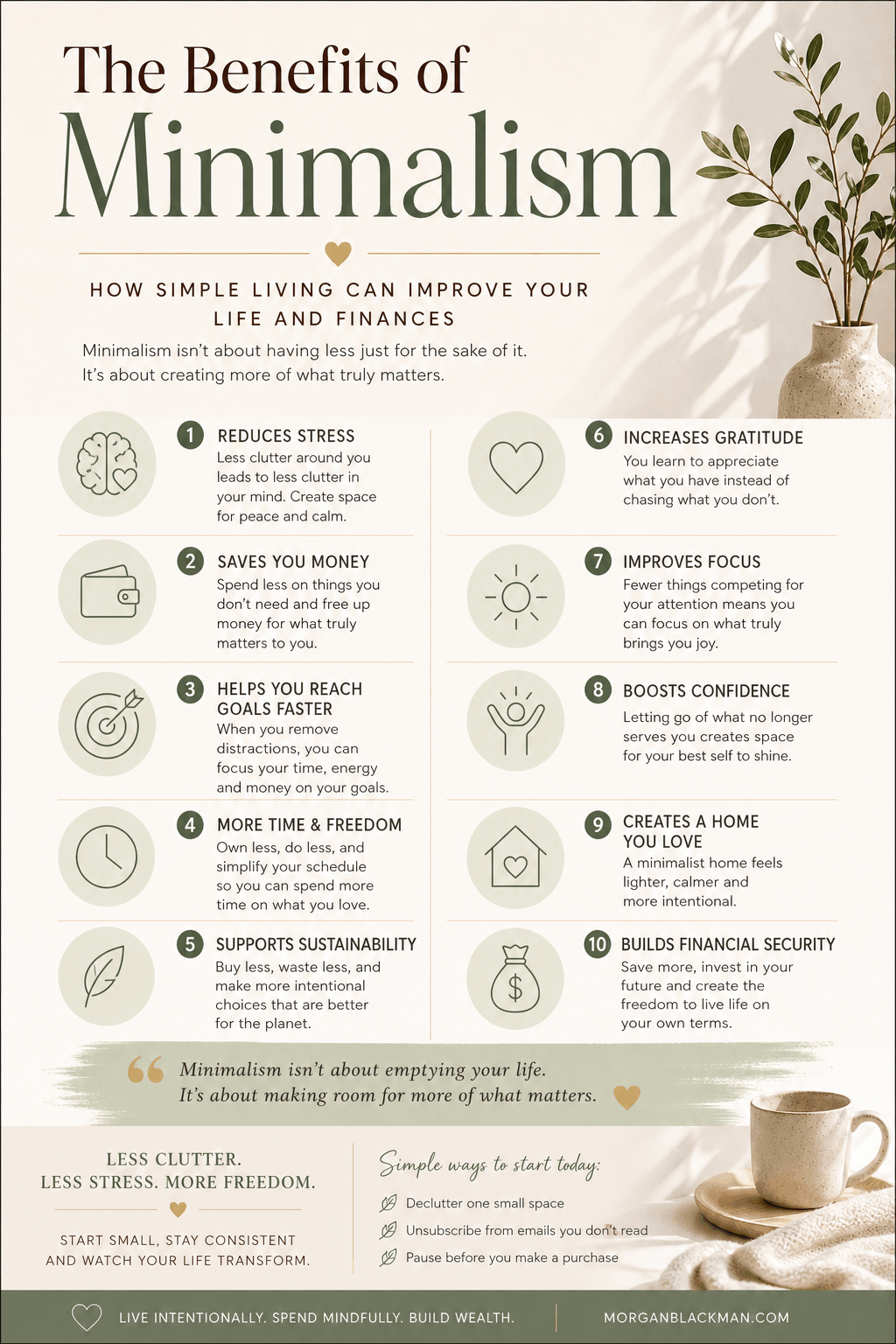
In a world obsessed with accumulating more, minimalism offers a liberating perspective.
By simplifying your life, you can:
Reduce stress and mental overwhelm
Save more money intentionally
Improve your focus and productivity
Create more emotional clarity
Accelerate your financial goals
Reduce comparison and overconsumption
Feel more grounded and content
Spend more time on what genuinely matters
Minimalism isn’t about perfection.
It’s about creating a life that feels supportive, intentional, and aligned with your values.
Take the First Step Toward Minimalism
Decluttering your life is about more than just organizing your space; it’s about creating a lifestyle that supports your wellbeing, finances, and long-term goals.
And honestly, you don’t have to overhaul your entire life overnight.
Sometimes minimalism begins with something incredibly small:
Cleaning out one drawer.
Cancelling one unused subscription.
Saying no to one unnecessary purchase.
Creating one intentional financial habit.
Tiny decisions compound.
And over time, those small shifts can completely transform both your finances and your peace of mind.
If you’ve been feeling financially overwhelmed, emotionally exhausted, or stuck in a cycle of overconsumption, maybe this is your reminder that you don’t need more.
Maybe you just need more clarity.
Further Reading
Continue Building Wealth Intentionally
If you're simplifying your lifestyle and becoming more intentional with money, these posts may support you further.
Free Resource
If you’re currently trying to simplify your finances and create healthier money habits, I really think the Wealth Well Tracker could support you. It’s designed to help you track your spending, savings goals, and financial routines in a way that feels supportive instead of restrictive.
Product Recommendation
One thing that has genuinely helped me embrace simple living is using intentional tools instead of constantly buying random organizational products I don’t need.
That’s honestly why I love recommending The Well(th) List. It’s a curated collection of mindful tools, resources, and wellness-focused products that actually support intentional living without encouraging unnecessary overconsumption.
Sometimes having trusted recommendations helps you buy less overall because you stop impulse purchasing things that don’t truly serve you.
FAQs
What are the main benefits of minimalism?
The benefits of minimalism include reduced stress, improved financial wellbeing, better focus, less clutter, increased intentionality, and more freedom with your time and money.
How does minimalism help your finances?
Minimalism helps your finances by encouraging intentional spending, reducing impulse purchases, lowering unnecessary expenses, and helping you prioritize long-term financial goals.
Does living a minimalist lifestyle save money?
Yes, many people save money through simple living because they become more conscious about consumption, subscriptions, shopping habits, and lifestyle inflation.
Can minimalism improve mental health?
Research suggests that clutter and overconsumption can contribute to stress and overwhelm. Minimalism can improve mental clarity by creating calmer, more intentional environments.
What is the difference between minimalism and simple living?
Minimalism focuses on intentionally reducing excess, while simple living is a broader lifestyle philosophy centered around slowing down, mindfulness, and prioritizing what matters most.
How do I start living more minimally?
Start small by decluttering one area of your home, reviewing your spending habits, simplifying your schedule, and becoming more intentional with future purchases.

References
UCLA Center on Everyday Lives and Families — Research on clutter and stress https://newsroom.ucla.edu/releases/Does-Clutter-Cause-Stress-72973
PwC Global Consumer Insights Survey — Financial stress and consumer behavior https://www.pwc.com
Northwestern Mutual Planning & Progress Study https://www.northwesternmutual.com
〰️ WORK WITH ME
↳ my coaching services https://bit.ly/3ZAs0NZ
→ Download my free ebook on mastering your money mindset https://bit.ly/3fAfj33 💵
→ Download my free Wealth Tracker - https://bit.ly/48H8Rxj 🧮
→ Invest in stocks with Wealthsimple https://bit.ly/3PJYscp 📈
→ Invest in crypto and receive $25 USD https://bit.ly/3TxD4dr 🪙
→ Invest like the rich in art and receive a $200 bonus (USD only) https://bit.ly/3Popuqh 🖼️
→ Sign up for my bi-weekly newsletters https://bit.ly/466g09H 📨
↴ additional resources:
→ Download my free ebook on mastering your money mindset https://bit.ly/3fAfj33 💵
→ Sign up for my bi-weekly newsletters https://bit.ly/466g09H 📨
→ Check out the youtube video: https://youtu.be/Lqz-DSSv_qM?si=FnP69wXiB-u8svIj
→ Follow me on WhatNot for giveaways and selling hauls of my clothes, books, and misc. spiritual items https://bit.ly/466g5Kx 🔮
〰️ CONTACT ME
✉️ hello@morganblackman.com
