
How to Improve Your Relationship With Money (So It Finally Feels Safe)
Your relationship with money shapes nearly every financial decision you make. Learning how to improve your relationship with money can help you build healthier financial habits, reduce money stress, and create long-term financial wellness. When you understand your mindset around money, you gain the power to transform how you earn, spend, and grow wealth.

Your relationship with money shapes nearly every financial decision you make. Learning how to improve your relationship with money can help you build healthier financial habits, reduce money stress, and create long-term financial wellness.
If money has ever felt overwhelming, confusing, or never quite “enough”… this isn’t about discipline. It’s about understanding how you relate to money — and learning how to shift that in a way that actually feels good.
Can we talk about this for a second?
If you’ve ever avoided looking at your bank account…
felt behind…
or told yourself you’ll “figure it out later”…
I know this feeling.
It’s not that you’re bad with money…
you just haven’t been shown how to do this in a way that works for YOU.
And we’re not doing that anymore.
If this already feels familiar… I break this down deeper in my post on how to build a healthy relationship with money.
Why Your Relationship With Money Matters More Than You Think
Your relationship with money influences how you earn, spend, save, and invest.
When money feels stressful or unclear… it doesn’t matter how much you make — it never feels like enough.
But when your relationship with money feels calm and grounded…
Everything shifts.
You stop avoiding.
You make clearer decisions.
You start building wealth in a way that actually feels safe in your body.
Let’s Be Honest… This Is Where Most People Get Stuck
What do I know about money that gives me the nerve to tell others what to do? I’m no David Ramsey or Suze Orman, but I’m a 25-year-old money coach who’s been able to achieve 35% returns on my investments for the last three years. All this while living through the biggest pandemic of our time—shout-out to COVID-19.
I’ve also paid off a $13,000 car loan two years early and am on my way to building wealth through multiple income streams, monthly savings, and value investing. This isn’t boasting. I’m sharing because I understand the importance of retirement planning early on and want other millennials to know they can do the same.
What Your Future With Money Actually Requires
Did you know the average millennial will need between $500,000 and $1 million to retire comfortably? Yet, only about 24% of millennials have over $100,000 saved.
If you’re 24 and plan to retire at 65, you’ve got 41 years to save. That’s plenty of time if you start early with wealth planning and stick to smart money-saving tips for retirement. Every dollar you save now grows exponentially thanks to compound interest.
The goal is to build wealth steadily, so you don’t end up working past your retirement age or relying on others financially.
The Reality No One Talks About
Right now, many baby boomers are working past retirement age because they don’t have enough saved. My dad is a perfect example. At 67, he's still working—not because he wants to, but because he has to. My mom is still 10 years away from retirement and has little saved.
I grew up with immigrant parents who believed children would take care of them in their old age. But that’s a lot of pressure, especially when health issues arise.
If you don’t build financial stability for yourself… that responsibility doesn’t disappear.
It shifts.

Financial Independence Starts With You
Financial independence starts with you. It’s about making decisions that put you in control of your money, not the other way around.
Wealth isn’t just about being rich. It’s about having enough to live comfortably and not having to depend on others.
Understanding how to retire in your 20s doesn’t mean retiring immediately. It means setting up the financial framework so you can retire whenever you want.
That’s freedom.
Practical Money Habits That Actually Work
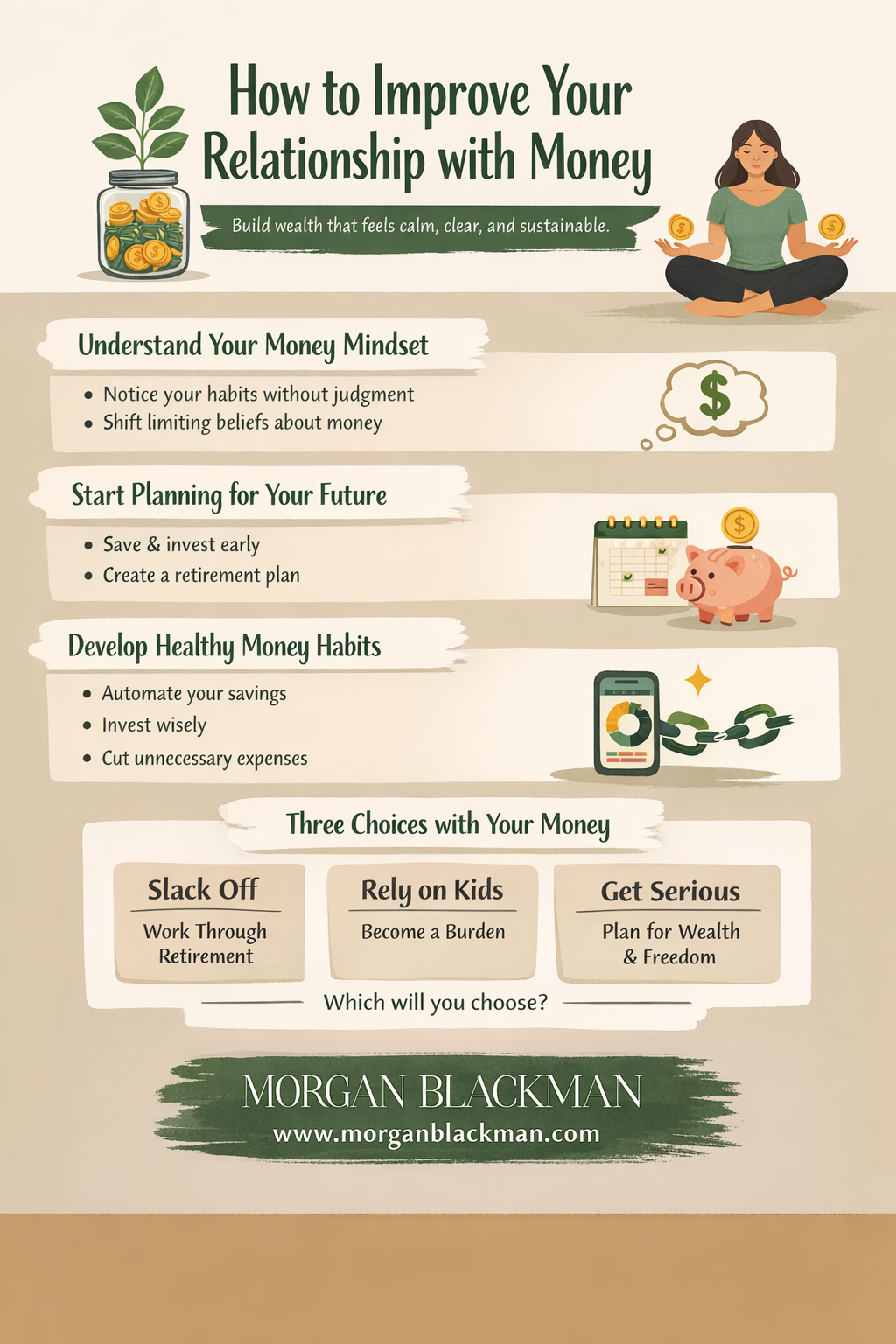
Here are a few money-saving tips for retirement that can help:
Start early — time matters more than perfection
Automate your savings so you stay consistent
Invest wisely and think long-term
Cut unnecessary expenses and redirect that money
This isn’t about restriction.
It’s about alignment.
You Have 3 Choices With Your Money
Slack off, and risk working through your retirement years.
Fail to prepare, and end up relying on your kids.
Get serious and plan for a financially stable future.
What will you choose?
The most important thing you can do is save. Saving is the foundation for financial security and independence.
You don’t have to race. This is a long-term game.
You have all the tools you need to calculate how much you’ll need for retirement. And if you need help, there are financial experts who can guide you.
But don’t wait—start today.
$500,000 is the minimum the average millennial will need to save for retirement, but this depends on your circumstances and where you are in your financial journey. You can refer to my investment calculator to play around with these numbers.
FAQ: Money Questions You Might Be Asking Right Now
How do I actually start improving my relationship with money?
Start by being honest… not perfect.
Look at your current habits without judgment. Notice what you avoid, what stresses you out, and what stories you’ve been carrying about money.
From there, focus on simple shifts:
checking your accounts regularly
automating your savings
learning how to manage money in a way that feels supportive, not restrictive
It’s not that you’re bad with money… you just haven’t been shown how to do this in a way that works for YOU.
What does it mean to have a healthy relationship with money?
A healthy relationship with money means you can engage with it without fear, shame, or avoidance.
You feel calm opening your banking app.
You understand where your money is going.
You trust yourself to make aligned financial decisions.
It’s not about being perfect…
It’s about feeling safe and in control.
Why do I feel so emotional about money?
Because money is rarely just about numbers.
It’s tied to safety, identity, control, and past experiences.
If money feels overwhelming, stressful, or triggering… that doesn’t mean something is wrong with you.
It means there’s something deeper asking to be understood.
Can I change or heal my relationship with money?
Yes… and this is where everything shifts.
Your relationship with money is not fixed.
You can change it by:
becoming aware of your patterns
shifting the way you think about money
creating new habits that actually support you
This is less about “fixing” yourself…
and more about learning a new way to relate to money that feels safe.
Are budgeting apps helpful for improving your relationship with money?
They can be — but only if they feel supportive, not overwhelming.
Budgeting apps can help you:
see where your money is going
stay consistent with your habits
feel more organized
But the tool itself isn’t the transformation.
If the app feels restrictive or stressful, it won’t stick.
The goal is to use tools that help you feel clear and in control… not micromanaged.
What are the best ways to learn money management and financial wellness?
The best way is a blend of education and real-life application.
That might look like:
online courses or coaching
reading and learning at your own pace
actually applying what you learn to your own finances
But here’s the key…
You don’t just need more information.
You need a way to integrate it into your life.
Why does improving my relationship with money matter for building wealth?
Because you can’t build sustainable wealth from a place of stress or avoidance.
When your relationship with money is strong:
you make better decisions
you stay consistent
you stop self-sabotaging
Wealth isn’t just built through strategy…
It’s built through the way you relate to money every day.
If you’d like to keep journeying together…
→ Start Here: free tools and reflections to help you feel grounded, clear, and more confident with your money.
→Work With Me: private coaching, strategy sessions, and programs designed to help you build wealth that feels aligned, stable, and sustainable.
→ Subscribe to the Channel: If this resonated, come hang out with me on YouTube where I break this down in real life — the habits, the mindset shifts, and what this actually looks like day-to-day.
→ Or Join My Email List: This is where I share deeper insights, behind-the-scenes thoughts, and the kind of conversations we don’t always have publicly.
