
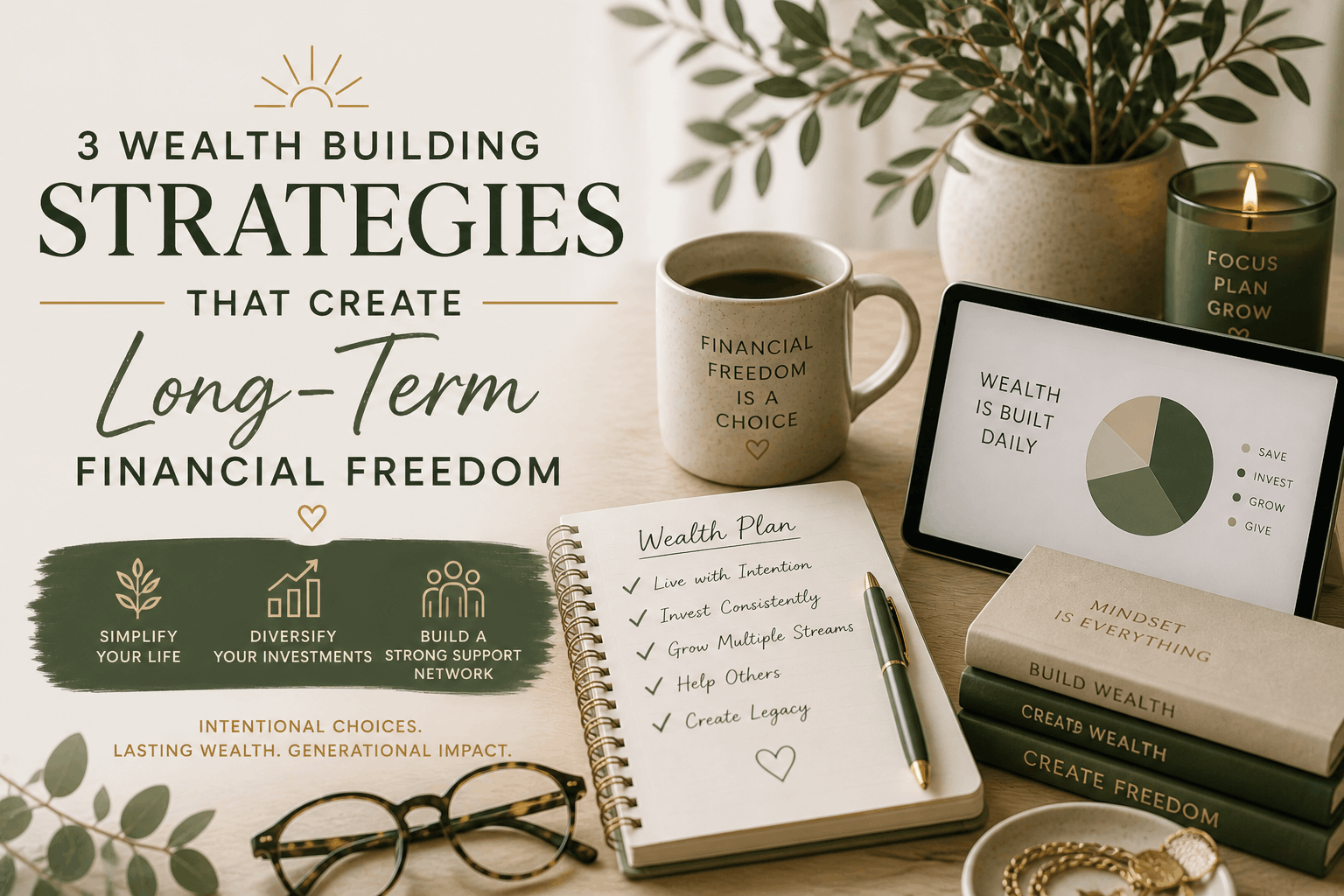
3 Wealth Building Strategies for Financial Freedom
Building wealth requires more than luck or simply earning a higher income. Real financial freedom often comes from consistent habits, intentional financial decisions, and creating a lifestyle that aligns with your values. In this guide, we’re exploring wealth building strategies that go beyond traditional financial advice by focusing on minimalism, diversified investing, and building supportive financial communities that help create long-term abundance.
3 Unexpected Ways to Build Wealth More Intentionally
Building wealth requires more than luck. It comes from consistent habits, intentional financial decisions, and supportive wealth building strategies that align with your long-term goals. While traditional financial advice often focuses heavily on budgeting and saving, true financial freedom is usually much more layered than that.
And honestly, I think one of the biggest misconceptions about wealth-building is believing there’s only one “correct” way to become financially successful.
For years, financial success has been marketed as:
working constantly
accumulating more
upgrading your lifestyle endlessly
chasing status symbols
and attaching self-worth to productivity
But over time, I’ve realized wealth feels much different than what many of us were taught to pursue.
Because true abundance isn’t always about having more.
Sometimes it’s about needing less.
Sometimes it’s about creating flexibility.
Sometimes it’s about protecting your peace.
And sometimes it’s about building a life that simply feels more aligned.
Research from the American Psychological Association continues to show that financial stress remains one of the largest contributors to anxiety and emotional overwhelm for many adults. Which is why I think wealth-building should support your overall well-being too — not just your bank account.
These are a few of the unconventional wealth building strategies that I genuinely think deserve more attention.
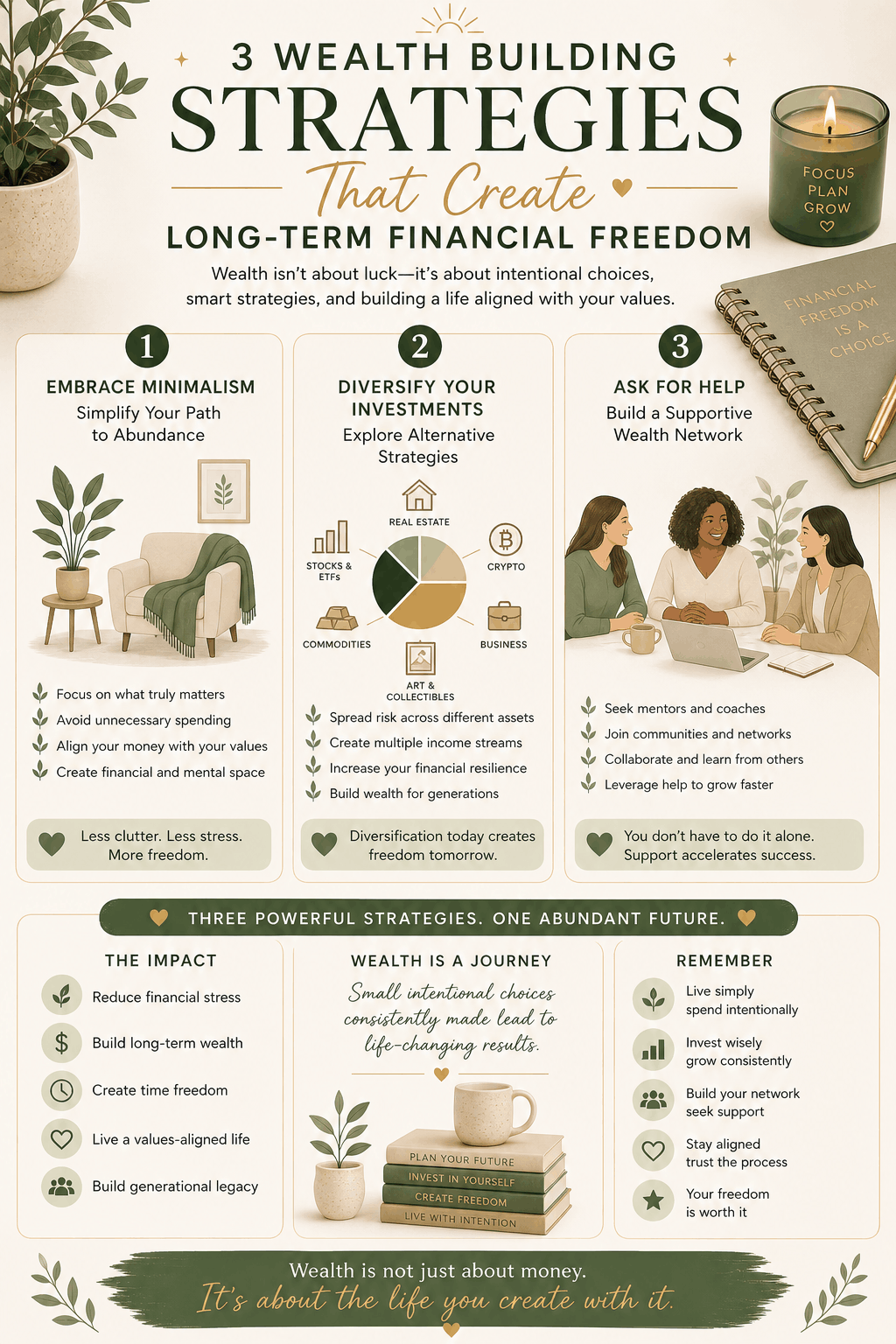
1. Minimalism Can Create More Financial Freedom Than Consumption
When people think about building wealth, they often assume the solution is simply earning more money.
And while increasing your income absolutely matters, I think many people underestimate how powerful simplifying your lifestyle can become financially.
Minimalism isn’t about deprivation.
And honestly, I don’t think it means living with only ten possessions or never enjoying beautiful things.
To me, minimalism is really about intentionality.
It’s learning how to separate:
societal pressure
comparison
emotional spending
and external validation
…from what genuinely adds value to your life.
Because many people spend enormous amounts of money trying to maintain lifestyles they don’t even deeply enjoy.
Minimalism invites you to ask:
What actually matters to me?
What purchases genuinely improve my quality of life?
What am I buying purely for validation, status, or emotional comfort?
And honestly, those questions can completely shift your relationship with money.
One of the biggest financial benefits of minimalism is that it naturally creates more flexibility:
lower expenses
lower financial pressure
more room to save
more room to invest
more emotional freedom around money
This is something I talk more about in “Conscious Spending: How to Spend Without Guilt” because intentional spending and wealth-building are deeply connected.

2. Diversifying Your Investments Creates Long-Term Stability
One thing I’ve learned about wealth-building is that relying on only one income source or one investment strategy can feel incredibly fragile long-term.
Diversification matters because it creates resilience.
And honestly, I think traditional financial conversations sometimes oversimplify investing into only stocks and retirement accounts when there are actually many different ways to build wealth intentionally.
Some alternative wealth-building strategies may include:
real estate
index funds
entrepreneurship
dividend investing
high-yield savings accounts
digital products
peer-to-peer lending
business ownership
collectibles or creative assets
That doesn’t mean every investment is appropriate for everyone.
And it definitely doesn’t mean chasing every trend online impulsively.
But creating multiple streams of income and diversified assets can reduce long-term financial vulnerability significantly.
Research from Fidelity and Vanguard continues to show that diversified portfolios generally help reduce risk exposure over time while supporting more stable long-term growth.
And honestly, I think diversification also creates emotional peace because your entire financial future no longer depends on one single thing working perfectly.
3. Asking for Help Is an Underrated Wealth Strategy
I genuinely think one of the most overlooked wealth building strategies is learning how to ask for help.
Because so many people approach financial success like they need to figure out absolutely everything alone.
And honestly? That mindset can become exhausting very quickly.
Sometimes the fastest growth happens through:
mentorship
collaboration
financial education
community
coaching
support systems
networking
learning from people further ahead
I think especially in entrepreneurship and personal finance spaces, there’s often this pressure to appear hyper-independent all the time.
But successful people rarely build wealth entirely alone.
Support matters.
Whether that looks like:
hiring a financial advisor
investing in therapy
learning from mentors
joining a mastermind
outsourcing tasks
or simply having financially conscious friends
…community often accelerates growth in ways people underestimate.
Research consistently shows that accountability, mentorship, and supportive social environments positively influence long-term habit formation and goal achievement.
And honestly, I think asking for help is often less about weakness and more about emotional maturity.
Wealth-Building Should Feel Aligned, Not Performative
I think one of the healthiest shifts people can make financially is realizing that wealth-building doesn’t need to look identical for everyone.
Your version of abundance may not look like someone else’s.
And honestly, that’s okay.
For some people, wealth means:
flexibility
peace
travel
freedom
home ownership
entrepreneurship
community
creativity
generational security
slower living
The goal isn’t simply accumulating money endlessly.
It’s creating a financial life that actually supports the kind of life you want to live emotionally, mentally, and practically.
Because true financial freedom is usually about far more than numbers alone.
It’s about alignment too.
Further Reading
Continue Building Wealth Intentionally
If you're working toward long-term financial freedom and a healthier relationship with money, these posts may support you further.
Free Resource to Start With
If you’re currently trying to create more intentional financial habits and build long-term wealth in a way that feels supportive instead of overwhelming, my Wealth Well Tracker can help you organize your financial goals, spending, and savings more intentionally.
Download Your Wealth Well Tracker
Product Recommendation
One tool I genuinely recommend for building wealth more intentionally is Wealthsimple. A Canadian financial services company. It’s the #1 investment app trusted by millions of Canadians, letting you invest, save and even file your taxes all in one place. The platform makes it easy to diversify your investments and automate contributions, which aligns perfectly with the wealth-building strategies discussed in the post — and you can even get a referral bonus when you sign up.
FAQs
What are the best wealth building strategies?
Some of the most effective wealth building strategies include intentional spending, diversified investing, increasing income streams, and building consistent financial habits over time.
Why is diversification important for building wealth?
Diversification helps reduce financial risk by spreading investments across different asset classes and income sources instead of relying on one single strategy.
Can minimalism help you build wealth?
Yes. Minimalism can reduce unnecessary spending, create more financial flexibility, and free up money to save or invest more intentionally.
How do multiple income streams help financial freedom?
Multiple income streams create more financial stability and reduce dependence on one source of income, which can support long-term wealth-building.
Why is asking for help important financially?
Mentorship, coaching, community, and financial education can accelerate learning, improve decision-making, and help people avoid costly mistakes.
What does financial freedom really mean?
Financial freedom looks different for everyone, but it often involves having enough financial stability, flexibility, and resources to live life more intentionally and with less stress.
〰️ WORK WITH ME
↳ my coaching services https://bit.ly/3ZAs0NZ
↴ additional resources and perks:
→ Download my free ebook on mastering your money mindset https://bit.ly/3fAfj33 💵
→ Download my free Wealth Tracker - https://bit.ly/48H8Rxj 🧮
→ Invest in stocks with Wealthsimple https://bit.ly/3PJYscp 📈
→ Invest in crypto and receive $25 USD https://bit.ly/3TxD4dr 🪙
→ Invest like the rich in art and receive a $200 bonus (USD only) https://bit.ly/3Popuqh 🖼️
→ Sign up for my bi-weekly newsletters https://bit.ly/466g09H 📨
〰️ CONTACT ME
✉️ hello@morganblackman.com
〰️ THINGS MENTIONED
↳ North Node Membership Community for The Intuitive Entrepreneur
https://bit.ly/3rpuEd7
↳ Minimalism Documentary
https://bit.ly/3RGL7E7
Disclaimer: The financial advice provided in this video is for general informational purposes only and should not be considered as personalized financial advice. It is crucial to consult with a qualified financial advisor or professional before making any financial decisions or investments. The information shared is based on the speaker's personal experiences and research, and individual financial situations may vary. Always conduct your research and consider your specific financial goals and circumstances before taking any financial actions. Remember that financial markets can be volatile, and past performance is not indicative of future results.
