
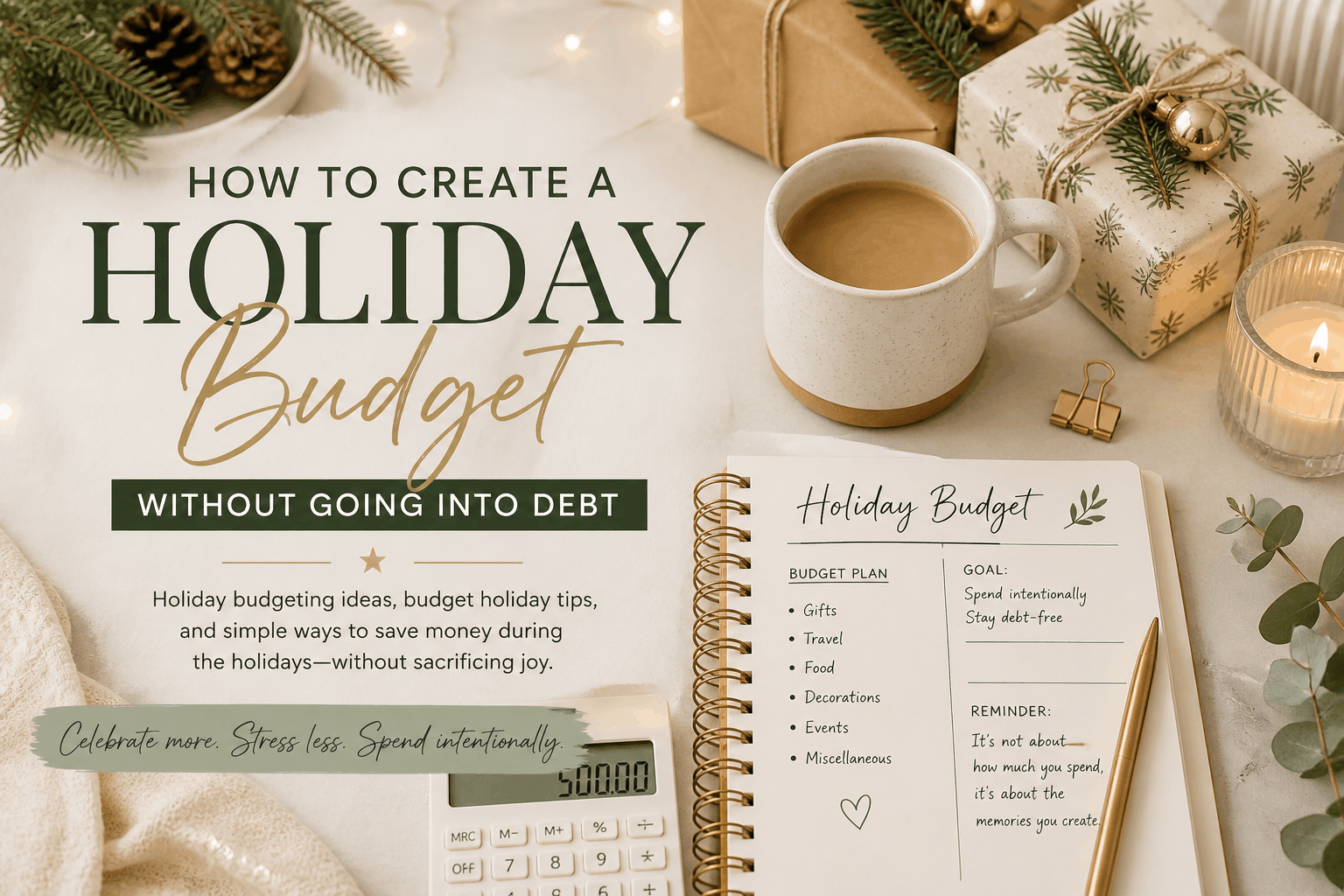
How to Create a Holiday Budget Without Going Into Debt
Creating a holiday budget can make the season feel far less stressful emotionally and financially. Between gifts, travel, food, decorations, and events, holiday spending can quickly add up without a plan in place. But the good news is that celebrating meaningfully does not require overspending. With intentional holiday budgeting ideas, budget holiday tips, and realistic financial boundaries, you can enjoy the holidays while still protecting your long-term financial wellbeing.
The holidays are supposed to feel joyful, meaningful, and connected.
But honestly, for many people, they also come with a huge amount of financial pressure.
Between gifts, travel, food, decorations, holiday parties, family expectations, and seasonal sales everywhere you look, it’s incredibly easy for spending to spiral quickly during this time of year. And sometimes the emotional pressure around the holidays makes it even harder to stay intentional financially.
I know for me personally, there were years where I felt like I needed to spend more in order to make the holidays feel “special” enough. I’d convince myself that overspending was temporary and that I would figure it out later in January.
But honestly, that mindset usually left me entering the new year feeling stressed instead of grounded.
Over time, I realized creating a holiday budget wasn’t about restriction or becoming overly frugal. It was about creating a holiday season that actually felt supportive emotionally, financially, and energetically too.
Because meaningful holidays are not created through financial burnout.
They’re created through connection, presence, intention, and experiences that genuinely matter.
Research from the National Retail Federation continues to show that holiday spending reaches hundreds of billions of dollars annually in the United States, with many consumers relying on debt to cover seasonal expenses. Financial stress during the holidays is also consistently linked to increased anxiety, emotional overwhelm, and money-related stress.
That’s why learning how to budget for holidays matters so much.
Not to remove the joy from the season.
But to protect your peace moving into the new year.
Why Holiday Budgeting Matters
One of the biggest mistakes people make during the holidays is assuming they’ll “figure it out later.”
But without a clear holiday budget, it becomes incredibly easy to overspend emotionally in the moment and deal with the consequences afterward.
And honestly, holiday spending often isn’t just about money.
It’s emotional too.
Sometimes we overspend because:
we want to impress people
we feel guilty
we associate gifts with love
we feel pressure from family traditions
we’re trying to create perfect memories
we compare ourselves to others online
we use spending to cope with stress or emotions
I’ve absolutely experienced this myself before. There were times where I confused generosity with overextending myself financially. And while there’s nothing wrong with wanting to make people feel loved, financial stress afterward can quietly remove so much joy from the season.
Creating a holiday budget helps you stay intentional instead of reactive.

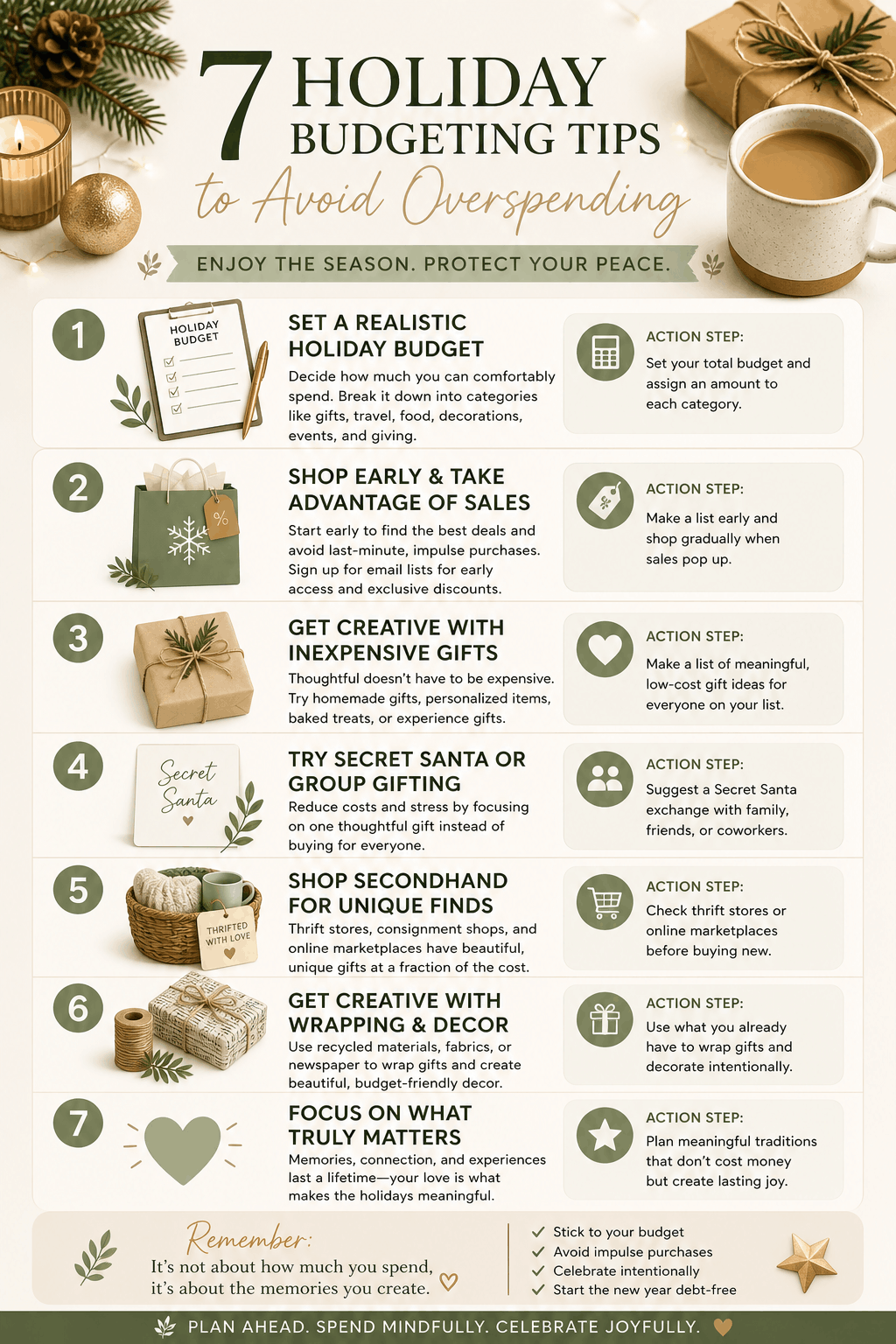
1. Set a Realistic Holiday Spending Limit
The first step in creating a holiday budget is deciding what you can realistically afford before shopping begins.
And honestly, this step matters more than most people realize.
Without a spending limit, it’s easy for “just one more gift” or “one more sale” to slowly turn into financial overwhelm.
I personally like breaking my holiday budget into categories such as:
gifts
travel
decorations
food
events
charitable giving
holiday activities
This creates much more clarity around where my money is actually going.
And honestly, realistic budgets work far better than overly restrictive ones. If your holiday budget feels impossible to maintain emotionally, it becomes much harder to stick to long term.
Gentle Reminder
Thoughtful Does Not Have to Mean Expensive
Some of the most meaningful holiday memories come from quality time, thoughtful gestures, homemade traditions, and genuine connection — not the price tag attached to a gift.
Your financial wellbeing matters too. You are allowed to celebrate the holidays without sacrificing your peace or creating financial stress for your future self.
2. Start Shopping Earlier
One of the best holiday budgeting ideas is honestly just starting earlier.
Waiting until the last minute often leads to panic spending, rushed purchases, and overspending emotionally because you feel pressured for time.
I started holiday shopping earlier a few years ago, and it genuinely changed the entire experience for me. Instead of scrambling through crowded stores in December, I could buy things intentionally over time and take advantage of sales gradually.
Starting early also gives you:
more time to compare prices
access to seasonal sales
reduced stress
better inventory selection
more intentional gift choices
And honestly, slower shopping usually leads to less impulsive spending overall.
3. Embrace Cheap Gifts for the Holidays
One thing I wish more people talked about is that cheap gifts for the holidays can still feel deeply meaningful.
There’s often so much pressure online to create extravagant holidays, but honestly, many people care far more about thoughtfulness than expensive gifts.
Some inexpensive holiday gift ideas include:
homemade gifts
handwritten letters
framed photos
baked goods
thrifted vintage finds
experience gifts
personalized playlists
DIY gift baskets
books
self-care items
Some of my favorite gifts I’ve ever received were actually incredibly simple.
Because the emotional intention behind a gift usually matters far more than the cost itself.
This is something I also explore more deeply in “2 Money Saving Strategies That Actually Work”, especially around creating intentional spending habits that align with your values instead of external pressure.
4. Try Secret Santa or Group Gifting
If you have a large family or friend group, Secret Santa can honestly save so much money and stress during the holidays.
Instead of buying gifts for everyone individually, each person buys for one person only.
This often allows:
more thoughtful gifts
less financial pressure
lower spending overall
less shopping stress
simpler holiday planning
And honestly, it can make the holidays feel much less overwhelming emotionally too.
5. Save Money During Holidays With DIY Traditions
One of my favorite budget holiday tips is creating traditions that focus less on spending and more on connection.
Some affordable holiday traditions may include:
movie nights
baking together
homemade decorations
holiday walks
game nights
potluck dinners
handmade ornaments
hot chocolate nights
volunteering together
And honestly, these moments often become the memories people remember most anyway.
Not expensive gifts.
Not luxury decorations.
Just connection.

6. Avoid Emotional Spending Triggers
Holiday marketing is designed to create emotional urgency.
Limited-time sales, gift guides, holiday ads, and social media comparison can make it incredibly easy to overspend emotionally without realizing it.
I’ve absolutely had moments where scrolling online made me feel like I needed to buy more in order to create the “perfect” holiday experience.
But honestly, comparison can quietly destroy intentionality financially.
One thing that helps me now is pausing before purchases and asking:
Does this align with my budget?
Am I buying this intentionally or emotionally?
Will this purchase still matter next month?
Am I trying to impress people or genuinely create meaning?
Those small moments of awareness can completely shift your holiday spending habits.

7. Budget for Holidays Year-Round
One of the smartest financial habits I’ve learned is treating holiday spending like a planned annual expense instead of a surprise every December.
Even saving small amounts consistently throughout the year can make the holidays feel far less stressful financially.
For example:
saving monthly for gifts
using sinking funds
setting aside cashback rewards
automating small savings deposits
planning travel costs early
Small intentional planning creates so much more peace later.
And honestly, future-you will thank you for it.
Creating a More Intentional Holiday Season
At the end of the day, the holidays are not supposed to become a season of financial burnout, pressure, or emotional exhaustion. And honestly, I think many people are craving something slower and more intentional anyway. Holidays that feel grounded. Connected. Meaningful. Present. Not constantly driven by comparison, overconsumption, or financial stress.
For me personally, learning how to create a holiday budget completely changed the way I experienced the season. Instead of entering January feeling anxious about overspending, I started feeling calmer, more intentional, and far more present with the people around me. I realized I enjoyed the holidays so much more when I stopped trying to create perfection and focused more on creating meaningful moments instead.
Because honestly, the most meaningful parts of the holidays are rarely the most expensive ones.
They’re usually the quiet moments shared with people you love. The traditions you repeat every year. The laughter around the dinner table. The movie nights. The conversations. The homemade memories that become part of your life long after the season ends.
Creating a holiday budget allows you to celebrate in a way that supports both your current joy and your future financial wellbeing. It helps you stay intentional with your money while still creating beautiful experiences and thoughtful moments without carrying unnecessary financial stress into the new year.
And honestly, no amount of overspending can replace genuine connection, peace, and presence.
Further Reading
Create Healthier Financial Habits Year-Round
If you're working toward more intentional spending and long-term financial wellness, these posts can support you beyond the holiday season too.
Product Recommendation
If holiday spending tends to leave you feeling financially overwhelmed, I’d start with my Wealth Well Tracker. It’s designed to help you organize your finances, track spending intentionally, and create healthier money habits without guilt or shame.
FAQs
What is a holiday budget?
A holiday budget is a financial plan that helps you manage spending during the holiday season, including gifts, travel, food, decorations, and events.
How can I save money during holidays?
You can save money during holidays by starting shopping early, setting spending limits, using Secret Santa, embracing homemade gifts, and avoiding emotional spending.
What are the best holiday budgeting ideas?
Some of the best holiday budgeting ideas include creating spending categories, shopping sales intentionally, planning ahead, and focusing on meaningful experiences instead of overspending.
How much should I budget for holidays?
Your holiday budget depends on your financial situation, goals, responsibilities, and priorities. The most important thing is creating a realistic spending plan you can maintain comfortably.
What are cheap gifts for the holidays?
Cheap gifts for the holidays can include homemade gifts, books, baked goods, thrifted finds, framed photos, personalized playlists, and meaningful experience gifts.
How do I avoid holiday debt?
Avoid holiday debt by planning ahead, setting clear spending limits, using savings instead of credit when possible, and staying mindful of emotional spending triggers.
〰️ WORK WITH ME
↳ my coaching services https://bit.ly/3ZAs0NZ
↴ additional resources and perks:
→ Download my free ebook on mastering your money mindset https://bit.ly/3fAfj33 💵
→ Download my free Wealth Tracker - https://bit.ly/48H8Rxj 🧮
→ Invest in stocks with Wealthsimple https://bit.ly/3PJYscp 📈
→ Invest in crypto and receive $25 USD https://bit.ly/3TxD4dr 🪙
→ Invest like the rich in art and receive a $200 bonus (USD only) https://bit.ly/3Popuqh 🖼️
→ Sign up for my bi-weekly newsletters https://bit.ly/466g09H 📨
〰️ CONTACT ME
✉️ hello@morganblackman.com
