
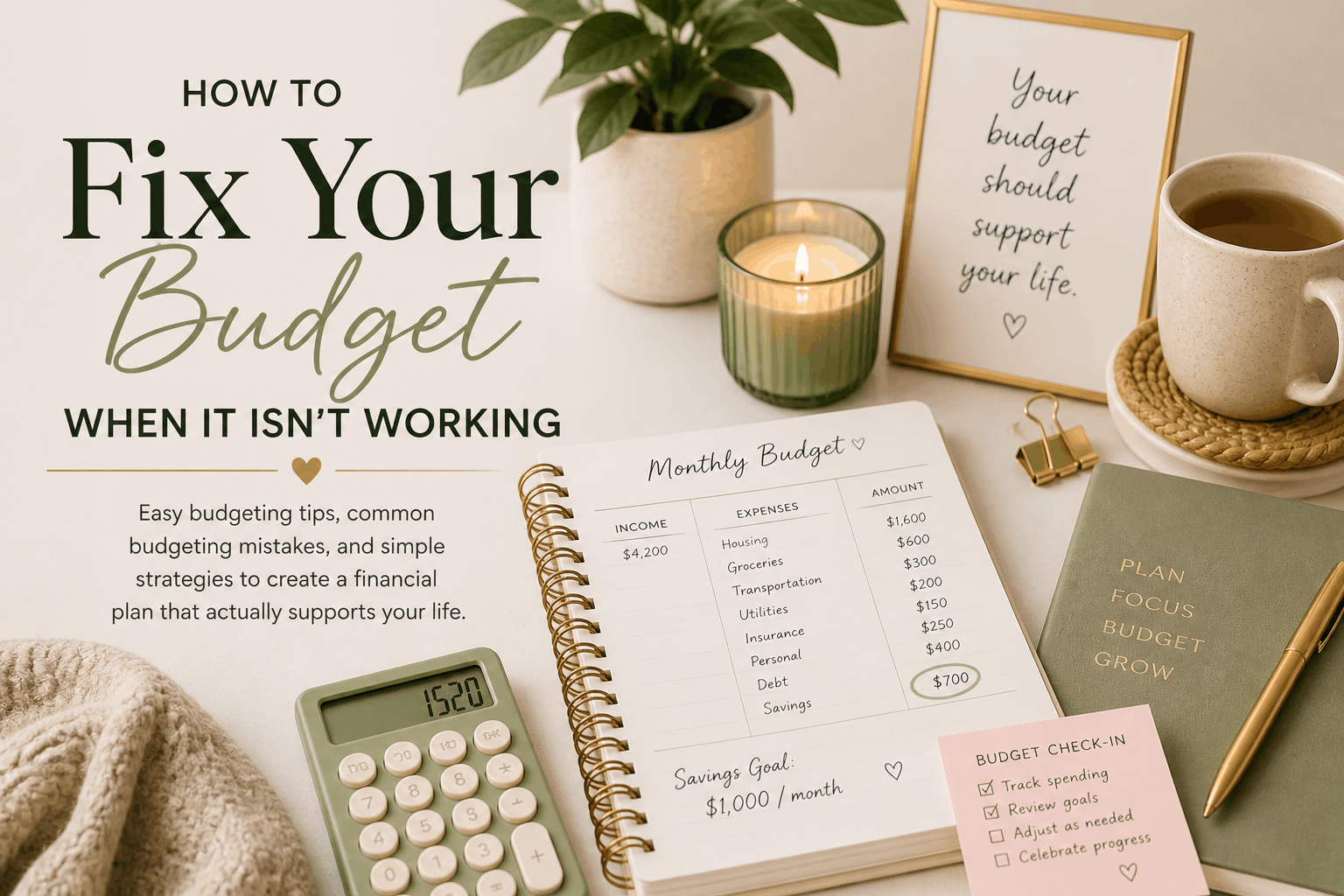
How to Fix Your Budget When It Isn’t Working
Trying to fix your budget can feel incredibly frustrating when you’re already doing everything “right” but still feel stressed, anxious, or financially stuck. And honestly, many budgeting mistakes have less to do with discipline and more to do with unrealistic systems, emotional spending patterns, or financial plans that simply don’t align with your current life season. The good news is that budgeting doesn’t need to feel restrictive or shame-based. With a few intentional shifts and easy budgeting tips, you can create a financial system that actually works for you long term.
Budgeting is often described as one of the most important parts of financial wellness.
But honestly, what happens when you’re budgeting consistently and it still feels like nothing is working?
You’re tracking your spending. Trying to save. Cutting expenses. Watching your bank account closely. And yet somehow, you still feel financially stressed, overwhelmed, anxious, or stuck.
If that’s where you are right now, I want you to know you’re not alone.
And honestly, you’re probably not failing financially either.
One of the biggest things I’ve learned over the years is that budgeting is not only mathematical. It’s emotional too. Your spending habits, nervous system, lifestyle, income, emotional capacity, and personal values all influence whether a budget actually feels sustainable long term.
For me personally, budgeting became much easier once I stopped trying to force financial systems that looked “perfect” on paper but didn’t realistically fit my life. I had to learn how to create a budget that felt supportive instead of restrictive.
And honestly, that changed everything.
Research from the Consumer Financial Protection Bureau continues showing that financial stress significantly impacts emotional wellbeing, decision making, and long-term financial habits. At the same time, studies show people are more likely to stay consistent with financial systems that feel realistic, flexible, and emotionally manageable.
Because budgeting should support your life.
Not constantly make you feel ashamed inside of it.
1. You’re Saving Less Than You Planned
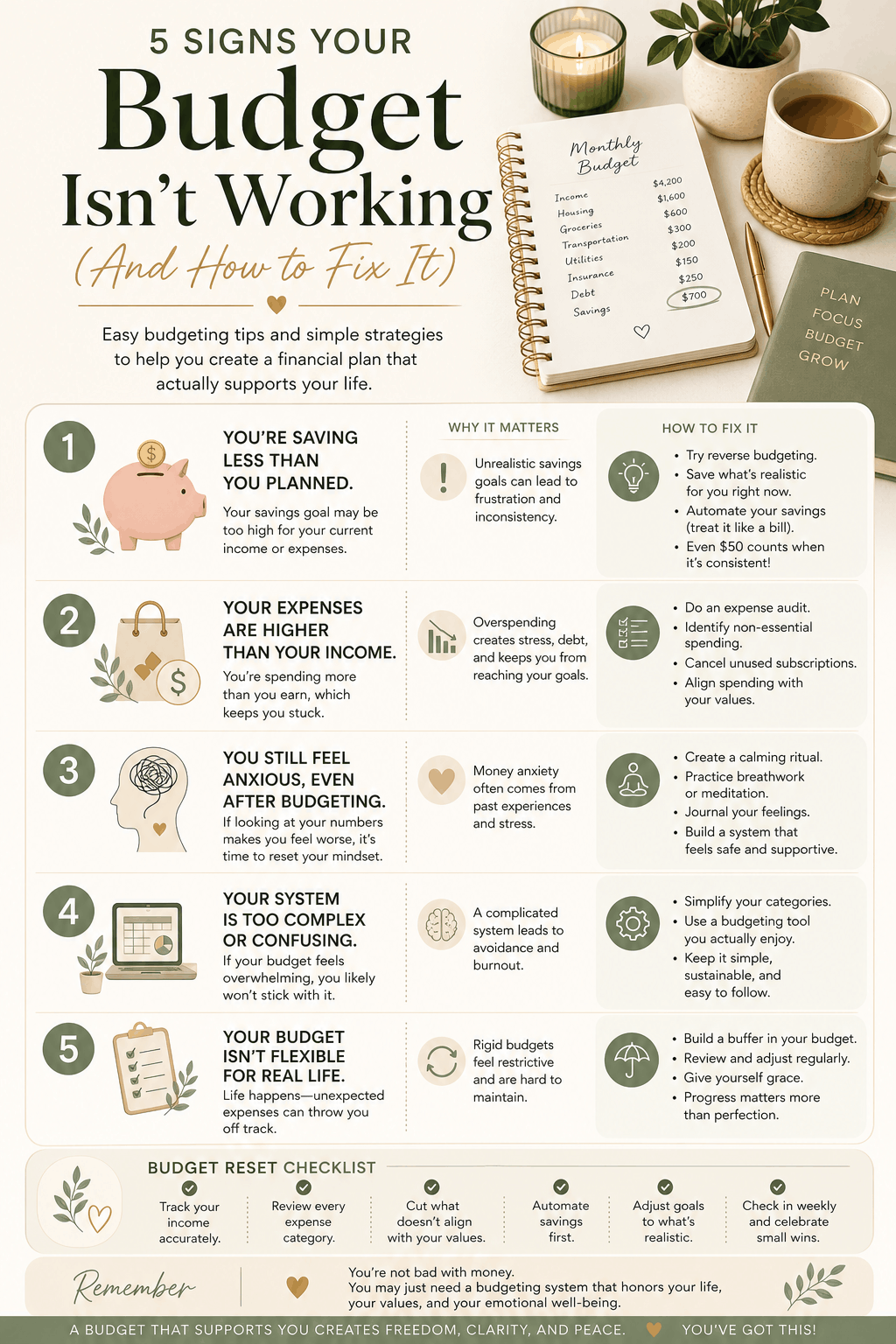
One of the most common budgeting mistakes is creating savings goals that feel emotionally overwhelming or unrealistic for your current financial situation.
For example, maybe your goal is saving:
$1,000 per month
aggressively paying off debt
investing heavily
building emergency savings quickly
…but every month you consistently fall short.
And honestly, that doesn’t necessarily mean you lack discipline.
Sometimes it simply means your financial plan is disconnected from your actual income, expenses, or life season right now.
One of the biggest shifts that helped me personally was learning how to reverse budget. Instead of forcing unrealistic savings numbers, I started looking honestly at my current finances and asking:
“What can I realistically save consistently right now?”
Even smaller amounts matter.
Consistency matters far more than perfection financially.
This is also why automation can be incredibly helpful. Treating savings like a recurring bill instead of an afterthought often creates much more consistency long term.
2. Your Expenses Are Higher Than Your Income
This is one of the hardest budgeting truths to face honestly, but it matters so much.
If more money is consistently leaving your account than coming in, your budget will continue feeling stressful no matter how detailed your spreadsheet becomes.
And honestly, overspending is often emotional too.
Sometimes spending becomes connected to:
stress
burnout
survival mode
comparison
convenience
emotional coping
social pressure
exhaustion
I’ve absolutely experienced moments where emotional exhaustion made intentional spending feel much harder. And I think many people underestimate how much emotional wellbeing impacts financial behavior.
One of the easiest budgeting tips here is simply reviewing your spending categories honestly without immediately shaming yourself. Sometimes the goal is not perfection — it’s awareness.
This is also why expense tracking matters so much.
You may discover:
subscriptions you forgot about
excessive takeout spending
emotional shopping patterns
convenience spending
lifestyle inflation
spending habits that no longer align with your values
And honestly, awareness creates change much faster than guilt does.
This is something I also explore more deeply in “How to Improve Your Relationship With Money (Beginner Guide),” especially around emotional spending patterns and financial self-awareness.
3. You Still Feel Anxious Even With a Budget
One thing I wish more people talked about is how budgeting can sometimes trigger anxiety instead of reducing it.
And honestly, this often has very little to do with math itself.
Money anxiety can come from:
childhood experiences
financial trauma
instability
scarcity mindsets
nervous system dysregulation
fear of failure
shame around money
For me personally, there were seasons where simply opening my banking app made me feel emotionally overwhelmed. Even when I had a financial plan, my nervous system still felt stressed around money.
That’s why I believe budgeting needs to feel emotionally supportive too.
Some things that genuinely helped me included:
creating calming budgeting rituals
journaling before money check-ins
using supportive budgeting tools
simplifying my financial systems
practicing mindfulness before reviewing finances
approaching money with curiosity instead of shame
And honestly, small emotional shifts can completely transform your relationship with budgeting over time.
✨ Gentle Reminder
Your Budget Should Feel Supportive, Not Punishing
Financial wellness is not built through shame, restriction, or constantly feeling like you’re failing. A healthy budget should create more clarity, emotional safety, and flexibility in your life — not constant guilt every time you spend money.
Sustainable budgeting almost always works better than extreme budgeting because the systems that feel realistic are usually the ones we can actually maintain long term.
Easy Budgeting Tips That Actually Help
If your budget currently feels overwhelming, here are a few easy budgeting tips that can make things feel more manageable:
automate savings whenever possible
simplify your budgeting categories
track spending weekly instead of obsessively daily
review subscriptions regularly
build smaller financial goals first
create realistic spending limits
leave room for joy and flexibility
stop comparing your finances to social media
Because honestly, budgeting becomes much easier when your system actually supports your real life.
Sometimes the Problem Is the System
One thing I’ve realized over time is that sometimes the issue is not you. It’s the budgeting system itself. If your financial tools constantly make you feel overwhelmed, ashamed, restricted, or emotionally exhausted, it may be time to create a simpler and more supportive approach.
And honestly, there is no single “perfect” budgeting method that works for everyone.
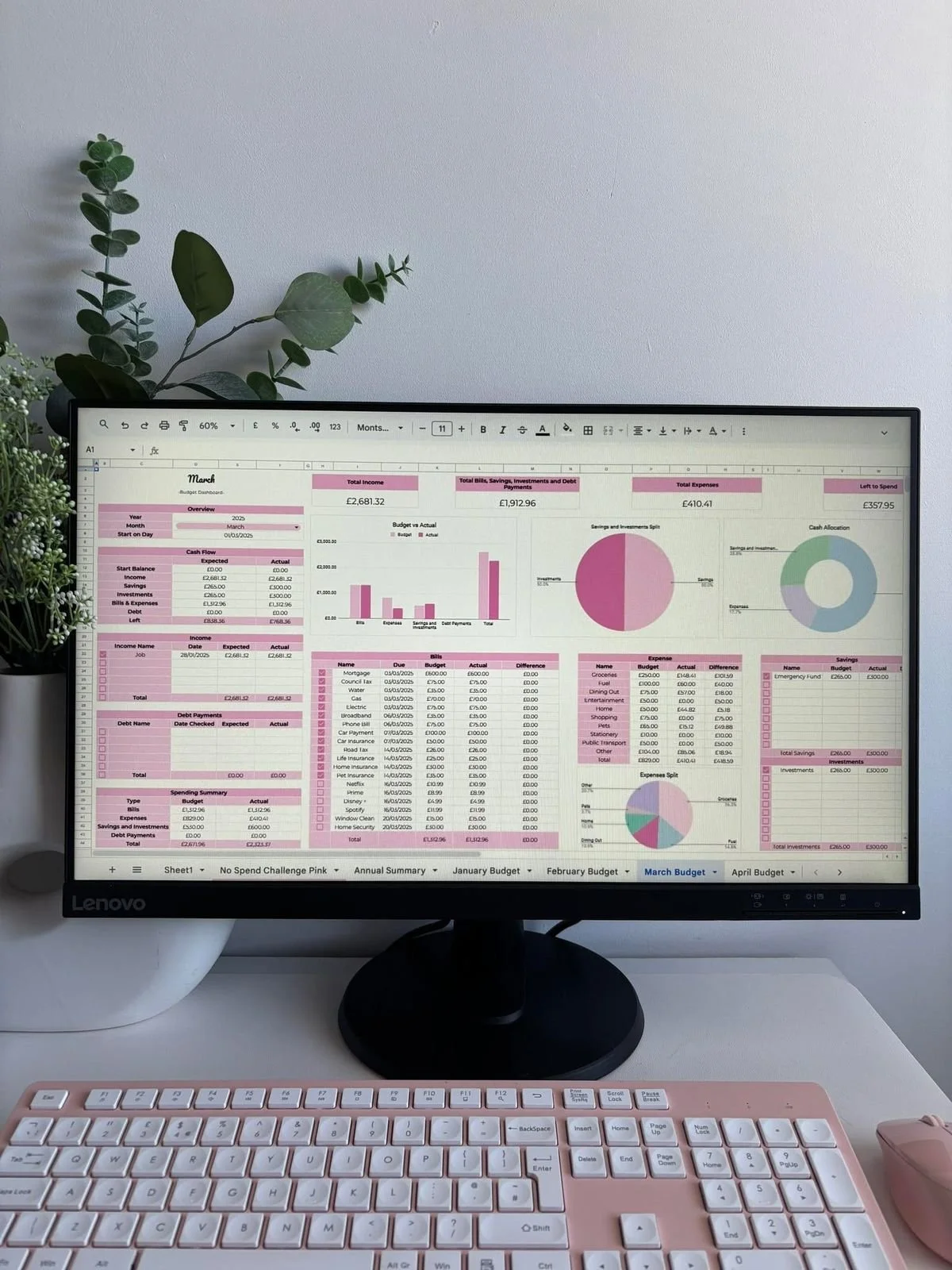
Some people thrive with spreadsheets.
Others prefer budgeting apps.
Some people need highly detailed categories.
Others need simplicity.
What matters most is creating a system that feels sustainable for your lifestyle, emotional wellbeing, and financial goals. Because financial wellness should feel supportive.
Not performative.
Creating a Budget That Actually Supports You
At the end of the day, budgeting is not about becoming perfect with money overnight. And honestly, I think that’s one of the biggest misconceptions people carry around financial wellness. Many of us approach budgeting believing we need to completely fix our finances immediately, follow rigid rules perfectly, or never make mistakes again in order to feel successful financially.
But real financial growth usually doesn’t happen that way.
It’s built through awareness, consistency, flexibility, and self-compassion over time. The goal is not creating the “perfect” budget spreadsheet. The goal is creating a financial system that supports your actual life, your nervous system, your responsibilities, your goals, and your emotional wellbeing too.
For me personally, budgeting became much more sustainable once I stopped trying to force perfection and started focusing on creating systems that felt realistic and supportive instead. Some months will feel easier than others. Unexpected expenses will happen. Financial goals may need adjusting. That doesn’t mean you failed.
It simply means you’re human.
And honestly, the more compassion and self-awareness you bring into your financial life, the easier budgeting becomes long term. Because sustainable financial wellness is not built through shame. It’s built through small intentional habits, emotional honesty, and systems that genuinely support the life you’re trying to create.
Further Reading
Build a Budget That Actually Supports You
If you're trying to improve your financial habits and reduce money stress, these posts can help you create a more intentional and supportive relationship with money.
Resource to Start With
If budgeting has been feeling emotionally overwhelming lately, I’d start with the Wealth Well Tracker. It’s designed to help you organize your finances, track spending intentionally, and create healthier money habits without guilt or shame.
Access The Wealth Well Tracker
FAQs
How do I fix my budget if it isn’t working?
Start by reviewing your spending honestly, adjusting unrealistic savings goals, simplifying your budget categories, and creating a system that feels sustainable for your lifestyle.
What are common budgeting mistakes?
Common budgeting mistakes include unrealistic savings goals, emotional spending, ignoring subscriptions, overly restrictive budgets, and failing to track expenses consistently.
Why does budgeting make me anxious?
Budgeting anxiety can come from financial stress, past money experiences, scarcity mindsets, financial trauma, or budgeting systems that feel overwhelming or restrictive.
What are easy budgeting tips for beginners?
Easy budgeting tips include automating savings, tracking expenses weekly, simplifying categories, reducing unnecessary subscriptions, and creating realistic financial goals.
How can I stop overspending?
Stopping overspending often starts with identifying emotional triggers, increasing spending awareness, reducing impulse purchases, and aligning spending with your values.
What is the best budgeting method?
The best budgeting method is the one that feels sustainable, realistic, and supportive for your unique lifestyle and financial goals.
〰️ LISTEN TO THE PODCAST OR WATCH THE VIDEO
↳ Listen to the full podcast version HERE
↳ Watch the YouTube Video for this blog post HERE
〰️ WORK WITH ME
↳ my coaching services https://bit.ly/3ZAs0NZ
↴ additional resources and perks:
→ Watch my FREE Webinar 'From Financial Confusion to Clarity' - https://bit.ly/4h7dXqq 📺
→ Download my free ebook on mastering your money mindset https://bit.ly/3fAfj33 💵
→ Download my free Wealth Tracker - https://bit.ly/48H8Rxj 🧮
→ Invest in stocks with Wealthsimple https://bit.ly/3PJYscp 📈
→ Invest in crypto and receive $25 USD https://bit.ly/3TxD4dr 🪙
→ Invest like the rich in art and receive a $200 bonus (USD only) https://bit.ly/3Popuqh 🖼️
→ Sign up for my bi-weekly newsletters https://bit.ly/466g09H 📨
〰️ CONTACT ME
✉️ hello@morganblackman.com
