
4 Debt Payoff Strategies That Help You Become Debt Free Faster
Paying off debt doesn’t have to feel overwhelming when you have a clear plan. These proven debt payoff strategies, including the popular debt snowball method, can help you eliminate debt faster and regain control of your finances. If you’re looking for practical pay off debt tips, these strategies can help you build momentum toward financial freedom.
I think one of the hardest parts about debt is how emotionally heavy it can become. People often talk about debt like it’s purely mathematical, but honestly, debt impacts so much more than numbers. It affects stress levels, confidence, relationships, nervous systems, decision-making, and overall wellbeing too. I know for me personally, there were periods where debt made me feel trapped emotionally. Like no matter how hard I worked, I couldn’t fully relax because part of my mind was always calculating bills, balances, and financial pressure in the background. And I think many people quietly carry shame around debt, even though so much of modern life almost pushes people toward it. But over time, I realized paying off debt fast is not about punishment or extreme deprivation. Sustainable financial healing usually requires strategy, emotional awareness, consistency, and self-compassion too.
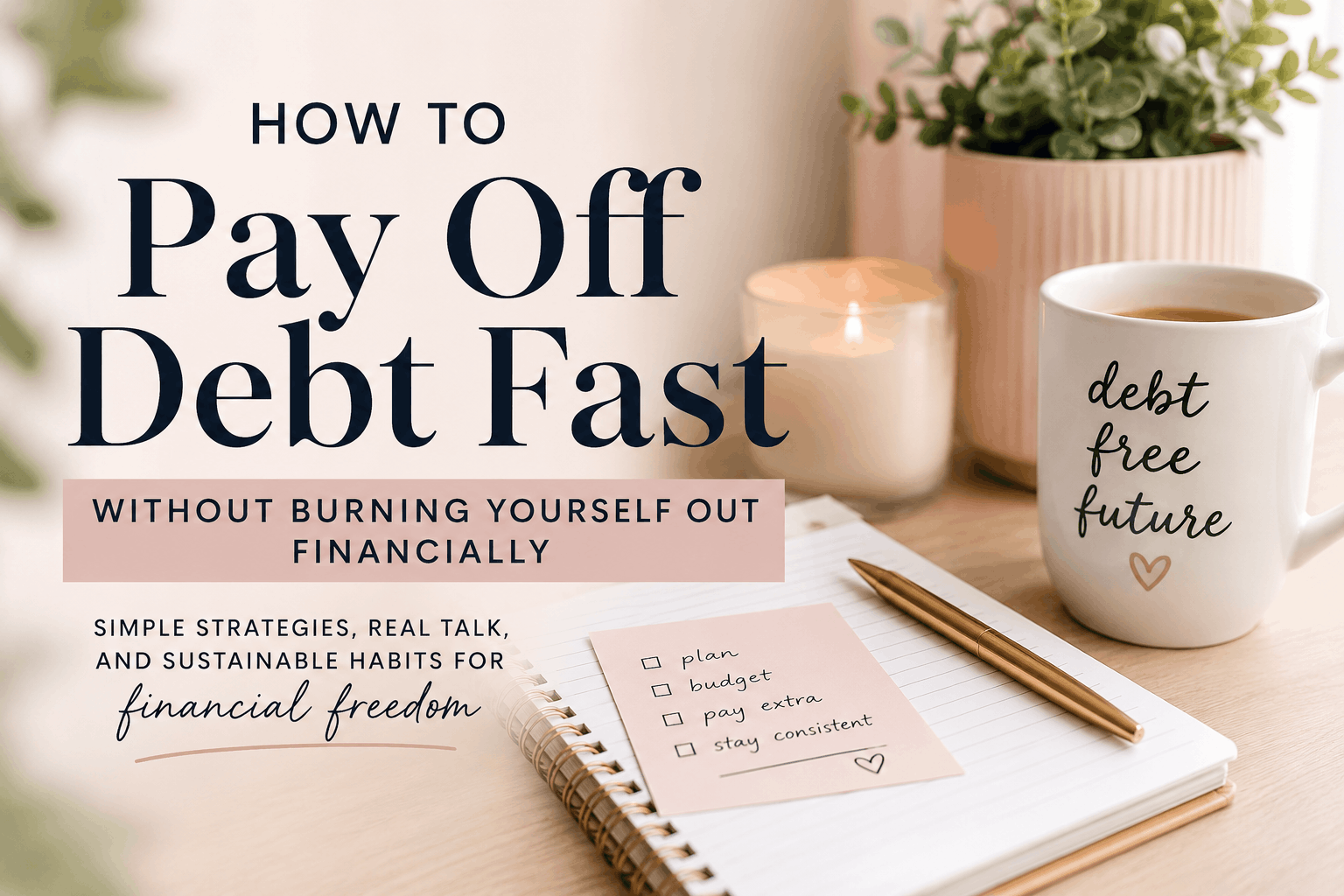
How to Pay Off Debt Fast Without Burning Yourself Out Financially
Debt can feel incredibly overwhelming in ways I don’t think people fully understand unless they’ve experienced it personally. It’s not just the financial pressure itself. It’s the emotional weight that quietly follows you everywhere in the background of your life. You can be out with friends trying to enjoy yourself while mentally calculating your credit card balance at the same time. You can wake up already anxious before even checking your bank account. You can feel guilty spending money on things you genuinely need because financially, everything starts feeling emotionally loaded.
And honestly, I think many people carry enormous shame around debt even though debt has become deeply normalized within modern society. Student loans, medical bills, inflation, rising housing costs, underpaid labor, emergencies, survival spending — so many people are trying to navigate systems that already feel financially exhausting. Yet despite how common debt is, people still internalize it as a personal failure instead of recognizing how many structural and emotional factors contribute to financial stress too.
That’s why I think conversations around debt need more compassion and honesty. Because fear and shame rarely create sustainable financial change long term.
Why Debt Feels So Emotionally Heavy
I think one of the biggest mindset shifts that helped me approach debt differently was realizing debt payoff is not only about math. It’s emotional too.
Financial stress impacts nearly every part of life. Research consistently shows that chronic financial anxiety can affect sleep, emotional regulation, stress hormones, mental health, and overall wellbeing. And honestly, I think many people underestimate how difficult it is to make calm financial decisions when their nervous system constantly feels unsafe.
When people feel trapped financially, they often respond emotionally instead of strategically. Some people avoid checking balances entirely because the stress feels overwhelming. Others emotionally spend for temporary comfort because they’re exhausted or burned out. Some people become extremely restrictive and start treating themselves with constant punishment around money.
But honestly, sustainable debt payoff strategies usually require balance. Not avoidance. Not shame. Not financial self-destruction disguised as discipline.
Real financial healing often requires learning how to become more intentional without becoming emotionally consumed by scarcity at the same time.
Understanding Your Debt Honestly
One of the hardest but most important steps when trying to pay off debt fast is actually looking at the full picture honestly. And emotionally, I know that can feel incredibly uncomfortable at first.
Because sometimes people avoid their numbers not because they’re irresponsible, but because they’re overwhelmed. Avoidance becomes a coping mechanism when financial stress already feels emotionally heavy enough.
But clarity changes things.
I remember periods where I felt significantly more anxious not because my finances were objectively worse, but because I was avoiding them completely. The uncertainty itself became emotionally exhausting. And honestly, once I finally sat down and organized everything clearly, I felt more empowered even before my financial situation had fully changed.
There’s something psychologically powerful about knowing exactly where you stand.
That’s why one of the most effective debt payoff strategies is simply creating awareness first. Knowing your balances, understanding your interest rates, tracking spending honestly, identifying financial leaks, and looking at emotional spending habits too. Not from shame. From awareness. Because you cannot intentionally change what you refuse to fully look at.
The Debt Snowball vs Avalanche Method
I think one of the reasons debt payoff strategies work differently for different people is because personal finance is deeply emotional. What motivates one person may not motivate someone else at all.
For some people, the debt snowball method feels more encouraging psychologically because it focuses on paying off the smallest balances first. The quick wins create momentum. You start seeing progress faster, and emotionally that can feel incredibly motivating when debt already feels overwhelming.
Other people prefer the avalanche method, which focuses on paying off the highest-interest debt first. Financially, this often saves more money long term because it reduces how much interest accumulates over time.
And honestly, I don’t think there’s one universally perfect method.
I think the best debt payoff strategy is often the one you can emotionally sustain consistently.
Because consistency matters more than perfection.
Some people need psychological momentum.
Some people need mathematical efficiency.
Some people need a combination of both.
And honestly, all of that is okay.
Why Paying More Than The Minimum Matters
One of the biggest things that keeps people financially stuck in debt longer is only making minimum payments consistently. And while technically you are still making progress, most of those payments often go toward interest instead of reducing the principal balance significantly.
Even relatively small increases can create meaningful change over time.
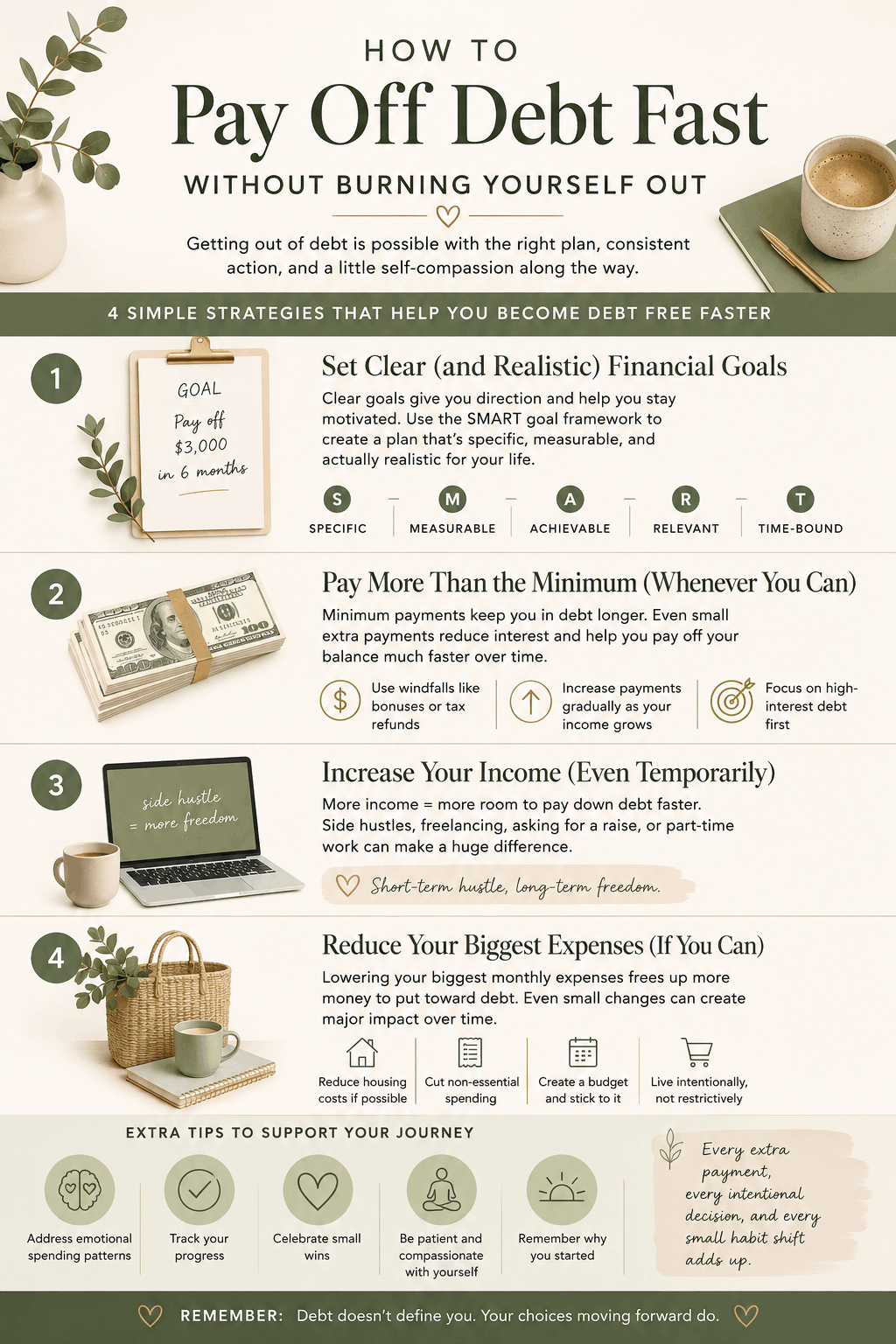
That doesn’t necessarily mean aggressively draining yourself financially every month. But when possible, increasing payments gradually, putting windfalls toward debt, or applying extra income strategically can help reduce interest and accelerate progress significantly.
I also think setting realistic financial goals matters here too. Vague goals like:
“I want to get out of debt someday”
often don’t create enough structure emotionally.
But specific goals create clarity.
For example:
“I want to pay off $5,000 of credit card debt within the next year by increasing my monthly payment and directing freelance income toward it.”
That creates direction.
And honestly, direction reduces overwhelm.
Increasing Your Income Changed Everything For Me
One of the biggest things that helped me pay off debt faster personally was increasing my income.
Back in 2018, I worked weekends as a waitress on top of my full-time job. And honestly, there were moments where I felt exhausted. Moments where I questioned whether it was worth it. But that additional income helped me pay off my credit cards and car loan significantly faster than I would have otherwise.
And more importantly, it gave me emotional breathing room.
I think sometimes people focus so heavily on cutting expenses that they forget income expansion matters too. While reducing unnecessary spending absolutely helps, there’s often a limit to how much people can realistically shrink their lives before it becomes emotionally unsustainable.
That’s why increasing earning potential can be so powerful.
Side hustles, freelancing, consulting, part-time work, monetizing skills, remote work, or creating additional income streams can all create more financial flexibility during debt repayment seasons.
And honestly, I think many people underestimate how valuable their skills already are.
The Emotional Side Of Spending Habits
I think one of the most overlooked parts of debt conversations is emotional spending because money is emotional for most people whether they realize it consciously or not.
People spend money for survival sometimes, but they also spend emotionally for comfort, identity, validation, stress relief, escapism, or temporary control during difficult periods of life.
And honestly, I think many people don’t fully recognize their patterns until they slow down enough to examine them compassionately.
For example, some people emotionally spend after overwhelming workdays because they’re exhausted and seeking comfort or dopamine. Others overspend socially because they fear exclusion or judgment. Some people grew up around financial instability and unconsciously learned to spend money quickly because saving never felt emotionally safe or stable growing up.
That’s why I believe financial healing requires self-awareness too, not just budgeting spreadsheets.
Because if someone never addresses the emotional patterns underneath their spending habits, debt often becomes cyclical.

Paying Off Debt Fast Requires Self-Compassion Too
I know self-compassion and debt may sound unrelated initially, but honestly, I think shame keeps many people financially stuck longer than necessary.
When people constantly judge themselves around money, they often avoid financial conversations entirely. They procrastinate. Shut down emotionally. Avoid asking for help. Avoid looking at their numbers. Avoid financial education because they already feel ashamed.
But financial growth requires honesty. And honesty becomes much easier when shame is not controlling the entire process.
I think paying off debt fast becomes more sustainable when people approach themselves with accountability and compassion simultaneously. Not pretending everything is fine. But also not treating themselves like failures either.
Because financial healing is still healing.
Debt Does Not Define Your Worth
One thing paying off debt taught me is that financial wellness is not only about becoming debt-free someday. It’s also about building a healthier long-term relationship with money overall.
Because if someone pays off debt but still emotionally overspends, avoids finances, lacks savings, stays financially reactive, or constantly lives in scarcity mode emotionally, the underlying stress often continues.
That’s why I think holistic financial wellness matters so much.
Real wealth is not just income.
It’s stability.
Peace.
Preparedness.
Emotional regulation.
Intentionality.
Self-trust.
And honestly, I think many people are craving that far more deeply than just a number in their bank account.
Debt does not define your intelligence, your discipline, your worth, or your future. People experience debt for countless reasons: survival, education, medical emergencies, family responsibilities, job loss, lack of financial literacy, burnout, economic systems, or simply trying to build a life in an increasingly expensive world.
And honestly, I think many people are doing the best they can with the information, support, and resources they currently have.
That doesn’t mean avoiding responsibility. But it does mean releasing unnecessary shame.
Because shame rarely creates sustainable transformation.
Support, awareness, education, consistency, and self-trust usually do.
Further Reading
Continue Exploring Debt, Money Healing & Financial Wellness
If you're working toward financial freedom, healing your relationship with money, or trying to build more sustainable financial habits, these articles may support you further.
FAQ’s
How can I pay off debt fast?
The fastest way to pay off debt is usually a combination of clarity, consistency, and extra payments whenever possible. Start by understanding exactly how much you owe, what your interest rates are, and which strategy feels most sustainable for you. From there, increasing your income, reducing unnecessary spending, and paying more than the minimum can help you build momentum without relying on extreme restriction.
What are the best debt payoff strategies?
The two most common debt payoff strategies are the debt snowball method and the debt avalanche method. The snowball method focuses on paying off the smallest balances first so you can build motivation through quick wins. The avalanche method focuses on paying off the highest-interest debt first so you can save more money on interest over time. The best strategy is usually the one you can actually stick with consistently.
What are easy ways to get out of debt?
Some easy ways to get out of debt include canceling unused subscriptions, reducing impulse spending, meal planning more often, selling items you no longer use, negotiating bills, and putting unexpected income directly toward your balances. These small shifts may not feel dramatic at first, but over time they can create more room in your budget and help you pay off debt faster.
Should I use the debt snowball or debt avalanche method?
It depends on what motivates you most. If you need emotional momentum and encouragement, the debt snowball method may feel better because you’ll pay off smaller balances sooner. If you’re more motivated by saving money on interest, the debt avalanche method may be more aligned. Neither method is wrong — the most important thing is choosing a debt payoff strategy that feels realistic for your life.
Can I pay off debt while still saving money?
Yes, and in many cases, it can be helpful to build at least a small emergency fund while paying off debt. Even a small cushion can prevent you from relying on credit cards again when unexpected expenses come up. The balance will look different for everyone, but financial stability usually comes from both reducing debt and creating some level of safety.
Why is paying off debt so emotionally hard?
Paying off debt can feel emotionally hard because debt is rarely just about numbers. It can bring up shame, anxiety, fear, stress, and feelings of being behind. Many people also use spending as a coping mechanism during difficult seasons, which can make debt feel even more complicated. That’s why sustainable debt payoff often requires both financial strategy and self-compassion.
How do I stay motivated while paying off debt?
Staying motivated usually comes from tracking progress, celebrating small wins, and reminding yourself why becoming debt-free matters to you. Debt payoff can feel slow at times, but every extra payment, every intentional spending decision, and every small habit shift adds up. Consistency will take you further than perfection.
If you’d like to keep journeying together…
→ Start Here: free tools and reflections to help you feel grounded, clear, and more confident with your money.
→Work With Me: private coaching, strategy sessions, and programs designed to help you build wealth that feels aligned, stable, and sustainable.
→ Subscribe to the Channel: If this resonated, come hang out with me on YouTube where I break this down in real life — the habits, the mindset shifts, and what this actually looks like day-to-day.
→ Or Join My Email List: This is where I share deeper insights, behind-the-scenes thoughts, and the kind of conversations we don’t always have publicly.
