
Building Wealth: What I Wish I Knew Before I Started
Last Updated: May 10, 2026
Building wealth is often talked about through numbers, income goals, investing strategies, and external success. But honestly, some of the most important lessons about wealth have very little to do with money itself. Over the years, I’ve learned that true wealth is deeply connected to your values, your nervous system, your relationships, your health, your mindset, and the way you move through life emotionally. In this post, I’m sharing the biggest lessons I wish I knew sooner about building wealth, investing in yourself, financial literacy, and creating long-term abundance in a more intentional way.
If I could sit down with my younger self before I really began my financial journey, I honestly wouldn’t start by handing her a spreadsheet or telling her to “just save more money.”
I would probably start somewhere much softer.
I would tell her that wealth is not just about numbers.
Not just about income.
Not just about investments.
Not just about reaching six figures.
I would tell her that wealth is emotional too.
It’s deeply connected to how safe you feel, how supported your nervous system feels, how aligned your life feels, and whether your financial goals are actually rooted in your own values instead of constantly chasing external validation.
Because honestly, I spent a lot of my early twenties thinking wealth simply meant making as much money as possible.
I didn’t really have a clear definition of “enough.”
I just knew I never wanted to feel financially unstable again.
And while ambition itself is not a bad thing, constantly chasing more without understanding why can quietly leave you burnt out, disconnected, and emotionally exhausted.
Looking back now, there are so many things I wish I understood earlier about building wealth, investing, money mindset, and creating financial freedom in a way that actually feels sustainable.
So this is the conversation I wish someone had with me sooner.
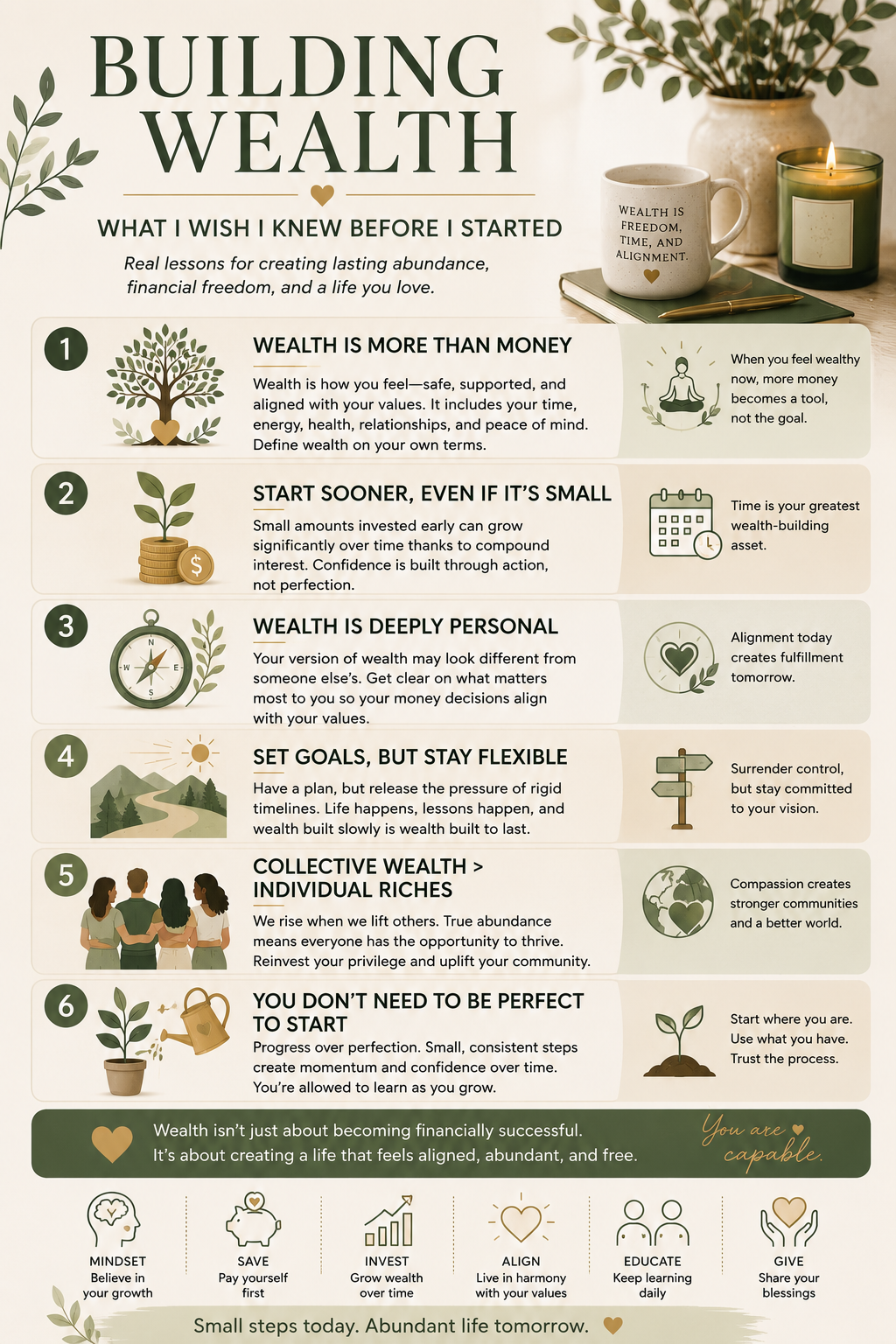
Wealth Is About More Than Money
This has honestly become one of the foundational beliefs behind my work as a holistic wealth coach.
Because true wealth is not just measured through the number sitting in your bank account.
It’s also measured through:
peace
freedom
health
emotional wellbeing
time
relationships
alignment
community
nervous system safety
And honestly, I think many people spend years chasing financial milestones while completely disconnecting from themselves internally.
I know I did at times.
For a long time, I was so focused on external success that I didn’t fully question whether the things I was spending money on actually aligned with what I valued most deeply.
I got caught up in:
beauty standards
overconsumption
dining out constantly
aesthetic lifestyles online
aspirational spending
comparison
And honestly, because I’m such a foodie, so much of my social life revolved around restaurants and spending money without much intentionality behind it.
But over time, I started realizing something important:
Joy does not always have to come with a large price tag.
Some of my favorite moments now are actually much simpler:
park walks
museum dates
cozy nights at home
coffee chats
long conversations
nature
creative projects
slower mornings
And honestly, redefining what abundance looked like for me personally changed my relationship with money completely.
Because if you do not feel internally abundant now, more money alone will not magically create that feeling permanently.
This is something I explore more deeply in “Money Is Energy: A Grounded Guide To Making It Flow,” especially around the emotional and energetic relationship many people have with wealth.
Start Earlier Than You Think You Need To
One of the biggest financial lessons I learned is that small actions matter far more than waiting for perfect timing.
If I could go back and speak to my sixteen-year-old self after getting my first job, I would tell her:
Start now.
Even if it feels small.
Even if it feels imperfect.
Even if it’s only $20.
Because compound interest is genuinely powerful.
I first heard about investing when I was younger, but honestly, it didn’t feel accessible or real to me at the time. It felt like something “other people” understood. People who were already wealthy, financially confident, or more educated about money.
It wasn’t until university that I really began teaching myself about investing, wealth building, and financial literacy.
And honestly, I still felt uncertain in the beginning.
But confidence with money is usually built through action.
Not perfection.
Research consistently shows that long-term investing and compound growth can significantly impact wealth over time, especially when people begin earlier. Even modest investments made consistently over decades can grow substantially because of compound interest.
And honestly, I think financial literacy should be taught much earlier in life.
Because so many people are not irresponsible with money.
They were simply never taught.

Building Wealth Requires Patience
I think one of the most damaging things social media has done financially is normalize unrealistic timelines around money.
People constantly market:
overnight success
fast money
instant wealth
crypto hype
“get rich quick” thinking
And honestly, I got caught up in some of that too.
There was a period where I ignored my intuition chasing faster financial growth through crypto speculation, and it ended up becoming one of my biggest financial lessons.
I share that openly because I think many people feel shame around financial mistakes when honestly, mistakes are part of learning.
But that experience taught me something incredibly important:
Slow wealth is often safer wealth.
Sustainable wealth takes time.
That’s one of the reasons I deeply respect Warren Buffett’s long-term investing philosophy. Patience, consistency, emotional regulation, and long-term thinking matter so much more than constantly chasing shortcuts.
Because honestly, building wealth slowly may not look exciting online, but it often creates much stronger long-term financial stability.
Your Nervous System Impacts Your Finances
This is something I honestly wish more people talked about.
Your relationship with money is deeply connected to your nervous system.
If your body constantly feels unsafe, stressed, dysregulated, or emotionally overwhelmed, financial decisions often become reactive too.
You may:
overspend emotionally
avoid looking at finances
self-sabotage opportunities
stay stuck in scarcity
panic around money
chase fast results impulsively
And honestly, I had to learn that financial wellbeing is not just about math.
It’s emotional regulation too.
This is why mindset work became such an important part of my wealth journey.
Meditation.
Journaling.
Therapy.
Slowing down.
Building self-awareness.
Learning emotional regulation.
All of those things impacted my relationship with money far more deeply than I initially realized.
Because when your nervous system feels safer, your financial decisions often become clearer too.
Community Wealth Matters Too
One of the deepest lessons I’ve learned is that wealth should not only be individual.
I genuinely believe collective wellbeing matters too.
Because honestly, what is the point of creating abundance if the communities around us are struggling deeply?
And I’m not talking about perfection here.
I’m talking about compassion.
I think wealth becomes much more meaningful when it creates:
opportunities
support
education
accessibility
safety
generosity
community care
We are all interconnected whether we realize it or not.
And honestly, one of the most beautiful parts of financial growth is eventually being able to support not just yourself, but other people too.
Gentle Reminder
Wealth Is Built Slowly
Building wealth is not about rushing toward overnight success. It’s about creating sustainable habits, emotional awareness, financial literacy, and long-term consistency over time.
You do not need to have everything figured out to begin building a healthier relationship with money.
You Don’t Need to Be Perfect to Start
One thing I really want people to understand is that you do not need to become a perfect financial expert before beginning your wealth journey.
I’m still learning too.
I’ve made mistakes.
I’ve overspent.
I’ve trusted the wrong things.
I’ve ignored my intuition.
I’ve had financial setbacks.
And honestly, that’s part of being human.
Building wealth is not about perfection.
It’s about willingness.
Willingness to:
learn
grow
become more intentional
ask questions
build healthier habits
improve slowly over time
Because honestly, even small steps repeated consistently can completely change your future financially.
Resource to Start With
If you’re currently trying to build wealth, improve your financial literacy, and create a healthier relationship with money, I’d start with the Financial Clarity Webinar.
Inside the workshop, I break down the biggest money mistakes that keep people financially stuck and walk through the foundational mindset and strategy shifts that help create long-term financial clarity.
Product Recommendation
One platform I genuinely recommend for beginner investors and long-term wealth building is Wealthsimple.
When I first started learning about investing, one of the biggest barriers was feeling intimidated by complicated financial platforms. Wealthsimple makes investing feel far more accessible and beginner-friendly, especially for people who are just starting their wealth-building journey. And honestly, simplifying your investing process can make it much easier to stay consistent long term.
FAQs
What does building wealth actually mean?
Building wealth means creating long-term financial stability and abundance through saving, investing, financial literacy, intentional spending, and aligned financial habits.
How do beginners start building wealth?
Beginners can start building wealth by learning financial literacy, creating a budget, saving consistently, investing early, reducing high-interest debt, and improving their money mindset gradually over time.
Why is investing important for wealth building?
Investing helps grow money over time through compound interest and long-term market growth, making it one of the most effective tools for building long-term wealth.
How does mindset affect wealth building?
Money mindset affects financial behaviors, emotional spending habits, confidence, risk tolerance, self-worth, and the ability to make intentional financial decisions.
What is the best age to start investing?
The best time to start investing is as early as possible because compound growth becomes more powerful over long periods of time. However, it’s never too late to begin.
Can you build wealth on a low income?
Yes. While income matters, wealth building also depends on spending habits, financial literacy, saving consistency, investing, and long-term financial behaviors.
