
Your Money Story: How Your Past Shapes Your Financial Future
Your money story shapes far more than your bank account. It influences your spending habits, financial fears, investment decisions, and overall relationship with wealth. In this reflective guide, Morgan explores how money perspectives evolve over time and how intentional money mindset shifts can transform your financial future.
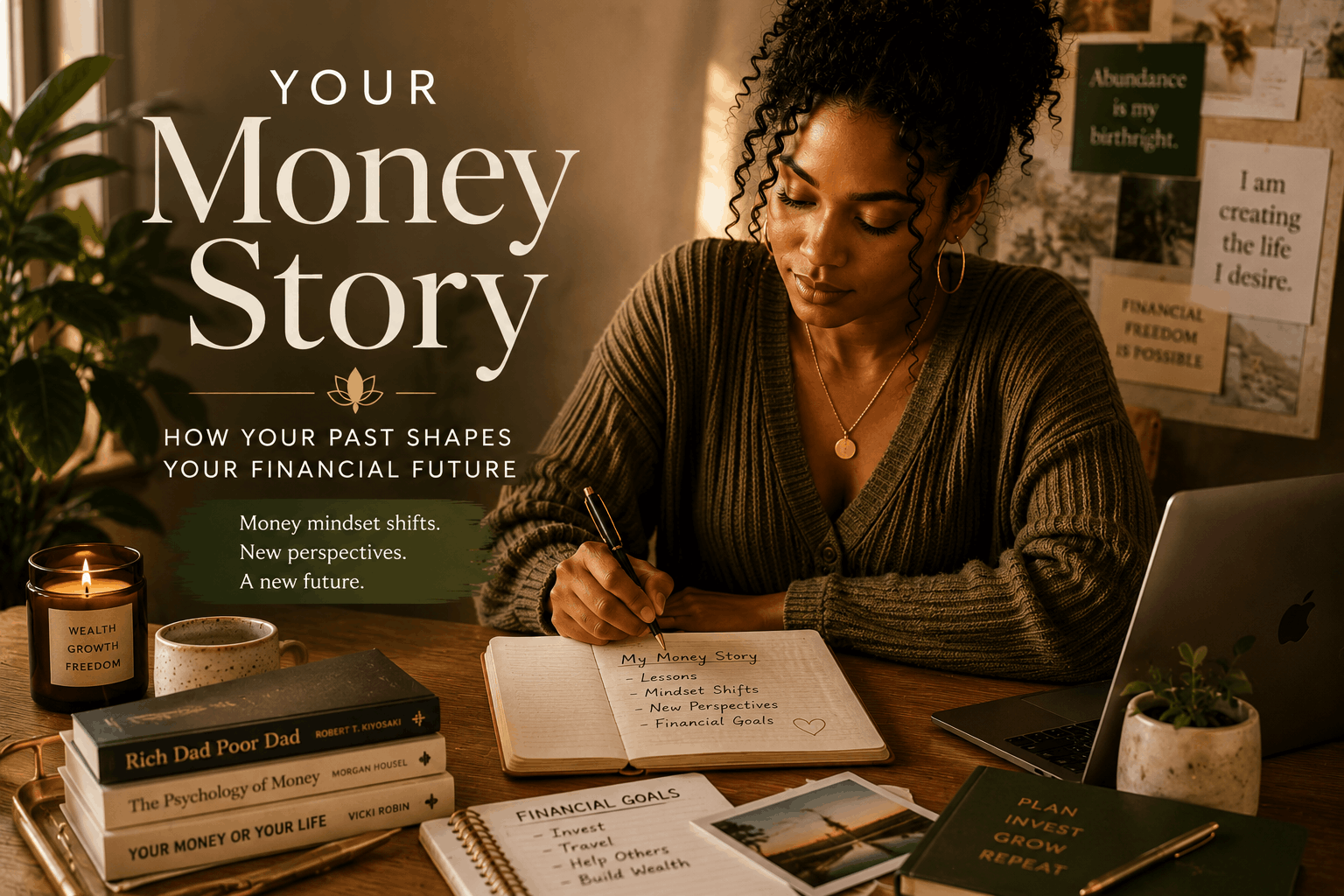
It’s funny how your thoughts on a topic can change over the years.
So often we see celebrities or influencers getting criticized for things they once believed or said, and while accountability absolutely matters, I also think there’s honesty in acknowledging that many of our beliefs are shaped by personal experience, trauma, culture, survival, and whatever perspectives we inherited at the time.
And honestly, I think money is one of the clearest examples of this.
Our money story is constantly evolving.
The way we think about wealth at 16 is often completely different from how we think about it at 25, 35, or 45. Financial beliefs shift as we experience more responsibility, hardship, education, privilege, opportunity, loss, and growth.
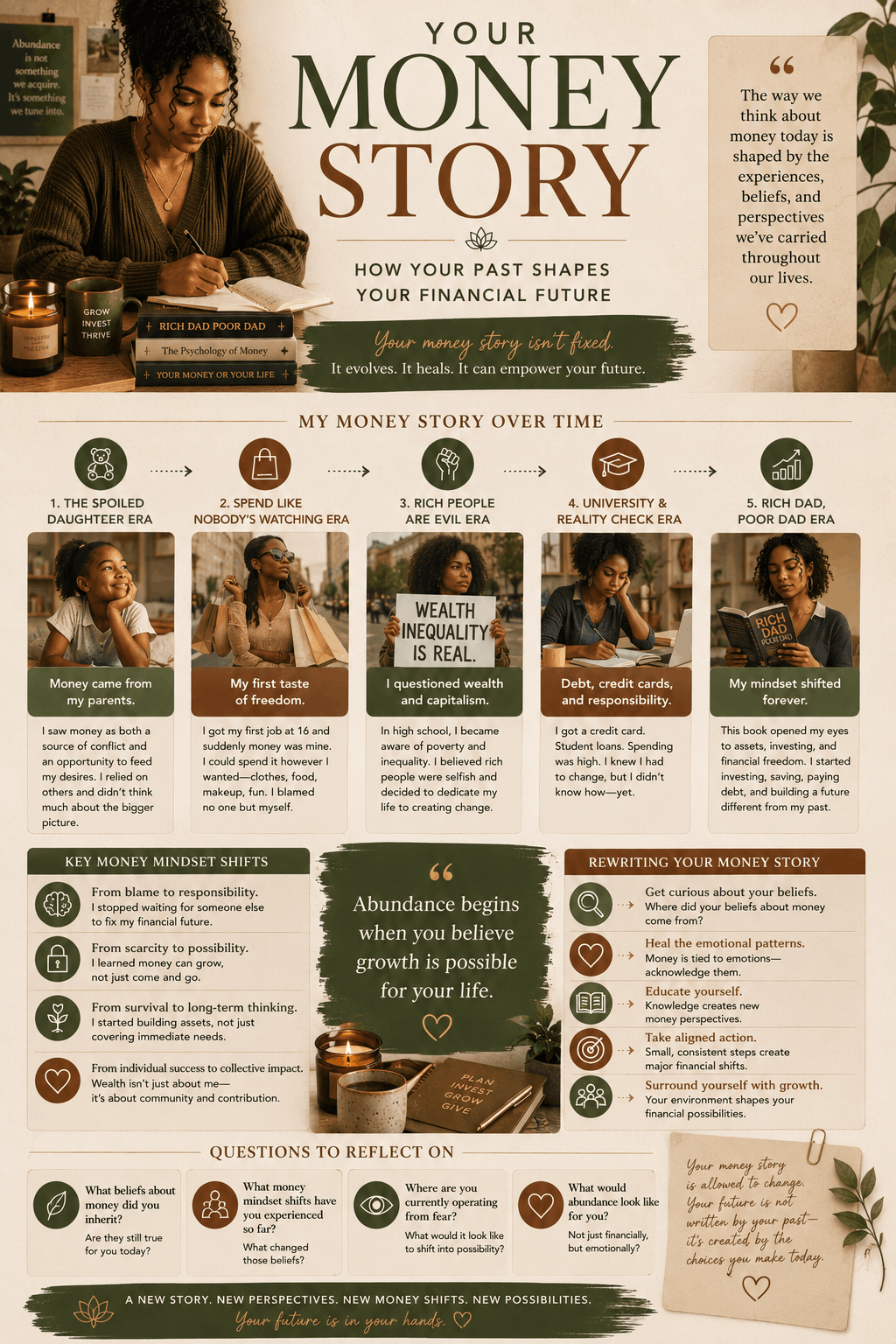
When I look back on my own financial journey, I can clearly see the different money mindset shifts that shaped my life over time. I can see how each era of my life carried its own relationship with wealth, scarcity, abundance, capitalism, investing, and financial responsibility.
And honestly, I no longer judge those earlier versions of myself the way I once did.
Because every version of me was simply responding to the information, emotions, and survival patterns I had at the time.

The First Money Story: “Someone Else Will Take Care of Me”
Before I got my first job at 16, my stance on money and wealth was honestly pretty underdeveloped. Money existed around me, but it didn’t yet feel like something I personally understood. I mostly experienced it through the eyes of my parents and the environment around me.
My parents fought often about money, so part of me viewed it as a source of stress and conflict. But on the other hand, money also represented comfort and access to the things I wanted. Most things I asked for, I would eventually get. Even if I didn’t fully understand what was happening financially behind the scenes, I knew that somehow my desires were usually met.
Looking back now, I realize how much that shaped my earliest money story.
A part of me subconsciously believed money would always somehow appear when needed. I wasn’t thinking about debt, investing, budgeting, or long-term financial responsibility yet. I simply knew that money created freedom and access.
Then I got my first job.
And suddenly money became personal.
I was no longer dependent on my parents to buy what I wanted. I could spend money however I chose. Clothes, food, makeup, random little pleasures that felt exciting simply because they represented independence for the first time.
And honestly, I think many people’s earliest money perspectives are emotional long before they’re practical.
Money becomes associated with safety.
Or stress.
Or freedom.
Or shame.
Or pleasure.
Or instability.
Those emotional associations stay with us far longer than we realize.
The “Rich People Are Evil” Era
One of the biggest money mindset shifts I experienced happened during high school and university when I became more politically and socially aware.
I took a world politics course that completely changed how I thought about wealth on a collective level. Conversations around poverty, wealth inequality, and systemic injustice ignited something in me emotionally. I became deeply frustrated by the reality that some people had more money than they could ever need while others struggled to survive.
At that point in my life, I viewed wealth itself with suspicion.
How could humanity be so selfish?
Why did some people have everything while others had nothing?
And honestly, I think many people quietly carry this conflict internally.
Part of them wants financial freedom.
Another part feels uncomfortable with wealth because they associate it with greed, exploitation, or inequality.
I still believe systemic inequality deserves serious criticism. But over time, one of the biggest money mindset shifts I experienced was realizing that money itself is neutral. People shape how it’s used.
That realization softened something in me.
Because once I stopped viewing wealth itself as inherently evil, I became more open to understanding how wealth could actually be built intentionally, ethically, and even collectively.
The Money Story That Changed Everything
Then came university, debt, credit cards, and my first real introduction to financial responsibility.
Like most young adults, I got a credit card because that’s simply what everyone around me was doing. I also took on student loans, fully aware that eventually those payments would come due.
At the time, spending still felt normal.
It was also my party era.
Everyone around me was broke.
Living paycheck to paycheck felt expected.
Having almost no money in your account felt common.
But internally, something was starting to shift.
I realized I didn’t want financial stress to become my permanent reality.
And then one conversation changed everything.
A friend introduced me to investing, and eventually I read Rich Dad Poor Dad. That book completely transformed my money perspectives.
For the first time, I started thinking differently about:
assets versus liabilities
passive income
net worth
ownership
entrepreneurship
long-term wealth building
I realized wealthy people often understood systems and opportunities that many others were simply never taught.
And honestly, that realization changed my money story forever.
Money Mindset Shifts Through Investing
Stocks became my first real introduction to abundance thinking financially.
Until then, I had always believed money required constant labor to exist. You work for money. You exchange time for money. That was the only framework I understood.
But investing introduced me to an entirely different perspective.
What if money could grow?
What if assets could compound?
What if wealth building was less about exhaustion and more about intentional systems?
That shift changed something in me emotionally.
I became motivated to save intentionally for the first time in my life. I set goals. I wanted to build assets instead of only consuming things. Eventually, I invested consistently and watched my money begin growing in ways I had never imagined before.
And honestly, I think one of the biggest money mindset shifts people experience is moving from survival thinking into long-term thinking.
Because survival mindset focuses only on immediate relief.
Wealth mindset starts considering future possibility too.

Becoming the Change I Wanted to See
At one point, I knew I wanted to create a business, but not simply for profit. Since Grade 12, I had made a promise to myself that whatever I built needed to genuinely help people.
My first idea was actually an aromatherapy business focused on emotional wellness. Then came a female empowerment blog inspired by my own healing journey around self-worth and relationships.
But eventually, I realized the work that excited me most was helping women build financial confidence.
Because honestly, I had lived both realities already.
I knew what it felt like to emotionally overspend, avoid financial responsibility, and feel disconnected from wealth building. But I also knew what it felt like to slowly become more intentional, financially aware, and empowered.
And I realized financial education changes lives.
Not only financially.
Emotionally too.
So I started teaching online. Sharing what I had learned. Talking about investing, wealth building, mindset, and financial wellness in ways that felt more emotionally grounded and accessible.
Even within coaching, though, my perspectives continued evolving.
At one point, I believed wealth was almost entirely about personal responsibility. Then over time, I circled back toward acknowledging systemic barriers more deeply too. As a Black woman, I’ve experienced both empowerment and discrimination simultaneously within financial spaces.
And honestly, I think maturity often looks like learning how to hold multiple truths at once.
Yes, mindset matters.
Yes, systems matter too.
Yes, financial literacy changes lives.
Yes, inequality still exists.
Your Money Story Is Allowed to Evolve
Today, I’m in an entirely different money era than I was years ago.
I still believe in building wealth intentionally. I still believe financial empowerment matters deeply. But I also think more now about collective wellbeing, enoughness, community support, and redefining what wealth actually means beyond status or endless accumulation.
Because honestly, I no longer think wealth is only about numbers.
It’s about how we feel.
How safe we feel.
How supported we feel.
How we show up for each other.
How much freedom and peace we actually experience in our lives.
And I think one of the healthiest things people can remember is that your money story is not fixed forever.
Your beliefs can evolve.
Your habits can evolve.
Your perspectives can evolve.
Some beliefs you inherited may eventually need to be questioned completely. Some money mindset shifts will happen through pain. Others through education, exposure, healing, investing, reflection, or simply getting older and seeing life differently.
And honestly, I think that’s what makes financial wellness so personal.
Because money is never only about money.
It’s about identity.
Safety.
Fear.
Belonging.
Power.
Freedom.
Possibility.
The older I get, the more I realize wealth is not only about what you accumulate financially.
It’s also about your willingness to remain open enough to keep evolving your perspective long after you think you’ve figured everything out.
Further Reading
Continue Exploring Money Mindset, Wealth & Financial Growth
If you're healing your relationship with money, building wealth intentionally, and exploring how mindset shapes financial wellbeing, these articles may support you further.
Free Resource
If you’re trying to heal your relationship with money, shift limiting beliefs, and rewrite your money story intentionally, download my free Money Mindset E-Book to begin building healthier financial habits and wealth perspectives.
Product Recommendation
One of the biggest money mindset shifts I experienced came from learning how investing could completely change my financial future long term. I personally love Wealthsimple because it made investing feel accessible, beginner-friendly, and emotionally less intimidating when I was first starting out.
Start Investing Today
FAQs
What is a money story?
A money story is the collection of beliefs, emotional experiences, and perspectives you’ve developed around money throughout your life. Your money story often shapes how you spend, save, invest, and emotionally respond to wealth.
Why do money mindset shifts matter?
Money mindset shifts matter because the way you think about money influences your financial behaviors, decisions, opportunities, and long-term relationship with wealth. Shifting limiting beliefs can help create healthier financial habits over time.
How does childhood affect your relationship with money?
Childhood experiences often shape early money perspectives around safety, stress, scarcity, abundance, or financial security. Many adult financial habits are connected to emotional patterns learned early in life.
Can your money mindset change over time?
Absolutely. Your money mindset can evolve through education, financial experiences, investing, healing, mentorship, exposure to new perspectives, and intentional personal growth.
What are some common limiting money beliefs?
Common limiting beliefs include:
“Money is hard to make.”
“Rich people are selfish.”
“I’ll never be financially successful.”
“People like me don’t build wealth.”
“Wanting more money is greedy.”
