
If you're tired of being broke and constantly chasing discounts to save more money, you're not alone. On the surface, hunting for deals may seem like a smart financial move. But in reality, it’s one of the sneakiest traps keeping you in a cycle of financial stress. In this article, we’ll uncover how the pursuit of discounts might be doing more harm than good—and how shifting your mindset can help you build lasting wealth instead.
Broke and Poor: The Quiet Habits Keeping You Stuck
There’s a certain kind of tired that comes from always feeling behind financially. It’s not just about the numbers in your account. It’s the way your body tightens before checking your balance. It’s the mental math you do in the grocery aisle. It’s saying “I’m tired of being broke” half-jokingly, but knowing deep down that the joke stopped being funny a long time ago.
Being broke and poor can start to feel like an identity when you’ve lived in survival mode for too long. You get used to stretching, delaying, borrowing from future you, and promising yourself that next month will be different. But then next month comes with the same bills, the same emotional spending, the same little purchases that felt harmless in the moment but somehow added up to another cycle of stress.
And I say this with so much compassion: sometimes the issue is not that you don’t know how to stop being broke. Sometimes the issue is that your nervous system has been trained to find comfort in the very habits keeping you there.
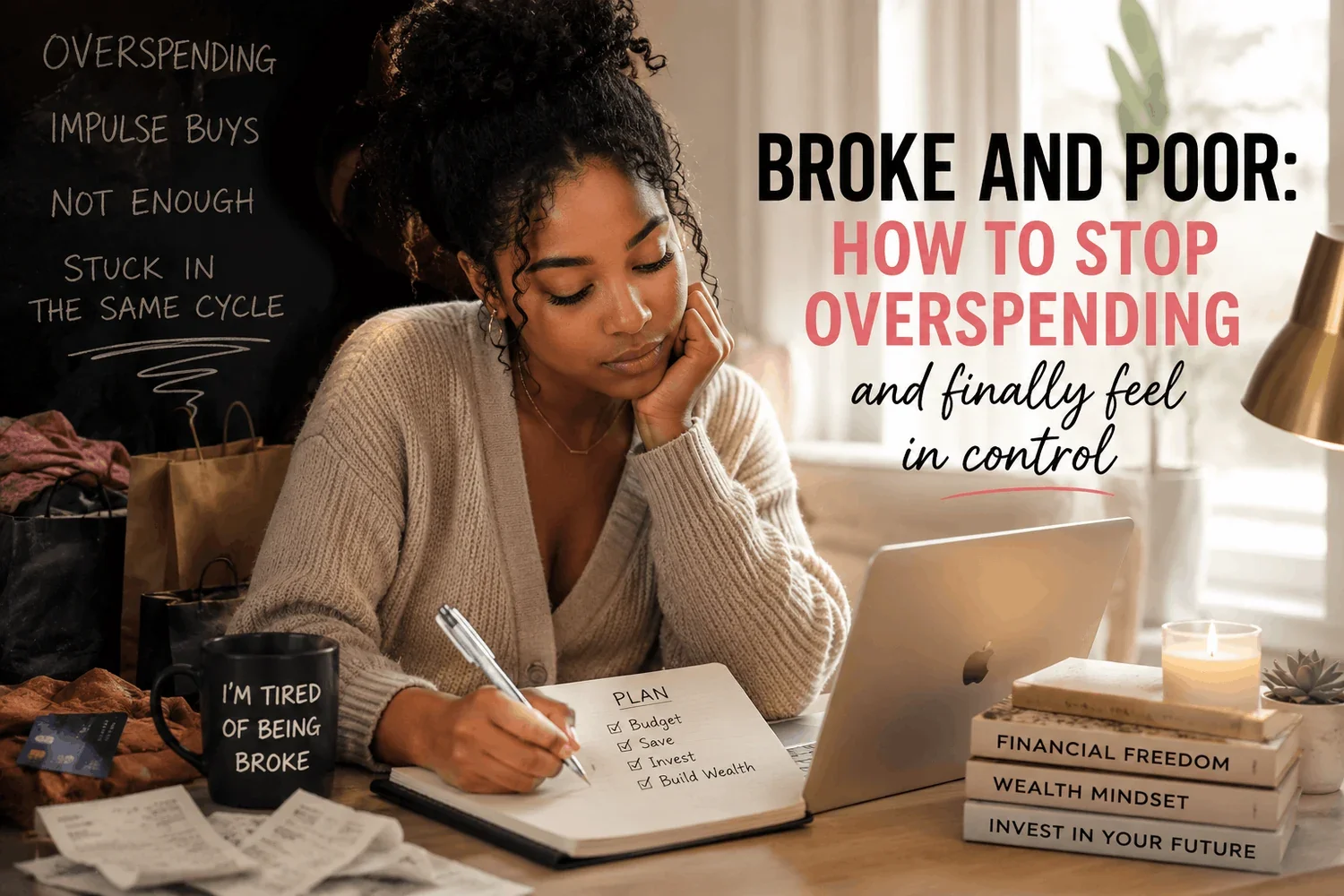
The Emotional Side of Overspending Habits
Overspending habits are rarely just about being irresponsible with money. A lot of the time, they are tied to exhaustion, shame, boredom, loneliness, celebration, or wanting to feel like life is still yours.
You buy the outfit because you’ve been working hard and want to feel beautiful. You order takeout because cooking feels like one more thing you cannot carry. You grab the discounted item because it feels like you’re saving money, even though you never planned to buy it. And in the moment, it does give you something. A small lift. A breath. A feeling of control.
But then the feeling fades, and the financial anxiety returns louder.
This is where things get tender. Because learning how to stop being broke is not only about cutting expenses. It is about becoming honest with the emotional patterns that keep asking your money to soothe what your life has not yet made space to feel.
When “I’m Tired of Being Broke” Becomes a Turning Point
There comes a moment when you stop laughing about being broke and poor and start realizing you want more for yourself. Not in a greedy way. Not in a performative “soft life” way. But in a grounded, deeply human way.
You want to breathe.
You want to have savings that don’t disappear every time life happens. You want to stop feeling embarrassed when your card declines or when you have to say no to plans. You want to make choices from peace instead of panic.
That moment matters. Because it is not just frustration. It is information. It is the part of you that knows survival cannot be the whole story.
How to Stop Being Broke Without Shaming Yourself
The first step is not creating the perfect budget. It is telling the truth without attacking yourself.
Look at where your money has been going, but do it with curiosity. What purchases were made from stress? What spending was connected to wanting approval, comfort, or escape? What subscriptions, discounts, impulse buys, and “little treats” have quietly become part of the reason your money keeps leaving faster than it comes in?
Before calling a purchase a saving, compare it with what you would have spent without the offer. For a hypothetical example, imagine you planned to spend $120 replacing a worn-out coat and find a suitable one for $90, with both amounts including taxes and delivery. That leaves $30 of the planned amount unspent. If you already have a coat you like and buy another just because it is reduced to $90, your spending has increased by $90. Check whether a sale requires buying extra items, too. A useful deal fits something you intended to buy and can afford. The discount itself does not create more room in your budget.
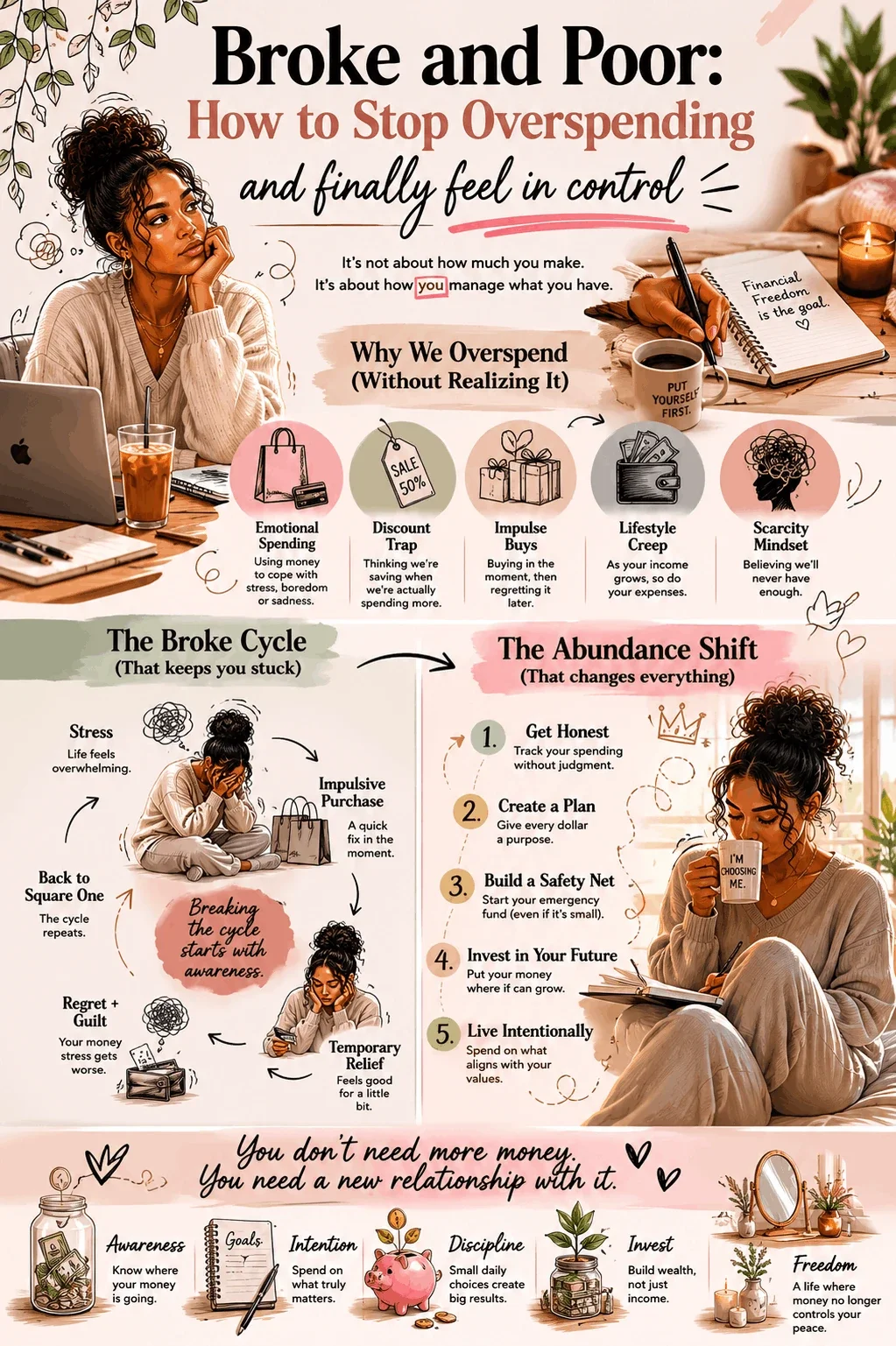
From there, you begin to rebuild. You create a spending plan that reflects your real life, not your fantasy discipline. You give every dollar somewhere intentional to go. You start paying attention before the purchase, not just regretting it after. You build a small emergency fund, even if it starts embarrassingly tiny. You stop confusing restriction with responsibility and start practicing devotion to future you.
Because future you deserves more than leftovers.

The Shift That Actually Changes Things
The real shift happens when you stop seeing money as something that only exists to rescue you at the end of the month. Money becomes something you partner with. Something you direct. Something you respect enough to slow down with.
You can still enjoy your life. You can still buy beautiful things. You can still celebrate, rest, eat well, and have fun. But the question becomes: does this purchase support the life I’m building, or is it helping me avoid the one I’m living?
That one question can interrupt so many overspending habits.
And slowly, you begin to trust yourself again. Not because you became perfect, but because you became present. You stopped abandoning yourself financially. You stopped letting every emotion become a transaction. You started choosing peace in small, repeated ways.
Being broke and poor may be part of your current reality, but it does not have to become the place you build your identity around. You are allowed to want more. You are allowed to learn. You are allowed to outgrow survival mode and create a life where money no longer feels like the loudest source of stress in the room.
Resource to Share
Tired of struggling with the same broke-and‑poor patterns? Download my free Money Mindset E‑Book to learn the mindset shifts that helped me go from constant overdraft fees to $10K months and paying off all my debt. You’ll see how small daily choices add up to long‑term wealth
Product Recommendation From Wellth List
Once you’ve started becoming more aware of your overspending habits, the next step is giving your money somewhere intentional to grow. Wealthsimple can be a gentle starting point if you’re ready to learn about investing, building long-term wealth, and no longer letting every dollar disappear into survival mode.
Further Reading
Continue Exploring Money Mindset, Emotional Spending & Financial Wellness
If you're healing your relationship with money, rebuilding self-worth, and learning how to stop surviving financially, these articles may support you further.
FAQs
Why do I keep overspending even when I know better?
Overspending habits are often emotional before they’re financial. A lot of people spend money to relieve stress, reward themselves after hard days, avoid uncomfortable feelings, or create temporary comfort. Knowing what to do financially and feeling emotionally safe enough to do it are two very different things.
How do I stop being broke when I live paycheck to paycheck?
Start smaller than you think you need to. Most people try to completely overhaul their finances overnight and burn out. Focus on awareness first: track your spending, reduce emotional impulse purchases, and create even a tiny emergency cushion. Consistency matters more than intensity when you’re rebuilding financial stability.
Is being broke and poor the same thing?
Not always. Being broke is often temporary and connected to cash flow. Being poor can involve longer-term systemic financial hardship. But emotionally, both experiences can create exhaustion, shame, fear, and survival thinking. That’s why healing your relationship with money matters alongside improving your income.
Why do discounts and sales make me spend more money?
Discounts trigger urgency and emotional reward systems in the brain. You feel like you’re “saving,” even when the purchase was unnecessary. Over time, constantly chasing deals can normalize impulse spending and reinforce overspending habits that quietly drain your finances.
Can I still enjoy life while trying to save money?
Absolutely. Financial healing should not feel like punishment. The goal is not deprivation — it’s intentionality. Learning how to stop being broke is about creating a life where your spending aligns with what genuinely supports your peace, values, and future.
