
Community Cultural Wealth: Why Collective Wealth Matters
Money isn’t just about numbers—it’s about choices, freedom, and impact. As a wealth coach, I’ve seen firsthand how financial well-being transforms lives. But true wealth isn’t just personal; it’s collective. In this post, we’ll explore why financial freedom is crucial for individuals and how building collective wealth leads to a better, more just world.
Money isn’t just about numbers — it’s about choices, freedom, and impact. As a wealth coach, I’ve seen firsthand how financial wellbeing transforms lives. But over time, I’ve also realized something deeper: true wealth isn’t just personal, it’s collective.
The conversation around money often becomes hyper-focused on individual success. Building your own income. Your own investments. Your own freedom. And while personal financial independence absolutely matters, I think we lose something important when wealth becomes entirely individualistic.
Community cultural wealth reminds us that wealth exists in many forms — not only financially, but socially, emotionally, culturally, spiritually, and collectively. The healthiest communities are often built through support, shared knowledge, mutual aid, opportunity, and collective wellbeing.
The Personal Power of Wealth
When we think of wealth, we often focus on personal success first. And honestly, that makes sense. Having financial stability allows people to meet their needs without constant stress or anxiety. It creates breathing room emotionally, mentally, and physically.
Financial independence benefits almost every area of life. Stability allows people to invest in healthcare, education, wellbeing, therapy, and long-term goals. It gives people more freedom to make choices that align with their values instead of constantly operating from fear or survival mode.
I’ve experienced this personally. By building my financial foundation, I gained the ability to prioritize my wellbeing, choose better healthcare, invest in my passions, and create a life that felt more aligned emotionally and spiritually.
And honestly, I think people underestimate how deeply financial stress impacts mental health, relationships, confidence, and overall wellbeing. This is why wealth matters. Stability creates freedom. But I also don’t think the story ends there.

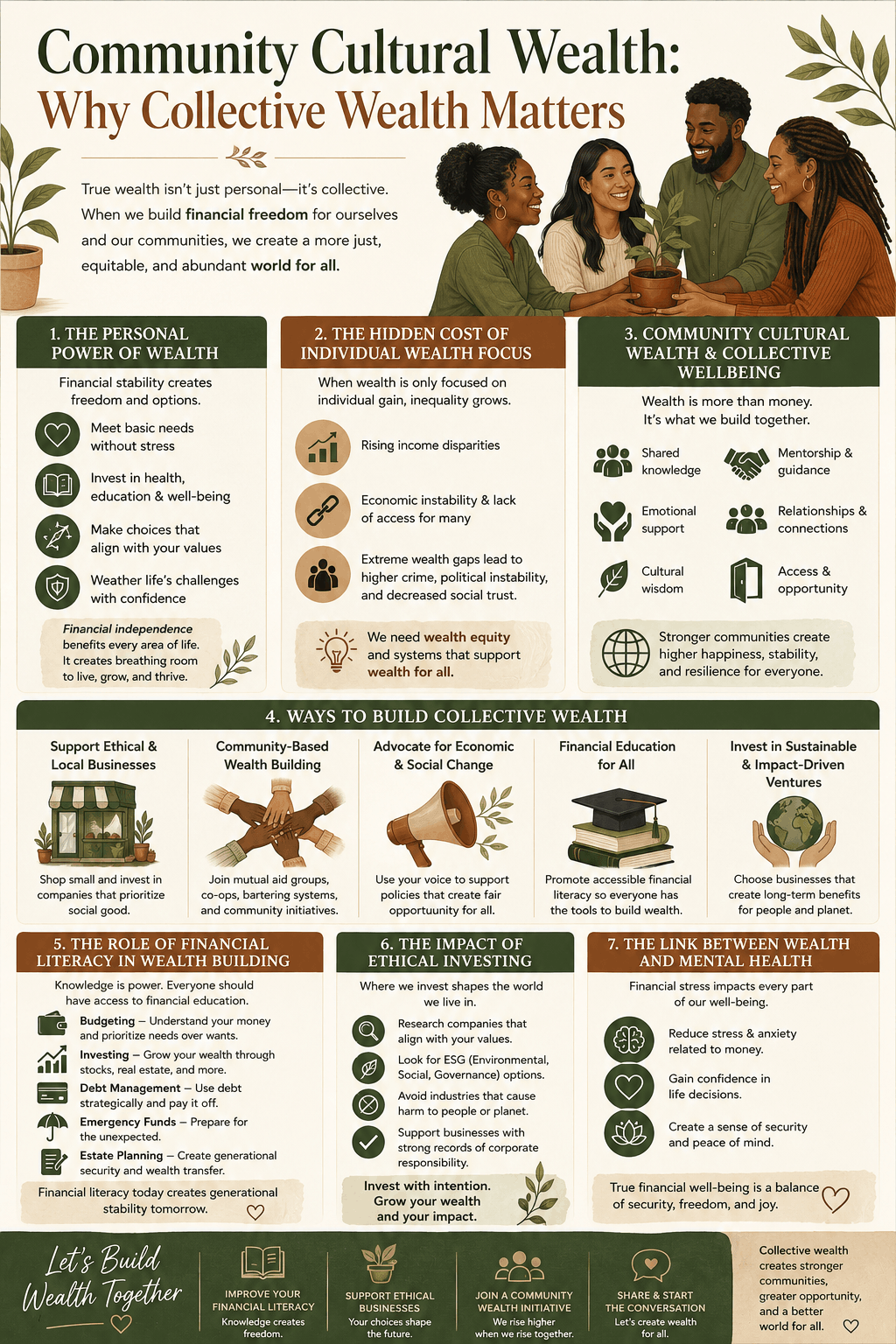
The Hidden Cost of Individual Wealth Focus
While personal wealth is important, focusing only on individual success can deepen societal inequalities over time. We see this reflected in rising income disparities, economic instability, lack of access to healthcare and education, and communities struggling to meet basic needs.
Modern culture often glorifies hyper-individual achievement while ignoring communal wellbeing. We celebrate personal wealth and luxury while many people remain locked out of stability and opportunity entirely.
Research consistently shows that extreme wealth gaps contribute to higher crime rates, lower social trust, political instability, and poorer mental health outcomes overall. And honestly, I think societies suffer when success becomes disconnected from community.
This is why conversations around wealth equity matter so much.
Because wealth for all creates healthier communities than systems where only a small percentage of people have access to security and opportunity.

Community Cultural Wealth and Collective Wellbeing
I think community cultural wealth is such a powerful concept because it expands the definition of wealth itself.
Wealth is not only financial.
It’s shared knowledge.
It’s emotional support.
It’s mentorship.
It’s relationships.
It’s access.
It’s opportunity.
It’s cultural wisdom.
It’s community care.
Communal wealth recognizes that communities become stronger when people are supported collectively instead of forced to navigate survival entirely alone.
We can see this reflected in societies that prioritize healthcare, education, and social safety nets. Nordic countries are often referenced because investments in collective wellbeing tend to create higher trust, stronger economic stability, and healthier overall quality of life.
And honestly, I think many people are craving this kind of collective support. People want healthier systems. People want access to opportunity. People want stability. People want environments where wellbeing feels possible without constant burnout.

The Role of Financial Literacy in Wealth Building
Financial literacy is one of the strongest foundations for both personal and collective wealth. Yet many people grow up without learning the basic financial skills needed to build long-term stability.
Learning how to budget, save, invest, manage debt, and prepare for emergencies can dramatically shift someone’s future. And honestly, I think financial education is one of the most powerful forms of empowerment.
When people understand how money works, they begin making decisions with more confidence and long-term thinking. They stop constantly reacting to financial crisis and start building stability intentionally.
This is why accessible financial education matters so much when we talk about community cultural wealth and wealth equity. Financial knowledge has the power to shift entire family systems and future generations over time.
The Impact of Ethical Investing
Beyond building personal wealth, ethical investing allows us to think more intentionally about the kind of world we’re helping create.
Where we invest matters.
What we financially support matters.
I think many people are becoming increasingly aware of how businesses impact labor conditions, environmental sustainability, healthcare access, housing, and broader community wellbeing.
Ethical investing encourages people to align financial growth with their values. That can look like supporting socially responsible businesses, researching ESG investment options, avoiding exploitative industries, or investing in companies focused on long-term sustainability.
Because collective wealth is not only about accumulating money.
It’s also about creating healthier systems.

The Link Between Wealth and Mental Health
It’s impossible to talk about wealth without discussing emotional wellbeing. Financial stress remains one of the leading causes of anxiety, burnout, relationship strain, and chronic stress.
While money alone does not guarantee happiness, long-term financial instability can deeply affect someone’s sense of safety and emotional stability.
Building wealth can reduce chronic stress, create more peace of mind, and allow people to make healthier long-term decisions.
But honestly, I also think true financial wellbeing requires balance.
Because wealth without community can still feel isolating.
Wealth without purpose can still feel empty.
Wealth without emotional health can still feel unstable.
Community cultural wealth reminds us that our wellbeing is interconnected. Our systems affect each other. Our opportunities affect each other. Our healing affects each other.
Building Collective Wealth Together
True abundance is not built entirely through individual success.
It’s built through collective care, shared opportunity, emotional wellbeing, education, and systems that allow more people to thrive together instead of only a few.
Building collective wealth can happen in both large and small ways. Supporting local businesses, investing ethically, sharing financial education, mentoring others, participating in mutual aid, and advocating for more equitable systems all contribute to stronger communities over time.
And honestly, I think one of the most important mindset shifts we can make is realizing that wealth for all ultimately creates healthier lives for everyone.
Community cultural wealth reminds us that success does not have to come at the expense of others. We can pursue personal financial freedom while also building systems, relationships, and communities rooted in collective wellbeing.
Because real wealth is not only about what we accumulate individually.
It’s also about what we help create together.
Further Reading
Continue Exploring Wealth, Community & Financial Wellness
If you're exploring financial freedom, collective wellbeing, and more intentional ways of building wealth, these articles may support you further.
Free Resource
If you’re trying to build a healthier relationship with money while creating a more abundant and intentional life, download my free Money Mindset E-Book to begin shifting your perspective around wealth, scarcity, and long-term financial wellbeing.
Product Recommendation
One of the most empowering parts of building collective wealth is learning how to grow your money intentionally instead of operating from constant survival mode. I personally love Wealthsimple because it makes investing feel more accessible, beginner-friendly, and aligned with long-term financial growth.
FAQs
What is community cultural wealth?
Community cultural wealth refers to the collective strengths, knowledge, relationships, support systems, and cultural resources that help communities thrive beyond traditional financial measures of wealth.
Why does collective wealth matter?
Collective wealth matters because healthier communities are created when more people have access to opportunity, education, stability, healthcare, and financial resources instead of wealth being concentrated among only a small percentage of people.
What are the benefits of financial independence?
Financial independence benefits include reduced stress, greater freedom in decision-making, improved mental wellbeing, more career flexibility, and the ability to invest in long-term goals, health, and personal growth.
What is communal wealth?
Communal wealth refers to shared resources, collective wellbeing, mutual support systems, financial education, and opportunities that strengthen communities as a whole rather than focusing only on individual financial success.
How can people help build collective wealth?
People can help build collective wealth by supporting ethical businesses, investing in financial education, participating in mutual aid, mentoring others, supporting community initiatives, and advocating for greater wealth equity and access to opportunity.
