
Budgeting Season: The Best Ways to Save Money Throughout the Year
Budgeting season is not just about cutting expenses — it’s about learning how to work with the natural rhythms of your life, spending habits, and financial goals throughout the year. In this reflective guide, Morgan shares seasonal budgeting tips, practical savings strategies, and insights into the best season to save money while building more intentional financial habits long term.
The older I get, the more I realize money habits are deeply connected to seasons — not just literal seasons, but emotional seasons too. Some times of the year naturally invite more spending, while others create opportunities to slow down financially, reset priorities, and become more intentional again.
I think one of the biggest mistakes people make with budgeting is assuming their finances should stay perfectly consistent year-round when life itself is constantly changing. Seasonal budgeting creates flexibility. It helps you prepare ahead for the rhythms of your real life instead of constantly reacting after the money is already gone.
And honestly, I think budgeting season becomes much less stressful when you stop treating budgeting like punishment and start treating it like preparation.

Winter: Managing Comfort Spending During Cold Months
Winter can quietly become one of the most emotionally expensive seasons of the year.
People spend more time indoors. Heating bills increase. Holiday recovery lingers. Emotional spending tends to rise too because colder weather often affects mood, motivation, and energy levels.
And honestly, I think many people underestimate how much “comfort spending” happens during winter.
The takeout orders.
The impulse online shopping.
The delivery apps.
The extra subscriptions.
The cozy purchases that feel harmless individually but slowly add up over time.
Winter can either become a budgeting reset season or a season where financial stress quietly compounds.
One of the healthiest things you can do during budgeting season is become more intentional about comfort spending before it spirals into unconscious habits.
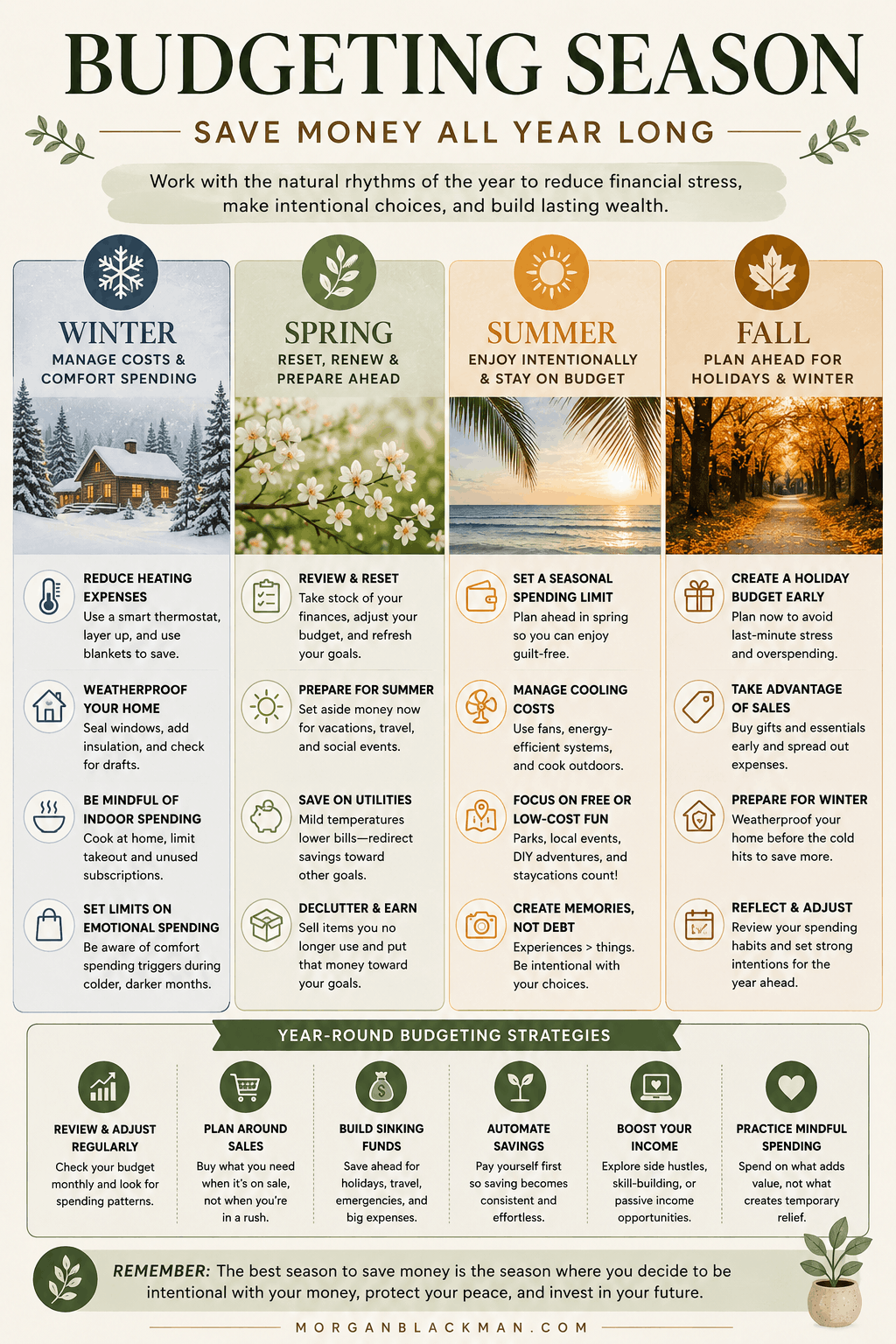
A few practical winter budgeting strategies that genuinely help include:
meal prepping simple comfort meals at home
reducing unused subscriptions
weatherproofing your home to lower heating costs
using programmable thermostats
planning lower-cost social activities
creating a realistic winter grocery budget
setting limits around emotional online shopping
I also think winter is an important season emotionally because it forces people to slow down. And sometimes slowing down reveals financial habits we were too distracted to notice during busier seasons.
The truth is, many people are not only spending for convenience during winter. They’re spending for comfort, stimulation, distraction, or emotional relief.
And honestly, becoming aware of that without shaming yourself is part of financial healing too.
Because budgeting season is not only about reducing expenses.
It’s about understanding why certain seasons affect your spending habits differently in the first place.

Spring: A Season for Financial Fresh Starts
Spring always feels like a financial reset season to me.
There’s something about warmer weather, longer days, and renewed energy that naturally creates momentum for change. With moderate weather reducing heating and cooling expenses, spring can create a little more breathing room financially.
This is one of the best seasons to save money intentionally because it allows you to prepare ahead for summer spending before it actually arrives.
Spring budgeting can look like:
reviewing your financial goals
reorganizing your budget
paying down debt more aggressively
rebuilding savings
decluttering and selling unused items
preparing a summer spending plan early
One thing I think people underestimate is how powerful small financial resets can become over time. Spring gives you the opportunity to review where your money has been going without waiting until financial stress becomes overwhelming.
It’s also the perfect season to reset subscriptions, reevaluate unnecessary spending, automate savings, and revisit long-term goals.
And honestly, I think spring is one of the most overlooked opportunities for financial growth because people often wait until they’re already overwhelmed before making adjustments.

Summer: Balancing Fun and Financial Responsibility
Summer is beautiful, but it can also become financially chaotic very quickly.
Vacations. Patios. Festivals. Travel. Weekend plans. Social spending.
Especially in colder climates like Canada, summer often carries emotional urgency because people want to maximize every warm moment before winter returns.
And honestly, I understand that deeply.
But I also think summer spending becomes dangerous when people confuse enjoying life with abandoning financial boundaries entirely.
One of the healthiest things you can do during budgeting season is create a dedicated summer spending category before summer even starts. That way you can enjoy experiences intentionally without constantly feeling guilty afterward.
A few realistic summer budgeting strategies that genuinely help include setting a seasonal spending limit early, using travel rewards strategically, prioritizing free outdoor activities, planning local experiences instead of constant expensive outings, cooking outdoors more often to reduce food costs, and limiting impulsive social spending.
And honestly, I think financial wellness becomes much more sustainable when enjoyment and responsibility stop feeling emotionally opposite to each other.
You can enjoy your life and still protect your future.

Fall: Planning for the Holidays and Beyond
Fall is probably one of the best seasons to save money strategically because it sits right before some of the most expensive months of the year.
Holiday shopping. Travel. Family obligations. Winter expenses. End-of-year burnout spending.
This is the season where preparation matters most.
And honestly, I think many people create unnecessary financial stress during the holidays simply because they start planning too late.
Fall budgeting can help reduce so much future anxiety.
This season is ideal for creating a holiday budget early, spreading out gift purchases gradually, building emergency savings before winter, weatherproofing your home before utility costs rise, and taking advantage of seasonal sales intentionally instead of impulsively.
I also think fall is a powerful season for reflection financially.
As the year begins slowing down, it becomes easier to evaluate what habits actually supported your wellbeing and which ones quietly drained your finances.
Year-Round Budgeting Strategies
Seasonal budgeting works best when paired with flexible long-term habits instead of perfectionism.
A few strategies that genuinely help year-round include reviewing your spending monthly, preparing ahead for predictable seasonal expenses, building sinking funds for holidays, travel, and emergencies, planning purchases around seasonal sales intentionally, automating savings where possible, boosting income through side hustles or skill-building, and practicing mindful spending instead of reactive spending.
I also think one of the healthiest financial habits is learning how to anticipate your emotional spending triggers throughout the year.
Winter can trigger comfort spending. Summer can trigger comparison and social pressure. The holidays can trigger guilt or over-giving.
Understanding those patterns helps you budget with more honesty and compassion instead of shame.
Because budgeting season is not only about numbers.
It’s about awareness.
And honestly, I think the best season to save money is ultimately the season where you finally decide to become intentional with it.
Not perfect. Not restrictive. Just more conscious about where your money is going and whether it’s supporting the life you’re genuinely trying to build.
Because real financial wellness is not about never enjoying your life.
It’s about creating a life where your money supports your peace instead of constantly contributing to your stress.
Further Reading
Continue Exploring Budgeting, Saving & Financial Wellness
If you're trying to build healthier money habits, reduce financial stress, and become more intentional with spending, these articles may support you further.
Free Resource
If you’re trying to build healthier financial habits and stop feeling overwhelmed every season financially, download my free Money Mindset E-Book to learn practical mindset shifts that support long-term financial wellness and intentional spending.
Product Recommendation
One of the biggest things that helped me financially was learning how to plan ahead instead of constantly reacting to money stress. I personally love Wealthsimple because it makes saving and investing feel more approachable while helping you build long-term financial stability over time.
FAQs
What is budgeting season?
Budgeting season refers to periods throughout the year when people become more intentional about managing money, adjusting expenses, and preparing financially for upcoming seasonal changes and life events.
What is the best season to save money?
Honestly, the best season to save money depends on your lifestyle and spending habits. Many people find spring and fall ideal because utility costs tend to stabilize, making it easier to focus on savings, debt repayment, and future financial planning.
Why does seasonal budgeting matter?
Seasonal budgeting helps people prepare ahead for predictable expenses like holidays, travel, heating bills, and social spending instead of constantly reacting financially after the money is already spent.
How can I budget better during expensive seasons?
Planning ahead is one of the most effective strategies. Creating seasonal spending categories, building sinking funds, reducing emotional spending, and anticipating high-cost periods early can help reduce financial stress significantly.
How do emotional spending habits affect budgeting?
Emotional spending habits often increase during certain seasons due to stress, loneliness, social pressure, burnout, or comfort-seeking behaviors. Understanding your emotional spending triggers can help you build healthier long-term financial habits.
