
How a Broke Mindset Around Your Insecurities Keeps You Financially Stuck
A broke mindset is not always about income. Sometimes it’s deeply connected to insecurity, emotional survival patterns, and money mindset blocks that quietly shape the way we spend, save, and seek validation. In this reflective article, Morgan explores the emotional roots of financial habits and the connection between self-worth and long-term financial wellbeing.
Nobody is exempt from financial struggles. It’s easy to blame external circumstances or other people for being broke or financially overwhelmed. And while systemic barriers absolutely exist, I also think many of our financial struggles are deeply connected to the emotional patterns we carry internally.
A broke mindset is not always about how much money someone makes. Sometimes it’s about the insecurities, fears, and money mindset blocks quietly shaping their financial decisions every single day.
We live in a society that constantly ties worthiness to appearance, status, productivity, and material success. If we feel like we don’t meet those standards, insecurity starts growing underneath the surface. And often, instead of healing those insecurities directly, people try to spend their way out of them.
That’s where the cycle begins.
How Insecurities Shape Your Financial Decisions
I think many spending habits are emotional before they are financial.
People spend because they want relief.
Because they want validation.
Because they want to feel accepted.
Because they’re dealing with insecurities they haven’t fully processed yet.
Our insecurities often come from lived experiences that slowly evolve into limiting beliefs. For me, much of this started in childhood. I spent years feeling insecure about my appearance after being bullied for being overweight and not fitting conventional beauty standards.
When I got my first part-time job, I earned around $20,000 in one year. But honestly, I had almost nothing to show for it financially. My insecurities drove so much of my spending. Synthetic weaves. Makeup. Clothes. Constant purchases that I believed would somehow make me feel more accepted, attractive, or “good enough.”
At the time, I didn’t fully understand what was happening emotionally. I just knew spending temporarily relieved the discomfort I felt inside myself.
And honestly, I think many people are doing the same thing in different ways.
Some people overspend to look successful.
Some overspend to feel lovable.
Some overspend because they’re afraid of being judged.
Some overspend because consumption temporarily numbs emotional pain.
A broke mindset often grows from these deeper emotional wounds long before it shows up financially.
The Link Between Money Mindset Blocks and Self-Worth
One of the hardest things about money mindset blocks is that they rarely sound irrational while you’re living inside them.
For years, I genuinely believed I was not attractive enough without makeup or external enhancements. That belief shaped my spending habits constantly. Looking back now, I can see how much money I spent trying to avoid rejection, insecurity, and shame instead of actually healing the root issue.
And honestly, I think many people carry similar beliefs financially.
They believe:
they need luxury items to feel respected
they need status symbols to feel successful
they need external validation to feel worthy
they need to “look rich” even while financially struggling
But insecurity is expensive.
Especially when it quietly controls your financial decisions for years.
It wasn’t until I started working on self-love and emotional healing that my relationship with money truly began changing. Once I stopped tying my worth entirely to external validation, I could finally see money differently. Savings started feeling more valuable than temporary approval. Long-term peace started mattering more than short-term image management.
And honestly, that mindset shift changed everything.
How Society Profits From Your Insecurities
I think it’s important to recognize that modern marketing thrives on insecurity.
Entire industries make money convincing people they are not attractive enough, successful enough, productive enough, wealthy enough, or desirable enough exactly as they are.
Society constantly pushes the idea that success should look expensive.
The latest car.
The designer labels.
The luxury apartment.
The bigger house.
The hyper-curated lifestyle online.
But many people are quietly drowning financially trying to maintain appearances they can’t actually afford.
And honestly, I think social media has intensified this pressure significantly.
People compare their real financial lives to carefully curated online performances every single day. That comparison creates more insecurity, more emotional spending, and more money mindset blocks around worthiness and success.
This is why dealing with insecurities is not separate from financial wellness.
It’s directly connected to it.

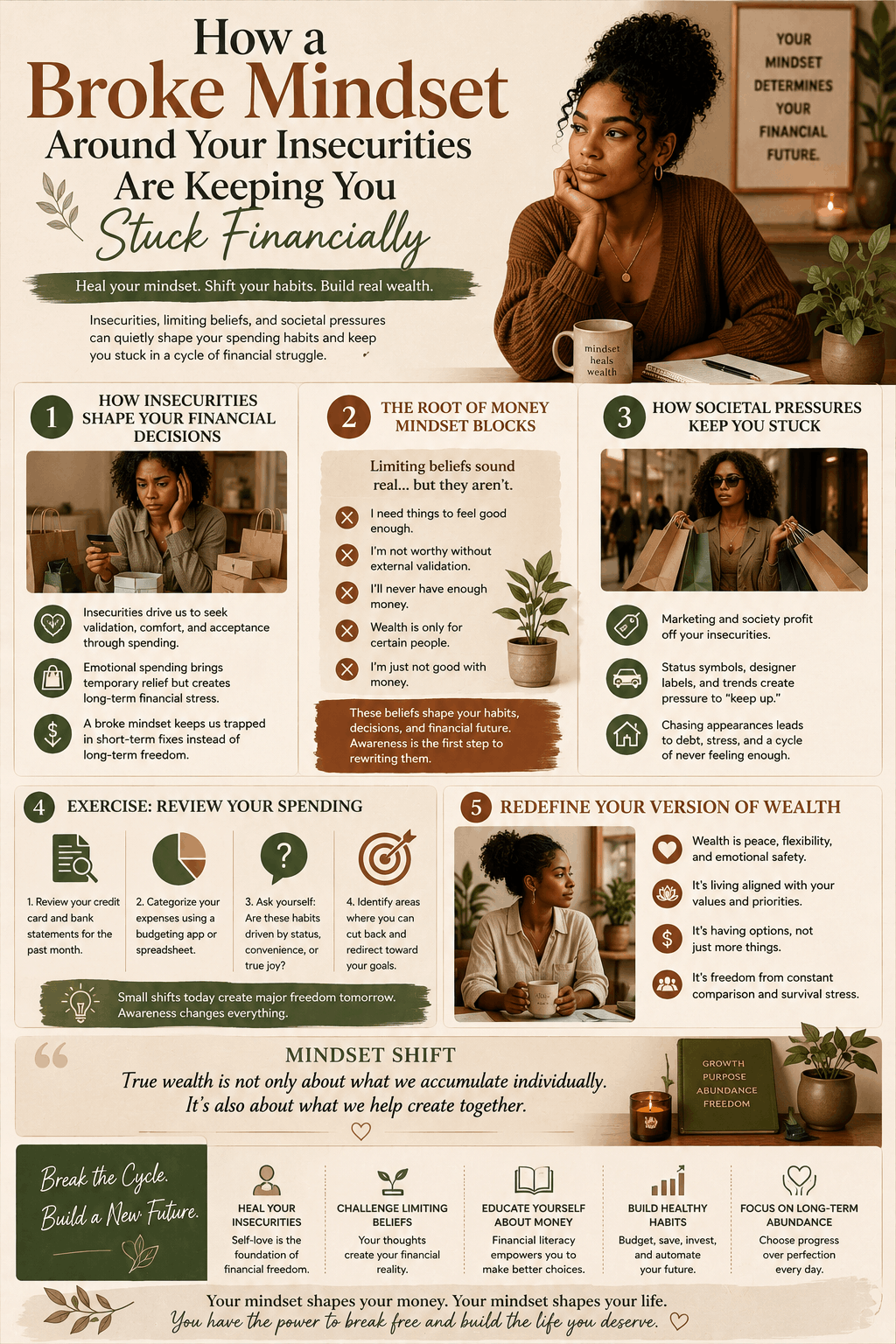
Review Your Spending With Honesty Instead of Shame
I think one of the healthiest financial exercises people can do is simply becoming more honest about why they spend.
Not judgmental.
Not ashamed.
Just honest.
Review your recent bank statements or credit card purchases and gently ask yourself:
Was this purchase aligned with my actual values?
Did this genuinely improve my life?
Or was I seeking temporary validation, comfort, distraction, or emotional relief?
Sometimes the answers can feel uncomfortable.
But awareness creates change.
And honestly, I think financial healing starts when people stop judging themselves long enough to understand themselves.
Because once you understand the emotional patterns underneath your spending habits, you finally gain the ability to make different choices.
Redefining Wealth Beyond External Validation
I think one of the biggest mindset shifts in my own financial journey was realizing that true wealth had very little to do with appearances.
Real wealth is peace.
It’s flexibility.
It’s emotional safety.
It’s having options.
It’s freedom from constant survival stress.
It’s alignment between your values and your financial decisions.
And honestly, I think many people spend years chasing the appearance of wealth while neglecting the actual feeling of stability.
A broke mindset keeps people trapped in short-term emotional relief instead of long-term wellbeing.
But healing changes that.
When you stop comparing yourself constantly, stop outsourcing your worth to external validation, and start building a healthier relationship with yourself, your financial decisions begin changing naturally too.
Because lasting abundance rarely begins with money first.
It usually begins with self-worth.
Further Reading
Continue Exploring Money Mindset & Financial Wellness
If you're healing your relationship with money, self-worth, and emotional spending habits, these articles may support you further.
Free Resource
If you’ve been struggling with emotional spending, insecurity, or money mindset blocks, download my free Money Mindset E-Book to start building a healthier relationship with wealth, self-worth, and long-term financial wellbeing.
Product Recommendation
One of the biggest mindset shifts in my financial journey was learning how to focus on long-term stability instead of short-term validation. I personally love Wealthsimple because it helped make saving and investing feel less intimidating and more aligned with building real financial peace over time.
Start Investing With Wealthsimple
FAQs
What is a broke mindset?
A broke mindset is a pattern of thinking rooted in fear, scarcity, insecurity, and limiting beliefs around money. It often affects financial decisions, spending habits, self-worth, and long-term financial wellbeing regardless of someone’s income level.
How do insecurities affect spending habits?
Insecurities can lead people to overspend on things that provide temporary validation, comfort, status, or emotional relief. Emotional spending is often connected to deeper feelings of inadequacy, comparison, rejection, or low self-worth.
What are common money mindset blocks?
Common money mindset blocks include beliefs like:
“I’ll never have enough money”
“I need to look successful to be respected”
“Wealth is only for certain people”
“I’m bad with money”
“My worth depends on my appearance or status”
These limiting beliefs can quietly shape financial habits for years.
How can I start healing a broke mindset?
Healing a broke mindset often starts with self-awareness, emotional healing, and financial honesty. Understanding the emotional reasons behind spending habits can help people build healthier relationships with money, self-worth, and long-term financial goals.
Why is self-worth connected to financial wellness?
Self-worth influences how people spend, save, invest, negotiate, and make financial decisions. When someone constantly seeks external validation, they may prioritize appearances over long-term stability. Building self-worth often creates healthier financial habits naturally.
