
Money Is Energy: A Practical Guide to Financial Flow
Last Updated: May 10, 2026
What does it mean that money is energy?
Money is energy because it represents a stored form of value and human effort intended for exchange. Like electricity, money’s power lies in its movement and flow. When you view money as an energetic resource rather than a finite object, you can shift your mindset to attract and manage it more effectively. Money behaves like energy, flowing where attention, systems, and beliefs align. By shifting your mindset, regulating your nervous system, and creating supportive financial habits, you can reduce resistance and allow money to move more freely in your life.
I wanted to talk about money being an energy because it’s a conversation I’ve been seeing in spiritual and wellness spaces for years now. And honestly, it can become a very heated topic because people often feel forced to choose between material reality and spirituality, as if the two cannot coexist together.
But we are material beings living a human experience.
We cannot completely dismiss the real tangible things we need in order to survive. We need shelter. We need food. We need healthcare. We need safety. So when people try to avoid conversations around money, materialism, or financial wellbeing entirely, I honestly think we rob ourselves of learning how to create balance between the spiritual and physical aspects of life.
And I think that balance matters deeply.
Because money exists physically. We can see it in our bank accounts. We can hold cash in our hands. We can quantify it. But our emotional relationship with money — the way we feel about it, fear it, avoid it, chase it, or receive it — is deeply energetic too.
That part is impossible to separate.
Understanding Money Beyond the Physical
I think one of the biggest reasons people struggle with the phrase “money is energy” is because they assume it dismisses the practical realities of finances entirely. But honestly, I don’t believe money is only energy. Money is both material and energetic.
Physically, money is a resource we use to survive and exchange value. We use it to buy food, pay rent, build homes, travel, support our families, and create stability. Whether it exists as physical cash or digital currency sitting inside our online bank accounts, money functions as a tool for exchange in our society.
But energy is different. Energy is not something we can necessarily hold in our hands. It’s something we feel. It’s movement. It’s emotional frequency. It’s the atmosphere you feel when you walk into a room after people have been fighting. It’s the calmness you feel sitting near the ocean. It’s the heaviness grief leaves behind in certain spaces.
Even though we cannot physically see energy, we experience it constantly. And honestly, money carries emotional energy too. Fear, stress, safety, freedom, shame, anxiety, relief, and expansion all become attached to the way we experience money over time.
People often think their financial decisions exist separately from their emotions, but that’s simply not true. The way someone feels about money affects the way they spend, save, invest, negotiate, receive opportunities, and even believe they deserve abundance in the first place.
Everything Is Exchange
One thing I kept reflecting on while recording my video on this is how much of life revolves around exchange. Sometimes the exchange is financial. Sometimes it’s emotional. Sometimes it’s energetic. Sometimes it’s relational.
When someone gives you a thoughtful birthday gift, what are they really exchanging? Maybe they’re exchanging gratitude for your friendship. Maybe they’re exchanging love, appreciation, care, or reciprocity. The object itself matters less than the energy behind it.
And honestly, I think we miss abundance because we’re constantly reducing wealth down to numbers alone. We think abundance only exists once we hit six figures, buy the house, or reach the savings goal. But abundance exists in so many forms beyond money itself.
It exists in supportive relationships. It exists in time freedom. It exists in emotional safety. It exists in health, community, creativity, opportunities, and having people who genuinely care about you. That doesn’t mean financial wealth stops mattering. It simply means wealth is larger than money alone.
Why So Many People Feel Financially Stuck
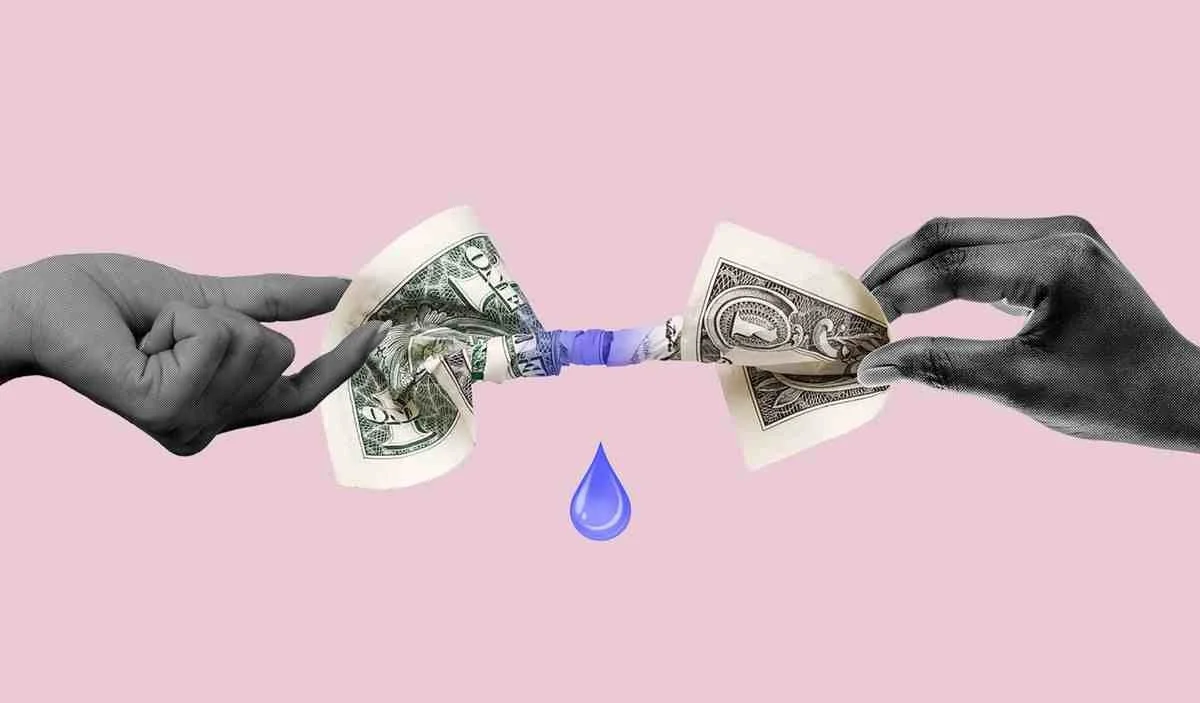
I also think modern society trains people to focus obsessively on lack. What we don’t have. What we haven’t achieved yet. What we’re behind on. What someone else has that we don’t.
And honestly, scarcity changes the way people experience life emotionally. When someone constantly feels behind, unsafe, unsupported, or financially trapped, it becomes difficult to notice opportunities, creativity, support, or abundance around them.
That’s part of why mindset matters. Not because positive thinking magically pays bills, but because perception affects behavior. The way people emotionally interpret their circumstances influences the risks they take, the opportunities they pursue, the relationships they build, and the decisions they make long term.
As a holistic wealth coach, one thing I challenge my clients to reflect on is this: where does abundance already exist in your life? Because when people begin noticing abundance beyond materialism alone, they often stop operating from constant panic and survival mode. And from that grounded place, it becomes easier to think strategically, receive support, and create healthier financial habits.
Money Exists Beyond Cash
One of the examples I shared in the video was about someone whose car breaks down. Let’s say they don’t currently have the money to repair it, but they have a friend willing to drive them to work every morning until they get back on their feet.
That support has value. That exchange matters. That is still a form of wealth being shared.
The person receiving help is saving transportation costs, stress, and emotional overwhelm. The person helping may feel fulfillment, connection, generosity, or appreciation in return. Both people are participating in energetic exchange even if physical cash never changes hands.
We’ve all heard the phrase “time is money,” but honestly, time may be even more valuable. We exchange our time, labor, emotional support, creativity, care, mentorship, knowledge, and presence constantly throughout life. Money is only one form of exchange among many.

The Relationship Between Burnout & Wealth
I think one of the most important parts of this conversation is recognizing that not every financial exchange is actually healthy. Someone can make six figures while completely destroying their nervous system in the process.
Someone can be financially successful while emotionally exhausted, disconnected from their relationships, physically burnt out, and deeply unhappy. And honestly, I think that’s one of the biggest flaws in how society defines wealth.
Because if money comes at the cost of your health, peace, relationships, or emotional wellbeing, then the energetic exchange is deeply imbalanced. This is why I constantly talk about maximizing abundance rather than simply maximizing income.
Real wealth includes emotional wellbeing, physical health, time freedom, meaningful relationships, purpose, nervous system safety, fulfillment, community, and peace. Money matters, but quality of life matters too.

Gratitude Changes Your Relationship With Wealth
At one point in the video, I looked outside at the palm trees and ocean view surrounding me and honestly became emotional thinking about how many people pray for moments like that. Not because luxury itself defines abundance, but because I realized how supported I felt in that moment.
I didn’t have to beg life for that experience. I didn’t have to completely abandon myself to access it. I simply felt grateful.
And honestly, gratitude changes the way people experience wealth. Not fake toxic positivity. Not pretending struggles don’t exist. Not bypassing real systemic issues. But genuine gratitude for what is already present.
Breath. Health. Friendship. Safety. Rest. Love. Possibility. Those things matter too.
The Systems Around Money Matter Too
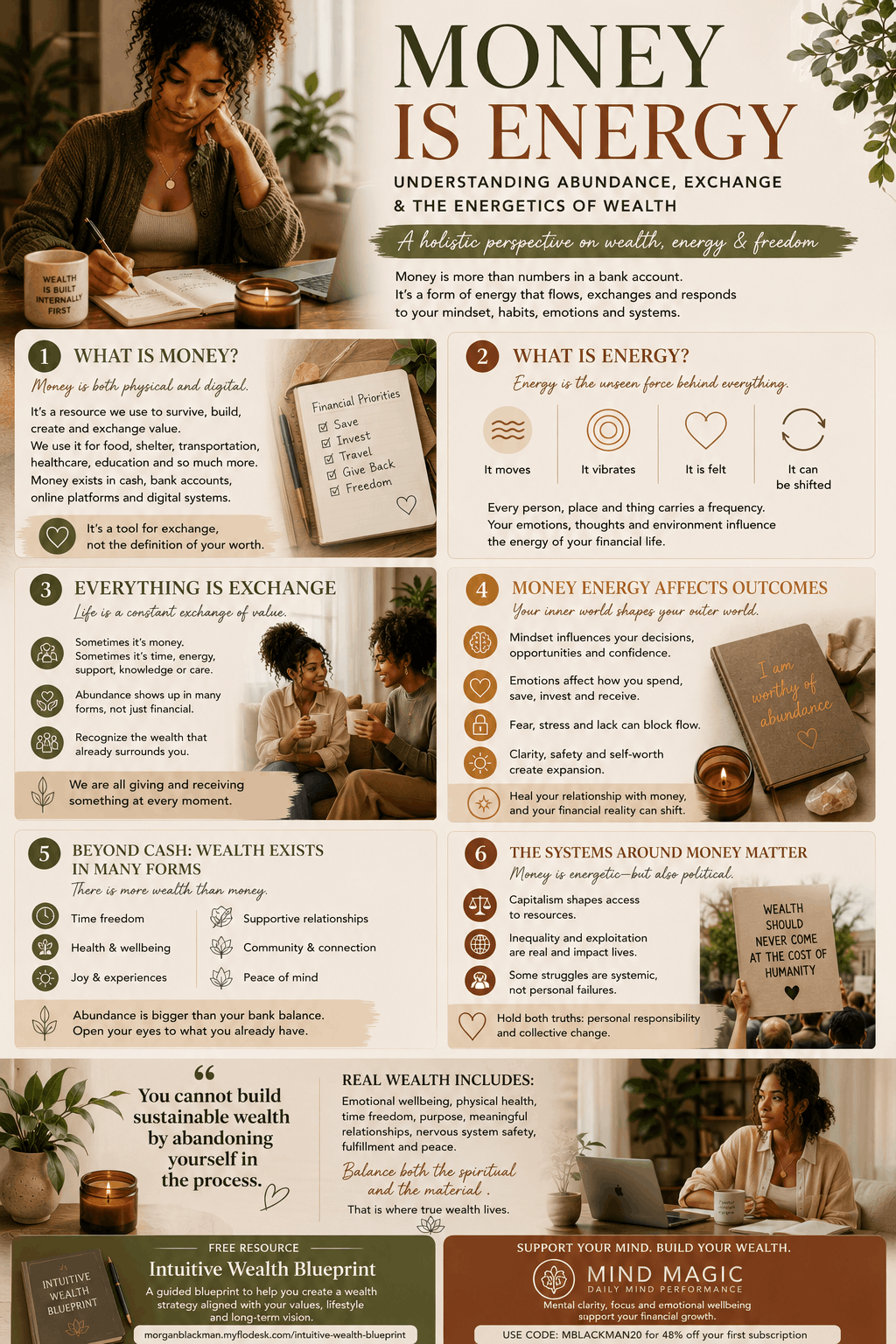
At the same time, I also think it’s important not to spiritualize money so much that we ignore systemic realities. Capitalism absolutely shapes access to resources. Wealth inequality exists. Exploitation exists. Poverty exists. Certain communities are intentionally denied access to opportunities and resources every single day.
And honestly, this is where conversations around “money is energy” can become harmful if they completely ignore structural realities. Because some people are not struggling financially due to mindset alone. Systems matter. Policies matter. Access matters. Generational inequality matters.
There are resources on this earth that should belong to everyone collectively — clean water, food, housing, safety, healthcare — yet many people are forced to fight for basic survival because of the systems we live within.
So yes, money is energy. But it is also political. It is structural. It is social. It is emotional. It is material. All of those realities can exist simultaneously.

Reclaiming Wealth On Your Own Terms
The older I get, the more I realize this conversation is really about reclaiming wealth beyond society’s narrow definitions.
Because if your entire sense of worth depends on the numbers in your bank account, you will probably never feel fully abundant. There will always be another milestone. Another comparison. Another financial target to chase.
But when you begin understanding abundance as something larger than materialism alone, something shifts internally. You start recognizing your resilience, your creativity, your relationships, your ability to adapt, your emotional growth, and your connection to life itself.
And honestly, that shift changes the way people move through the world financially too. Not because money magically falls from the sky, but because grounded people often make clearer decisions. They notice opportunities differently. They stop operating entirely from fear. They become more intentional about the way they exchange their time, energy, and resources.
Money is energy. But it’s also so much more than that.
And I think learning how to hold both truths at the same time is where real wisdom begins.
Further Reading
Continue Exploring Abundance, Money Mindset & Wealth Healing
If you're exploring abundance, emotional healing, money mindset shifts, and creating a healthier relationship with wealth, these articles may support you further.
Free Resource
If you’ve been trying to heal your relationship with money, shift scarcity thinking, and build wealth in a way that feels emotionally aligned, download my free Intuitive Wealth Blueprint. It’s designed to help you create a healthier, more intentional relationship with abundance, financial wellness, and long-term wealth building.
Affiliate Product Recommendation
One thing I’ve realized over time is that mindset, emotional regulation, and nervous system support deeply affect the way we experience money. When your mind is overwhelmed, anxious, or constantly operating in survival mode, it becomes harder to think clearly, make intentional financial decisions, and build sustainable wealth.
That’s one of the reasons I genuinely enjoy Mind Magic. It supports mental clarity, focus, emotional wellbeing, and nervous system balance in a way that feels supportive rather than performative. Especially for entrepreneurs, creatives, and people doing deep mindset work, having tools that support both emotional and cognitive wellness can make a huge difference long term.
If you want to support your mindset, focus, and overall wellness journey while building wealth more intentionally, you can check out Mind Magic and use my code MBLACKMAN20 for 48% off your first subscription.
FAQ: Money Is Energy
Is money really energy?
I think when people say “money is energy,” they sometimes misunderstand what that actually means. It doesn’t mean money magically appears through positive thinking alone or that financial systems and economic realities suddenly disappear. What it does mean is that money often reflects patterns of exchange, behavior, attention, emotional regulation, and trust.
Money tends to flow toward systems, relationships, skills, opportunities, and environments where value is consistently created and sustained. The way we think about money, emotionally respond to it, avoid it, fear it, or engage with it absolutely affects the financial decisions we make long term. In that sense, money behaves very similarly to energy — it moves, circulates, contracts, expands, stagnates, and responds to patterns.
How do you improve your money energy?
Improving your money energy often starts with improving your relationship with money itself. Many people unknowingly carry shame, fear, scarcity, avoidance, or anxiety around finances, especially if they experienced instability growing up. Those emotional patterns can quietly influence everything from spending habits to career decisions to investment behavior.
I think improving your money energy requires both emotional and practical work. That can look like learning financial literacy, creating healthier money habits, regulating your nervous system around financial stress, setting clearer goals, increasing self-worth, and building systems that support consistency rather than chaos. The goal is not perfection. It’s creating a relationship with money that feels safer, more intentional, and more sustainable over time.
Why does money feel blocked sometimes?
Money often feels blocked when there’s misalignment happening internally or externally. Sometimes people deeply desire financial freedom, but their behaviors, habits, relationships, or belief systems are still operating from fear, self-sabotage, or survival mode. Other times, the issue is more practical — unclear financial systems, inconsistent income strategies, burnout, debt overwhelm, or lack of financial education.
I also think emotional exhaustion plays a much larger role than people realize. When someone is chronically stressed, dysregulated, or burnt out, it becomes harder to think strategically, make long-term decisions, take healthy risks, or remain consistent financially. Sometimes the “block” is not laziness or failure. Sometimes it’s nervous system overwhelm, fear of instability, or emotional conditioning around worthiness and security.
Can changing your mindset really increase income?
Yes, but probably not in the overly simplistic way social media sometimes frames it.
Mindset alone does not replace strategy, education, opportunity, access, or action. However, mindset absolutely influences behavior, confidence, decision-making, resilience, and the opportunities people are willing to pursue. Someone who believes they are capable of growth is often more likely to negotiate higher pay, start a business, invest consistently, apply for opportunities, develop skills, or recover after setbacks.
I think money mindset shifts become powerful when they lead to behavioral changes. The combination of emotional healing, strategic action, financial literacy, and consistency is usually what creates long-term financial growth.
What does “money is energy” actually mean?
At its core, “money is energy” describes the relationship between value, exchange, emotion, attention, and movement. Money rarely exists in isolation. It flows through relationships, systems, labor, businesses, creativity, investments, and opportunities.
I think many people begin understanding this concept more deeply once they notice how emotional states affect financial behavior. Fear can create avoidance. Scarcity can create impulsive decisions. Confidence can create expansion and opportunity. Emotional regulation often affects financial regulation more than people realize.
Can trauma affect your relationship with money?
Absolutely. Financial trauma can shape spending habits, saving behaviors, risk tolerance, emotional regulation, and feelings of safety around money. People who grew up around instability, debt, financial stress, or unpredictability often carry those emotional patterns into adulthood without realizing it.
This is why financial healing is rarely only about numbers. Sometimes people need emotional safety before they can build financial consistency. Healing your relationship with money may involve therapy, nervous system work, mindset shifts, healthier boundaries, financial education, or simply learning how to feel safer receiving, saving, and managing money over time.
Why do some people struggle to hold onto money?
Sometimes the issue is not earning money — it’s sustaining it. People can unconsciously recreate financial instability through overspending, avoidance, emotional spending, undercharging, inconsistent habits, or fear-based decision making.
I think this is why wealth building requires more than temporary income increases. Sustainable wealth often requires emotional regulation, long-term thinking, supportive systems, and healthier financial habits. Otherwise people can remain trapped in cycles of earning and losing money repeatedly.
Does your nervous system affect wealth building?
I honestly think this conversation is still massively underrated.
Your nervous system affects how safe you feel with uncertainty, growth, visibility, investing, receiving money, and long-term planning. If someone’s body associates money with stress, instability, conflict, or fear, financial growth can feel emotionally unsafe even when it’s desired consciously.
This is why slowing down, regulating stress, creating stability, and building healthier emotional patterns can indirectly support financial growth too. Wealth building is not only mathematical. It’s emotional, behavioral, psychological, and relational as well.
