
Saving money should not feel like constantly shrinking your life. In this guide, Morgan shares realistic ways to save money, healthier money-saving habits, and emotionally sustainable financial strategies that help you build stability without living in constant restriction or financial anxiety.
There’s a version of saving money that feels calm, grounded, and sustainable.
And then there’s the version most people are taught.
The hyper-restrictive budgeting.
The guilt every time you buy coffee.
The endless messaging that saving money means cutting away every tiny joy until your life feels emotionally grey.
I honestly think that’s why so many people struggle with saving long term. Not because they’re incapable, but because they associate financial wellness with punishment.
And eventually, punishment becomes exhausting.
I’ve noticed that when people search for ways to save money, they’re often not just asking how to spend less. They’re asking how to finally feel safe. Stable. Less anxious every time an unexpected expense appears. Less emotionally reactive with money. Less trapped in cycles of overdraft fees, impulsive spending, and financial stress quietly humming in the background of everyday life.
Because saving money is not only practical.
It’s emotional too.

Why Saving Money Feels So Hard Sometimes
I think one of the biggest misconceptions around saving money is that people assume financial habits exist in isolation from emotional wellbeing.
But honestly, many spending habits are emotional survival habits first.
People spend because they’re overwhelmed.
Because they’re burned out.
Because they want comfort after difficult days.
Because they’re trying to feel successful, secure, included, or temporarily relieved from stress.
And modern life does not exactly encourage intentional spending either. Everywhere you look, there’s another ad convincing you that happiness, confidence, productivity, beauty, or rest is one purchase away.
So if saving money has felt difficult for you, it does not automatically mean you’re irresponsible. Sometimes it simply means you’ve never been taught how to feel emotionally safe enough to slow down with money.
15 Ways to Save Money That Actually Feel Sustainable
1. Create a Budget That Reflects Your Real Life
A budget should support your life, not shame you for living it.
I think one of the reasons people abandon budgeting so quickly is because they create unrealistic versions of themselves on paper. Suddenly they expect themselves to never eat out, never travel, never buy anything fun, and maintain perfect discipline forever.
That’s not sustainable.
A healthier budget creates structure while still allowing room for joy, rest, and flexibility.
I use a savings-first approach. I treat savings as a bill, so planned savings and debt payments have a place in the budget before fun spending. They’re commitments toward your goals, rather than something you hope to fit in at the end. The amount still needs to work alongside essentials and required payments. If a savings target would leave you short for groceries or a bill, adjust the target to what you can actually manage.
Then I keep my fun spending separate. I use a KOHO spending account, and at the end of the month I transfer what I have left for fun into that account for the next month. The amount might be $100, $200, or $300, depending on what’s available. Around $300 feels like more than enough for me. I might use it for dining out, seeing friends, a movie, a concert, or treating myself. Your amount may look different; it needs to fit your numbers and what you enjoy.
That’s why I want you to have an idea of what enough looks like for you. Once you’ve made room for your commitments, you can decide what you want your fun money to support. You’re still giving yourself room to enjoy your life, with a clear amount that belongs to that part of your budget.
2. Automate Your Savings
One of the easiest ways to save money is removing the constant decision-making around it.
When savings transfers happen automatically, you stop relying so heavily on motivation and willpower. Even small automatic transfers create momentum over time.
And honestly, consistency matters more than intensity financially.
Use automation to follow through on the savings commitment you’ve already planned. Check when your income arrives and when your bills are due, then choose an amount and transfer date that work with both. Scheduling a transfer after your pay has arrived can make the timing easier to manage. Check your account during the first few weeks and adjust if needed.
If essentials and required payments already use up your income, there may be nothing available to automate right now. A savings-first approach still needs to reflect your circumstances. A transfer that leaves you short for food or pushes you into overdraft adds pressure you don’t need.
3. Stop Trying to Impress People Financially
This one changed a lot for me.
So much unnecessary spending comes from performance. Keeping up socially. Trying to look successful. Feeling pressure to participate in lifestyles that quietly exceed your actual financial capacity.
Financial peace often requires becoming comfortable disappointing people who benefit from your financial overextension.
4. Build Smaller Daily Habits Instead of Extreme Restrictions
People love dramatic financial transformations online, but sustainable saving usually looks much quieter in real life.
Cooking more often.
Canceling subscriptions you barely use.
Waiting before impulse purchases.
Using what you already own.
Buying less frequently instead of constantly upgrading everything.
Small habits compound emotionally and financially.
I’ve had to catch this in my own spending too. I tried LinkedIn Premium because I wanted to use InMail for job outreach, then forgot to cancel before it renewed. Checking my statements helped me catch the charge, and I cancelled the subscription so I wouldn’t keep paying for it. Even when there was a reason to sign up, I still needed to check whether I wanted to keep paying.
When you review your statements, look at the recurring charges as well as the bigger purchases. Do you still use that membership? Did a trial turn into a paid subscription? Would you choose to sign up again today? A few minutes spent answering those questions can show you which commitments still belong in your budget.
5. Create Multiple Savings Funds
Saving becomes much easier when your money has emotional purpose attached to it.
An emergency fund feels different than a travel fund.
A future home fund feels different than retirement savings.
When people can emotionally connect to what they’re building, saving money starts feeling less abstract.

6. Learn Your Emotional Spending Triggers
This is probably one of the most overlooked money-saving habits.
Notice when you spend emotionally.
Stress.
Loneliness.
Boredom.
Celebration.
Burnout.
Social comparison.
Awareness creates interruption. And interruption creates choice.
7. Use Cashback and Rewards Intentionally
I think rewards programs are helpful when they support intentional spending — not when they encourage unnecessary purchases disguised as savings.
There’s a difference.
Use cashback tools strategically for expenses you already planned to make anyway.
8. Stop Romanticizing Financial Struggle
I think many people normalize being constantly broke because it’s become culturally common.
But financial instability is exhausting on the nervous system long term.
You deserve softness and stability too.
9. Meal Plan More Often
Food spending becomes emotionally reactive very quickly when life feels chaotic.
Meal planning does not need to be rigid or aesthetic. Even planning a few simple meals each week can significantly reduce overspending, takeout costs, and food waste.
10. Unsubscribe From Constant Temptation
Sometimes one of the best ways to save money is reducing how often companies psychologically manipulate you into spending.
Unsubscribe from marketing emails.
Mute influencers that trigger comparison spending.
Reduce exposure to constant consumption culture.
Protect your attention.
It affects your wallet more than people realize.
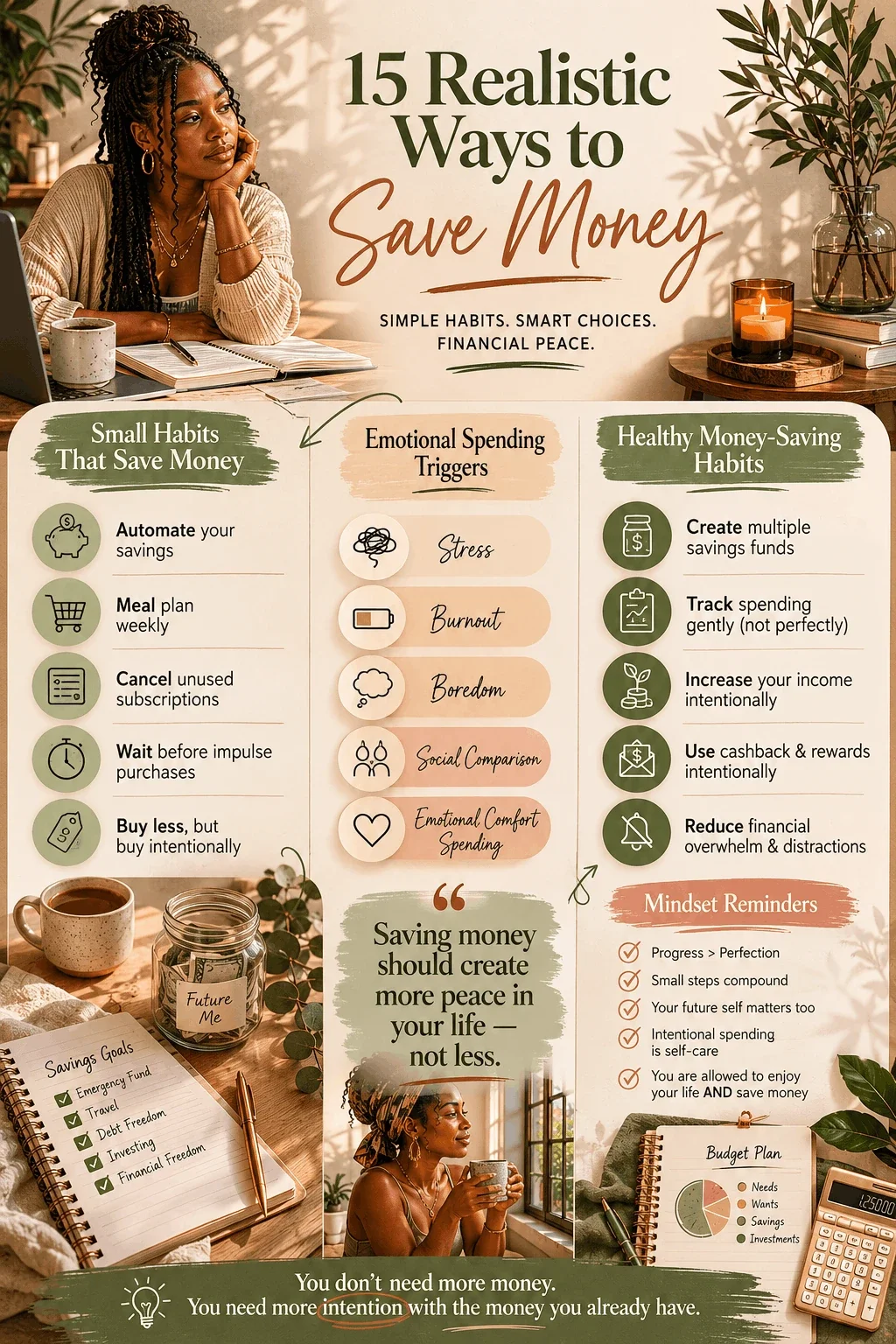
11. Increase Your Income Too
I think financial conversations focus so heavily on cutting expenses that people forget income matters too.
Sometimes the healthiest thing you can do financially is create more earning capacity instead of endlessly shrinking your life smaller and smaller.
12. Normalize Buying Things More Slowly
Not every desire requires immediate fulfillment.
One of the most powerful financial habits is learning how to pause long enough to ask:
Do I actually want this?
Or do I just want relief, stimulation, or validation right now?
13. Make Saving Feel Visible
Track your progress visually.
Celebrate milestones.
Watch your emergency fund grow.
Humans stay motivated when progress feels tangible.
14. Let Your Future Self Matter Too
One of the healthiest mindset shifts financially is remembering that future you is still you.
Saving money is an act of care toward the version of you who deserves stability later too.
15. Stop Treating Financial Wellness Like Punishment
Honestly, I think this may be the most important one.
Saving money should create more peace in your life — not less.
You are allowed to enjoy your life while becoming financially healthier.
You are allowed to buy beautiful things thoughtfully.
You are allowed to rest without spending excessively.
You are allowed to build wealth slowly.
Financial wellness is not about becoming emotionally disconnected from your desires.
It’s about learning how to support your life without constantly abandoning yourself financially in the process.
Further Reading
Continue Exploring Saving Money, Debt & Financial Wellness
If you're trying to build healthier money habits, reduce financial stress, and create more long-term stability, these articles may support you further.
Free Resource
If saving money has felt emotionally exhausting or overwhelming lately, download my free Money Mindset E-Book to start shifting your relationship with money, emotional spending, and long-term financial wellness in a more grounded and supportive way.
Product Recommendation
One of the easiest ways to save money consistently is making your savings automatic instead of relying on motivation every month. I personally love using Wealthsimple because it makes saving and investing feel much simpler, less intimidating, and more sustainable long term.
FAQs
What are the easiest ways to save money consistently?
Some of the easiest ways to save money include automating your savings, reducing impulse spending, meal planning, canceling unused subscriptions, and tracking where your money is actually going each month. Small consistent habits usually create more sustainable results than extreme restrictions.
Why is saving money so emotionally difficult sometimes?
Saving money can feel emotionally difficult because spending is often connected to stress relief, comfort, identity, burnout, or social pressure. Financial habits are not purely logical — they are emotional too.
How can I save money without feeling deprived?
The healthiest money-saving habits focus on intentionality rather than punishment. Instead of cutting everything enjoyable, focus on spending in alignment with your actual priorities while reducing unnecessary emotional spending.
What are realistic money-saving habits that actually work long term?
Automating savings, cooking more meals at home, waiting before impulse purchases, creating separate savings funds, and reducing lifestyle comparison are realistic financial habits that can support long-term financial wellness.
Should I focus on saving money or increasing my income?
Both matter. Saving money creates stability, but increasing your income can create more financial flexibility and reduce the pressure to constantly shrink your life through restriction alone.
