
Conscious Spending: How to Spend Without Guilt
Conscious spending is about using your money in ways that genuinely align with your values instead of spending impulsively, emotionally, or out of social pressure. When you practice mindful spending habits and intentional spending, money starts to feel less stressful and more supportive. In this guide, we’re exploring how your values and money are deeply connected — and how understanding your personal spending patterns can completely change your relationship with finances.
How I Got Into Conscious Spending
One thing I’ve realized about money is that most of us don’t actually want to stop spending — we just want to stop feeling guilty, impulsive, or disconnected every time we do.
Because spending money isn’t inherently bad. Some purchases genuinely improve our quality of life, support our healing, strengthen our relationships, or make life feel more fulfilling. The problem is that many of us were never taught how to spend intentionally. We were taught extremes instead: either save everything and deprive yourself, or spend emotionally and deal with the consequences later.
And honestly, neither approach creates long-term financial wellness.
Sometime during the overwhelming dullness of the pandemic, I found myself scrolling through Ramit Sethi’s content. If you don’t know him, he’s the author of I Will Teach You To Be Rich, and in one of his videos he introduced this concept called a “Money Dial” — an area of your life you value so deeply that as your income grows, you naturally want to spend more there because it genuinely improves your life.
That idea stayed with me.
Because I think many people struggle with spending guilt not because they’re irresponsible, but because they haven’t identified what truly matters to them yet. They’re spending reactively instead of intentionally.
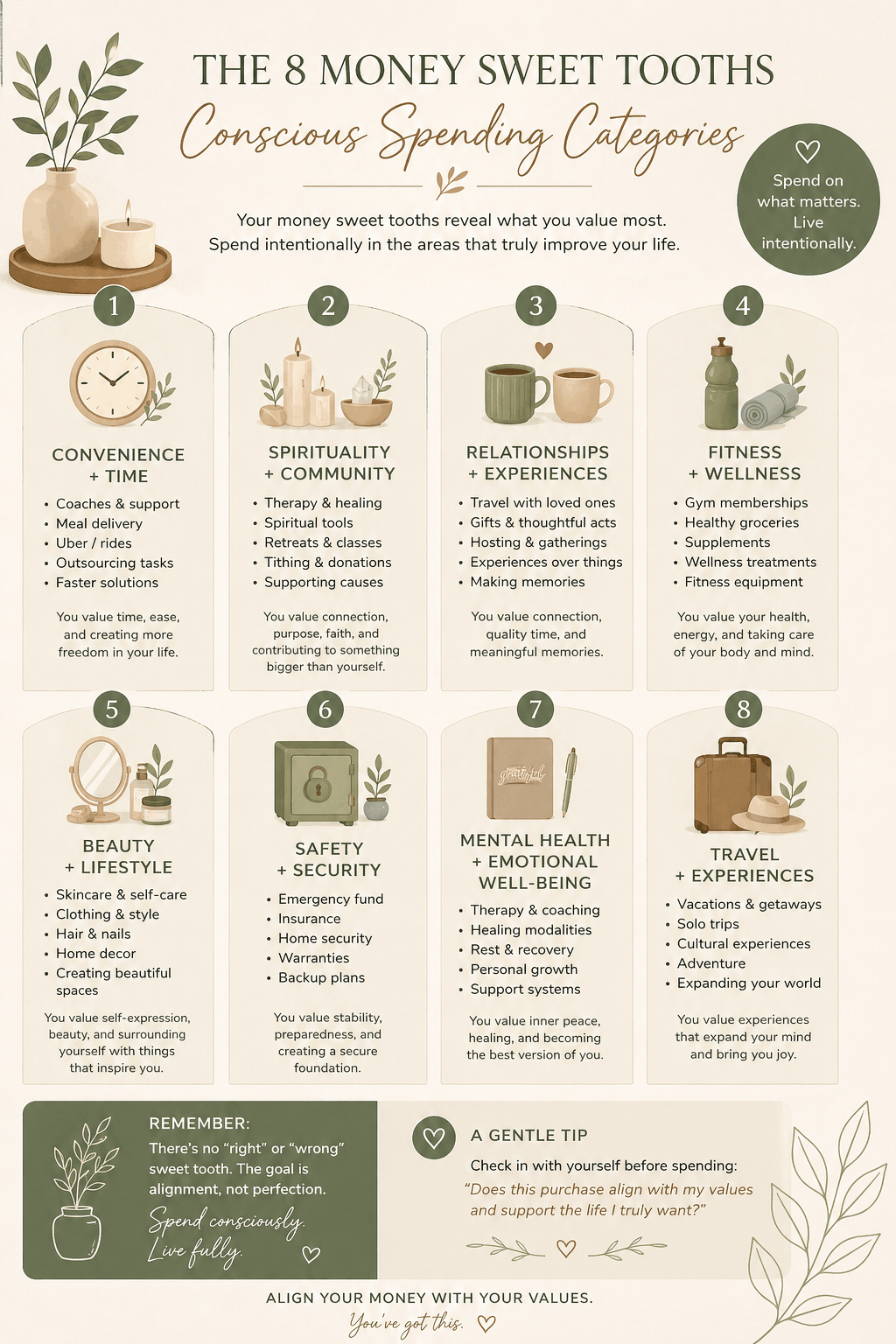
It inspired me to create my own version of Money Dials called “money sweet tooths” — the categories of spending we naturally crave most because they align closely with our values, lifestyle, and emotional needs.
And once you understand your money sweet tooths, spending starts to feel a lot less chaotic and a lot more conscious.
Why Conscious Spending Matters
We live in a world where we’re constantly being influenced about how we should spend our money.
Social media, influencer culture, advertising, trends, and comparison can make it feel like we’re always one purchase away from finally feeling successful, attractive, productive, healed, or fulfilled.
But usually that feeling fades quickly.
Research from the American Psychological Association has shown that emotional states like stress, anxiety, and overwhelm can heavily influence financial decisions and impulsive spending habits. And honestly, I think most people underestimate just how emotional spending can become.
Sometimes we spend because we’re bored.
Sometimes because we’re lonely.
Sometimes because we’re trying to reward ourselves.
Sometimes because we’re trying to become a different version of ourselves overnight.
Conscious spending invites you to slow down and ask:
“Does this actually align with who I am and what I value?”
Because financial wellness isn’t about never spending money.
It’s about spending in ways that genuinely support your life.
Your Money Sweet Tooths
One of the most powerful things you can do financially is understand where your money naturally wants to go.
Your “money sweet tooth” is the category of spending that feels most emotionally fulfilling to you. It’s the area of life you’d probably spend more money on if your income increased tomorrow.
And honestly? There’s nothing wrong with that.
The goal isn’t to eliminate spending.
The goal is becoming intentional about it.
Below are some of the most common conscious spending categories I see people resonate with.

Convenience + Time
Some people deeply value convenience, efficiency, and saving time.
These are the people who happily spend money on:
coaches
meal delivery
outsourcing
Uber rides
faster solutions
support systems
And honestly, I relate to this one a lot.
As I’ve gotten older, I’ve realized time and energy are some of my most valuable resources. If spending money helps create more peace, freedom, or capacity in my life, it often feels completely worth it.
This is also why many people invest in therapists, business coaches, or financial support instead of trying to figure everything out alone for years.
Sometimes spending money isn’t about laziness.
Sometimes it’s about alignment.
Spirituality + Community
For others, spending money on spirituality, healing, faith, or community feels deeply fulfilling.
This could look like:
therapy
yoga classes
spiritual tools
retreats
donations
church tithing
wellness practices
supporting causes you care about
Research published in Nature Communications has shown that generosity and giving can positively impact happiness and emotional well-being.
I’m someone who values spirituality deeply too. I love things that help me slow down, reconnect inwardly, and feel grounded again — whether that’s candles, books, journaling, or wellness practices.
And honestly, I think spending that supports inner peace is often some of the most meaningful spending we can do.

Relationships + Experiences
Some people naturally spend money on connection and experiences.
Maybe you’re the friend who:
always organizes dinner
loves buying thoughtful gifts
pays for group experiences
values quality time
prioritizes memories over material things
There’s nothing inherently wrong with spending money this way if it aligns with your values and still exists within healthy financial boundaries.
I think a lot of people confuse conscious spending with restriction when really it’s about intentionality.
Experiences often become some of our most meaningful memories.
Fitness + Wellness
Your health impacts every single area of your life — including your finances.
For some people, wellness becomes one of their largest conscious spending categories:
gym memberships
healthy groceries
supplements
therapy
fitness equipment
wellness treatments
preventative healthcare
And honestly? I think investing in your health can be one of the most supportive forms of spending possible.
This is something I dive deeper into in “Health Is Wealth: Why Your Wellbeing Impacts Your Finances” because financial wellness and physical wellness are deeply connected.

Beauty + Lifestyle
Beauty and aesthetics are another huge spending category for many people, especially women.
Hair appointments.
Clothing.
Home decor.
Skincare.
Nails.
Creating beautiful spaces.
Curating personal style.
And honestly, I don’t think there’s anything wrong with caring about beauty or aesthetics if it genuinely brings joy or self-expression into your life.
The key question becomes:
Are you spending intentionally, or spending for validation?
Because those are two very different things.
Safety + Security
For some people, spending is heavily tied to safety and stability.
Emergency funds.
Insurance.
Home security.
Backup plans.
Preparedness.
Financial protection.
And after the pandemic especially, I think many people became more aware of how emotionally important safety can feel.
Conscious spending in this category often creates emotional relief and nervous system regulation — not just financial protection.
Mental Health + Emotional Well-Being
One category I think deserves far more financial attention is mental health.
Therapy.
Coaching.
Healing modalities.
Support systems.
Rest.
Recovery.
Personal growth.
Many people hesitate spending money on healing while simultaneously spending impulsively in ways that actually worsen stress long-term.
Research from Johns Hopkins Medicine reports that anxiety and depression continue to impact millions of adults annually, often affecting relationships, work performance, and financial habits too.
Sometimes the most important investment isn’t external success.
It’s internal healing.

Travel + Experiences
Travel is one of the most common money sweet tooths because experiences expand us.
Travel allows us to:
break routines
reconnect with ourselves
experience new perspectives
create memories
feel inspired again
And honestly, I don’t think every dollar needs to be hyper-optimized all the time.
Life is meant to be experienced too.
Conscious spending isn’t about eliminating joy.
It’s about making sure the things you spend on genuinely add value to your life instead of simply distracting you temporarily.
Further Reading
Build a Healthier Relationship With Money
If you're working on becoming more intentional with your finances, these posts may support you further.
Conscious Spending Creates More Financial Freedom
The goal of conscious spending isn’t to spend more money.
And it’s not to spend less money either.
The goal is alignment.
When your values and money become more aligned:
spending guilt decreases
impulsive purchases decrease
comparison decreases
financial clarity increases
confidence increases
intentionality increases
You stop chasing lifestyles that don’t actually resonate with you.
You stop spending based on external pressure.
And you begin creating a financial life that actually feels supportive and sustainable.
Because true financial wellness isn’t just about how much money you make.
It’s also about how consciously you use it.

Free Resource to Start With
If you’ve been struggling with emotional spending, money guilt, scarcity, or trying to build a healthier relationship with finances, my Money Mindset Ebook is a supportive place to start. It walks you through the mindset shifts and emotional patterns that often shape our financial habits more than we realize.
Product Recommendation
One book I genuinely recommend for learning more about conscious spending and intentional money habits is I Will Teach You To Be Rich. I really appreciate that Ramit talks about spending intentionally on the things you genuinely love while still building long-term wealth — instead of approaching money from constant restriction or shame.
FAQs
What is conscious spending?
Conscious spending means using your money intentionally on things that align with your values, priorities, and long-term well-being instead of spending impulsively or emotionally.
How do I stop feeling guilty about spending money?
Spending guilt often decreases when your purchases genuinely align with your values and financial goals instead of emotional triggers or social pressure.
What are mindful spending habits?
Mindful spending habits involve becoming more aware of emotional spending triggers, impulsive purchases, and how your money decisions align with your priorities.
Why do people emotionally spend money?
People often emotionally spend money due to stress, anxiety, loneliness, boredom, comparison, or a desire for comfort and validation.
Can conscious spending include luxury purchases?
Yes. Conscious spending is not about deprivation. It’s about intentionally choosing purchases that genuinely improve your quality of life and align with your values.
How do I identify my money values?
Pay attention to the purchases and categories that consistently bring fulfillment, peace, joy, or support into your life. Your spending patterns often reveal your deeper values already.