
Right Livelihood: How to Align Your Career With Your Values
I think one of the hardest things about modern work culture is how disconnected many people feel from what they actually do every day. So many people wake up already exhausted, moving through careers that pay the bills but leave them emotionally depleted, uninspired, or deeply out of alignment with themselves. And honestly, I understand why. Society often teaches us to prioritize survival, status, or financial security before fulfillment. But over the years, I’ve realized that true wealth is not only about how much money you make. It’s also about whether your work feels meaningful, ethical, sustainable, and connected to who you genuinely are. That’s why the concept of right livelihood has become so important to me.
Let’s be honest for a moment.
A lot of people are deeply unhappy in their careers.
Not necessarily because they’re lazy.
Not because they lack ambition.
Not because they don’t want success.
But because many people have spent years building lives around survival instead of alignment.
We’re taught early on to focus on:
stability
productivity
achievement
external validation
financial pressure
And while financial security absolutely matters, I think many people quietly reach a point where they begin asking deeper questions too.
Questions like:
Does this work actually fulfill me?
Am I contributing something meaningful?
Does my career align with my values?
Is success supposed to feel this draining?
Can I build wealth without abandoning myself?
And honestly, I think those questions matter deeply.
Because true wealth is not only financial.
It’s emotional.
Spiritual.
Energetic.
Relational.
Mental.
That’s why I’ve become increasingly drawn to the idea of right livelihood.

What Is Right Livelihood?
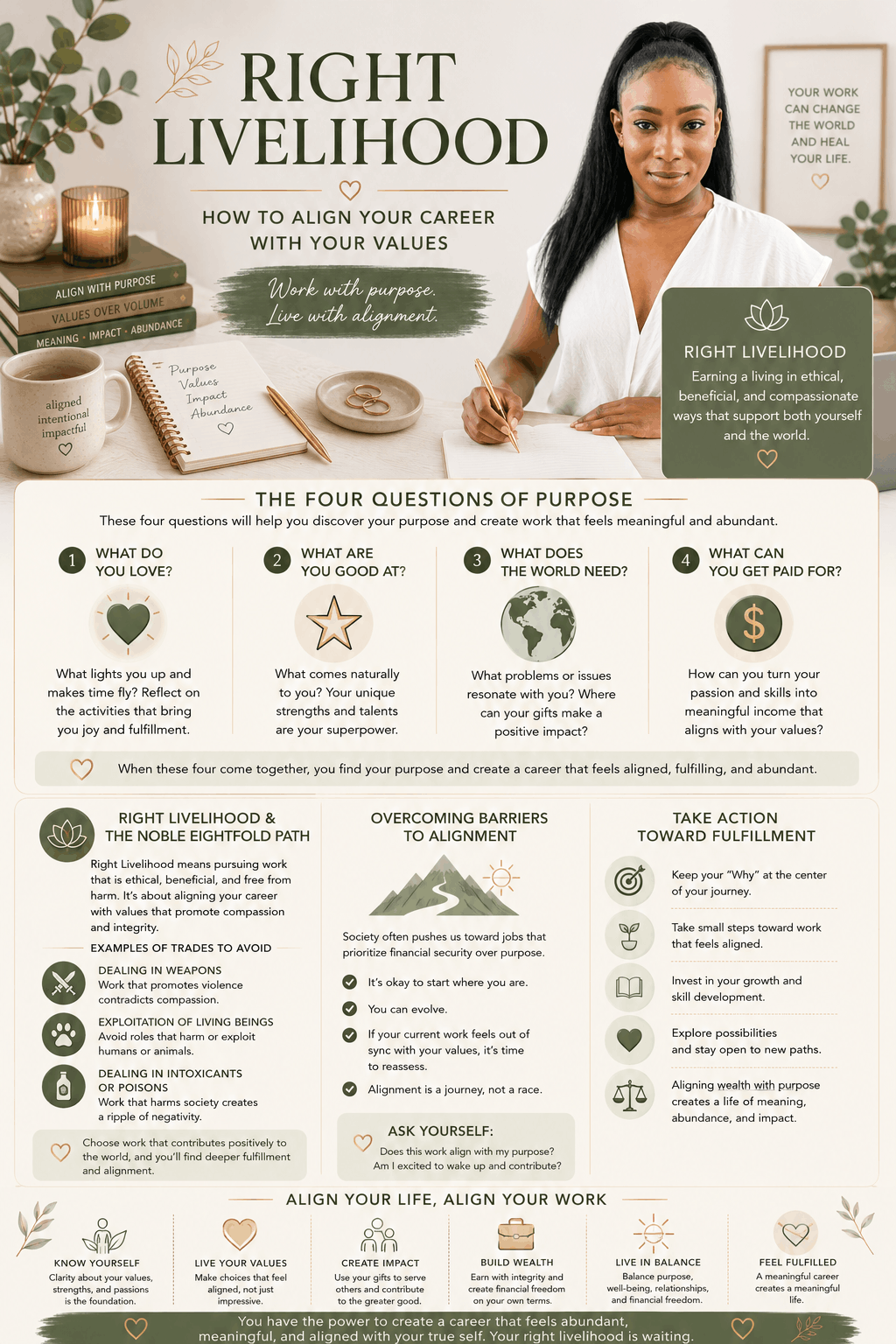
Right livelihood is a concept rooted in Buddhist philosophy and the Noble Eightfold Path. Traditionally, it refers to earning a living in ways that avoid harm and support compassion, integrity, and ethical living.
But honestly, I think the meaning of right livelihood extends beyond religion alone.
To me, right livelihood means creating work that feels aligned with:
your values
your wellbeing
your purpose
your integrity
your natural gifts
your impact on others
It’s the intersection between survival and soul.
And I think many people crave this kind of alignment more than ever right now because burnout culture has normalized emotional disconnection from work for so long.
People are exhausted.
Emotionally depleted.
Disconnected from purpose.
Stuck in survival mode.
And while not everyone can immediately leave jobs that feel misaligned, I do think many people are beginning to ask more honest questions about the kind of life they truly want to build.
Why Purpose Driven Careers Matter
I honestly believe humans want to feel meaningful.
We want to feel like our lives contribute something.
That our work matters.
That our energy is going somewhere intentional.
And I think that’s why purpose driven careers resonate so deeply with people emotionally.
Because work occupies such a huge percentage of our lives.
Research consistently shows that people who experience greater meaning and fulfillment in their work often report better emotional wellbeing, lower burnout, and stronger overall life satisfaction.
And honestly, that makes sense.
When your work feels aligned:
motivation feels different
energy feels different
creativity expands
resilience increases
work becomes more sustainable emotionally
That doesn’t mean aligned work is always easy.
Or that purpose eliminates stress completely.
But there’s a difference between being tired from meaningful growth and being depleted from chronic disconnection.
I’ve experienced both.
And they feel very different emotionally.

The Four Questions That Help You Align With Your Purpose
One of my favorite frameworks for discovering alignment is reflecting on four simple but powerful questions.
What Do You Love?
This question sounds simple, but honestly, many adults struggle to answer it.
Because after years of responsibility, survival mode, burnout, or people-pleasing, many people lose touch with what genuinely lights them up.
So sometimes it helps to think back further.
What did you naturally enjoy as a child?
What made you lose track of time?
What conversations energize you?
What kinds of work feel emotionally fulfilling rather than draining?
For me, helping people navigate challenges and create clarity has always felt deeply natural. Even as a child, I found myself supporting people emotionally, organizing solutions, and trying to help others feel empowered.
And honestly, those patterns often leave clues.
Your joy matters.
Your curiosity matters.
Your natural interests matter.
What Are You Good At?
I think people often underestimate their own gifts because what comes naturally to them feels “normal.”
But natural strengths are important.
Some people are naturally:
strategic
creative
nurturing
analytical
organized
communicative
visionary
calming
intuitive
detail-oriented
And honestly, recognizing your strengths is not ego.
It’s self-awareness.
One thing I’ve learned over time is that aligned careers often emerge where your strengths and interests overlap.
For example, my natural tendency toward organization, structure, and systems eventually became incredibly useful in both business and coaching.
And I think many people already carry the seeds of their purpose within them long before they fully recognize it.
What Does the World Need?
This question expands your purpose beyond yourself.
Because purpose often exists at the intersection between:
your gifts
andcollective need
What problems deeply move you emotionally?
What injustices frustrate you?
What conversations do you care about naturally?
What kind of impact do you want your life to have?
For me, financial empowerment became deeply personal because I saw how often women were disconnected from wealth, confidence, and financial education.
That became part of my “why.”
And honestly, purpose driven careers often emerge when people use their gifts in service of something larger than themselves.
What Can You Get Paid For?
I think this is the part many people feel conflicted about.
Especially people who care deeply about meaning, healing, creativity, or service.
There can sometimes be guilt around monetizing purpose.
But honestly?
I think sustainable impact requires sustainability financially too.
Money allows:
stability
growth
freedom
capacity
support
expansion
rest
longevity
And I think right livelihood is not about rejecting money.
It’s about earning money in ways that feel aligned and ethical.
That may look like:
coaching
consulting
creative work
entrepreneurship
healing professions
education
ethical business
nonprofit leadership
wellness work
sustainable companies
There are many ways to build wealth while remaining aligned with your values.
And honestly, I think many people underestimate how possible that actually is.
Why So Many People Feel Disconnected From Their Careers
I honestly think modern work culture creates a lot of emotional disconnection.
Especially under capitalism and hustle culture.
People are often taught to prioritize:
productivity over wellbeing
income over purpose
status over fulfillment
survival over alignment
And over time, many people become disconnected from themselves entirely.
Burnout becomes normalized.
Rest feels guilty.
Purpose feels unrealistic.
Dreams feel impractical.
But I think this disconnection creates emotional consequences too.
Because humans are not machines.
We are emotional beings.
And when people spend years working in environments that conflict with their values, nervous systems, or wellbeing, it can impact:
mental health
motivation
emotional regulation
relationships
creativity
physical health
self-worth
That’s why I think right livelihood matters so much beyond money alone.
Overcoming Fear Around Purpose Driven Work
One thing I want to acknowledge compassionately is that pursuing alignment can feel scary.
Especially when people have:
debt
responsibilities
caregiving roles
financial instability
fear of failure
fear of judgment
survival trauma
Not everyone can immediately leave a misaligned job overnight.
And honestly, I don’t think alignment always requires dramatic instant change.
Sometimes right livelihood begins through:
small shifts
side projects
learning new skills
reconnecting with passions
building community
exploring possibilities slowly
setting boundaries
redefining success
I think people often imagine purpose as one massive life-changing revelation.
But sometimes purpose unfolds gradually through experimentation, curiosity, and self-awareness over time.
Align With Your Purpose Without Romanticizing Burnout
I also think it’s important to talk honestly about the fact that purpose driven careers can still become unhealthy if boundaries disappear.
Just because you love something does not mean you should:
overwork constantly
abandon rest
undercharge
ignore burnout
sacrifice your wellbeing
I think many heart-centered people accidentally fall into martyrdom patterns because they care deeply about helping others.
But sustainable purpose still requires:
boundaries
pricing appropriately
rest
support
balance
nervous system regulation
Right livelihood should nourish your life too.
Not just everyone else’s.
Right Livelihood Is About Alignment, Not Perfection
I honestly do not believe there is one singular perfect career path for everyone.
Life evolves.
People evolve.
Purpose evolves too.
But I do think alignment matters.
I think people deserve work that:
respects their humanity
supports their wellbeing
aligns with their values
allows room for growth
creates sustainability emotionally and financially
And honestly, I think many people already know deep down when something feels aligned versus when it doesn’t.
The challenge is often giving ourselves permission to listen.
Because alignment rarely comes from external validation alone.
It comes from honesty.
From self-awareness.
From courage.
From slowing down enough to ask yourself what kind of life you actually want to build.
And honestly?
That question can change everything.
Further Reading
Continue Exploring Purpose, Wealth & Intentional Living
If you're exploring purpose driven work, alignment, and building a life rooted in holistic wealth, these articles may support you further.
Free Resource To Share
If you’re currently questioning your career path, craving more alignment, or trying to reconnect with your purpose, my Intuitive Wealth Blueprint may support you gently through that process.
I created it for people who want to build wealth and success in ways that feel emotionally aligned, intentional, and connected to their deeper values — not just external expectations.
Product Recommendation
A huge part of aligning with your purpose is expanding your perspective and giving yourself permission to explore new ideas, philosophies, and possibilities. Spotify has honestly been one of my favorite tools for learning about personal growth, spirituality, business, emotional wellbeing, and intentional living while moving through daily life.
Sometimes one book, conversation, or idea can completely shift the direction of your life.
FAQs
What is right livelihood?
Right livelihood is a concept rooted in Buddhist philosophy that refers to earning a living in ethical, compassionate, and aligned ways that avoid harm while supporting personal and collective wellbeing.
What does right livelihood mean in modern life?
In modern life, right livelihood often means pursuing work that aligns with your values, purpose, integrity, wellbeing, and desired impact on the world.
How do I align with my purpose?
Aligning with your purpose often starts through self-reflection. Exploring your passions, strengths, values, and the kind of impact you want to make can help guide you toward more meaningful work and life choices.
What is a purpose-driven career?
A purpose-driven career is work that feels emotionally meaningful and aligned with your values, strengths, and desired contribution to the world beyond financial gain alone.
Can you make money doing purposeful work?
Yes. Many people create sustainable income through coaching, entrepreneurship, creative work, wellness careers, education, ethical businesses, and other aligned professions that support both purpose and financial wellbeing.
Why do people feel disconnected from work?
People often feel disconnected from work when careers prioritize survival, productivity, burnout, or external validation over personal values, creativity, wellbeing, and emotional fulfillment.
Does right livelihood mean quitting your job immediately?
No. Right livelihood does not require drastic overnight change. Alignment can begin through small shifts, skill-building, side projects, boundary-setting, and gradually moving toward work that feels more meaningful and sustainable.
