
How to Choose a Career That Aligns With Your Life Goals
Figuring out how to choose a career can feel incredibly overwhelming, especially in a world where everyone seems to have an opinion about what you “should” be doing. Maybe you’re feeling pressure to pick something practical. Maybe you’re craving more freedom, creativity, or purpose in your work. Or maybe you’re simply tired of feeling disconnected from the life you’re building. The truth is, choosing a career isn’t just about finding a job title that sounds good on LinkedIn. It’s about creating a life that actually feels good to live. A career that supports your mental health, your relationships, your financial goals, and the version of yourself you’re becoming.
Embarking on a career journey can feel like setting sail on uncharted waters—filled with endless possibilities yet accompanied by the inevitable uncertainty of where the tide might take you. Whether you’re a recent graduate, someone itching for a career change, or simply seeking a role that feels more aligned with your values, this guide is here to help.
Finding the right career isn’t just about landing a job; it’s about discovering work that resonates with your authentic self and supports the life you want to build. And honestly, I think that’s something a lot of us forget.
We’re often taught to chase titles, salaries, prestige, or whatever looks “successful” from the outside. But no one really talks enough about how exhausting it feels to build a life that looks good on paper but leaves you emotionally disconnected from yourself.
I’ve had moments in my own journey where I thought I needed to force myself into a version of success that didn’t actually fit me. And every single time, my body knew before my mind did. Burnout. Anxiety. Feeling uninspired. Constantly questioning myself. Those feelings weren’t random — they were signals.
In this post, I’ll walk you through transformative steps to help you figure out how to choose a career that’s aligned not just with your resume, but with your actual life.

Assess Your Interests and Values
At the heart of a fulfilling career lies a deep understanding of what makes you come alive. This means peeling back the layers to uncover your true interests and values. Think of this as reconnecting with the essence of who you are beyond societal expectations, pressure from family, or the fear of disappointing people.
And sometimes? That takes honesty.
Not surface-level honesty like “I enjoy helping people.” I mean real honesty. The kind where you admit you actually value flexibility more than status. Or creativity more than climbing the corporate ladder. Or peace more than prestige.
Discover Your Passions
Ask yourself:
What activities bring me genuine joy?
What could I spend hours doing without feeling drained?
What fascinated me as a child?
What conversations light me up naturally?
What kind of problems do I actually enjoy solving?
When I reflect on my own career journey, I remember how much I loved creative writing as a child. I’d spend hours crafting stories and writing poetry, yet I buried that passion for years because I didn’t see a “real career” in it.
Fast forward to now, and writing has become one of the most important parts of my work — through coaching, newsletters, blogs, storytelling, and creative projects. The things we naturally gravitate toward often hold more clues than we realize.
There’s actually research in positive psychology showing that people who use their natural strengths regularly experience higher levels of fulfillment and motivation in their work. Sometimes the answers aren’t hidden. Sometimes they’re the things we’ve been trying to dismiss as “unrealistic.”

Align With Your Values
Equally important are your core values. What matters most to you in life?
Is it:
Freedom?
Financial security?
Creativity?
Stability?
Flexibility?
Making an impact?
Work-life balance?
Autonomy?
Because your career will either support those values or constantly challenge them.
For example, if work-life balance is deeply important to you, pursuing a career that glorifies overworking yourself may eventually leave you feeling emotionally depleted, regardless of the paycheck.
And this matters more than ever. According to a Deloitte workplace wellbeing survey, nearly 60% of professionals reported experiencing burnout-related stress within their jobs. A career that constantly forces you to betray your own needs will eventually catch up to you emotionally.

Assess Your Skills and Strengths
Once you’ve uncovered your passions and values, the next step is identifying your unique strengths. This is where self-awareness becomes your superpower.
A lot of us underestimate ourselves because certain skills come naturally to us. We assume if something is easy for us, it must not be valuable. But often, your natural strengths are exactly what make you valuable.
Identify What You’re Good At
Ask yourself:
What skills come naturally to me?
What do people consistently compliment me on?
Which tasks make me feel energized instead of exhausted?
What environments help me thrive?
What challenges do I navigate well?
For some people, this might be organization, communication, leadership, or problem-solving. For others, it might be creativity, emotional intelligence, adaptability, or technical skills.
And yes — emotional intelligence is absolutely a career skill.
Especially now, when so many workplaces are recognizing the importance of communication, collaboration, and adaptability. LinkedIn’s workforce reports consistently rank soft skills among the most in-demand professional strengths.
Grow Your Skillset
Even if you don’t feel fully “qualified” for a certain path, remember that skills can be developed.
Take courses.
Attend workshops.
Find mentors.
Experiment.
Start before you feel ready.
Honestly, some of the most successful people I know didn’t begin because they felt confident. They began because they were willing to learn as they went.
That mindset shift changes everything.
Clarify Your Goals and Explore Career Paths
Once you know your values and strengths, it’s time to get clear on what you actually want your life to look like.
Not just your career.
Your life.
Because your career should support your life — not consume it.
Set Clear Goals
What do you want your career to provide for you beyond income?
Maybe you want:
Flexibility to travel
More creative freedom
Stability and benefits
Time with family
The ability to work remotely
Opportunities for growth
A slower, less stressful lifestyle
Creating SMART goals — Specific, Measurable, Achievable, Relevant, and Time-bound — can help turn vague dreams into actionable steps.
For example:
Short-term goal: Research three industries and connect with five professionals within the next three months.
Long-term goal: Transition into a career that allows remote flexibility within two years.
One thing I wish more people understood is that clarity often comes through action, not overthinking. You do not need to have your entire life figured out before making your next move.
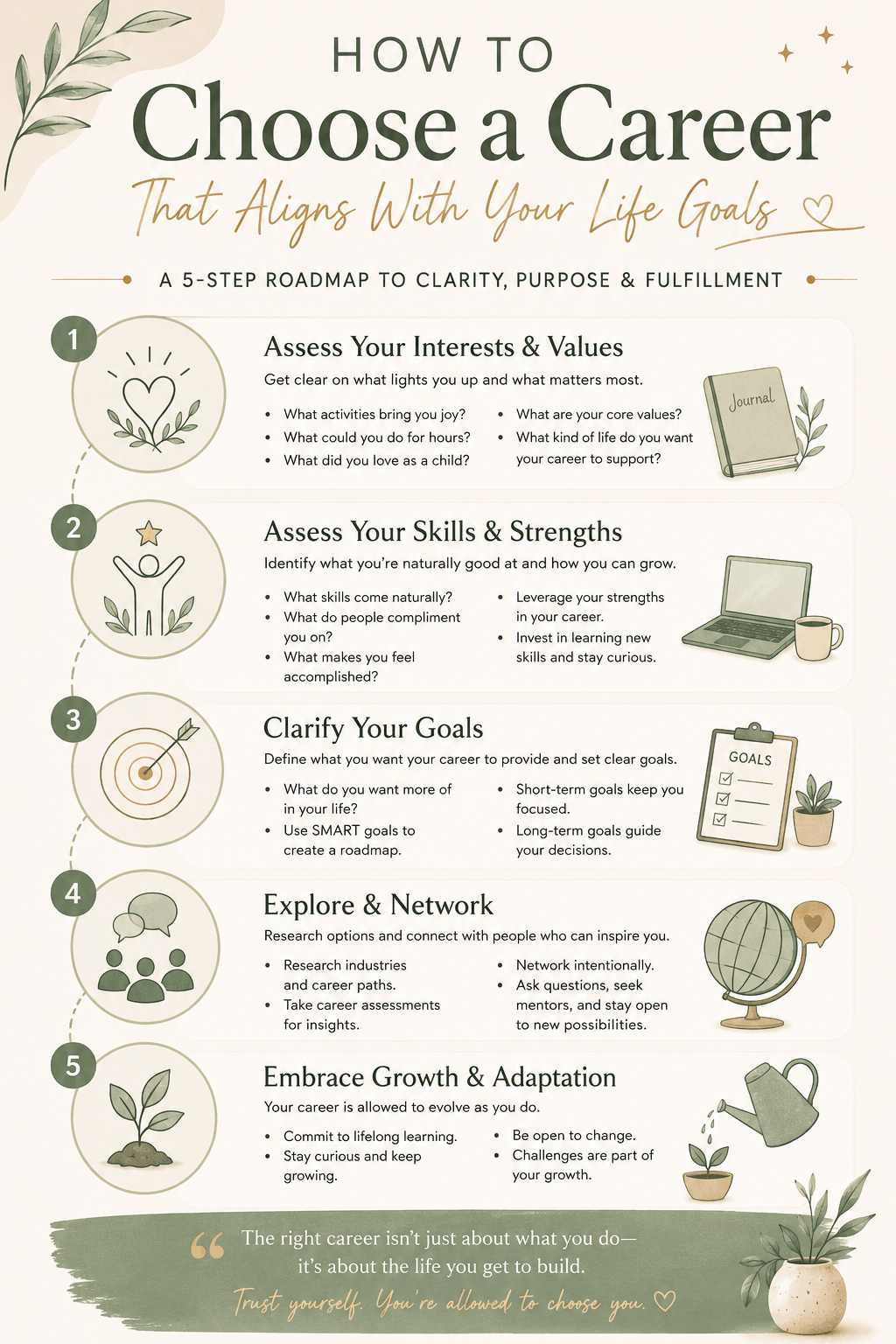
Research and Network Intentionally
Now comes the part that can feel exciting and intimidating all at once — exploring career options.
Spend time researching industries that align with your interests and values. You may discover roles you didn’t even know existed.
Use career tools like:
Myers-Briggs
StrengthsFinder
Career aptitude assessments
LinkedIn career exploration tools
And most importantly, talk to real people.
When I started my coaching journey, conversations with mentors and peers completely shifted my perspective. Hearing honest stories from people already living the life I wanted helped me realize that my goals weren’t unrealistic — they were possible.
Networking doesn’t have to feel transactional either. It can simply look like genuine curiosity and connection.
Embrace Lifelong Learning and Adaptation
Here’s one of the biggest truths I’ve learned: careers are not static.
Your interests will evolve.
Your priorities will change.
Your definition of success may completely transform over time.
And that’s okay.
Honestly, I think we put way too much pressure on ourselves to choose “the one perfect career” forever. But life doesn’t really work like that.
Commit to Lifelong Learning
The world changes constantly, and so do industries. Staying curious keeps you adaptable.
Whether it’s:
Online courses
Certifications
Mentorship
Reading
Workshops
Podcasts
Every new thing you learn expands your opportunities.
The average person now changes careers multiple times throughout their lifetime. So if you feel uncertain right now, you are absolutely not behind.
Be Open to Change
Sometimes the career path you start on won’t be the one you end up loving — and that’s not failure. That’s growth.
I never imagined I’d become a coach, writer, or entrepreneur. But every pivot taught me something valuable about myself.
There’s a version of you that already knows what feels aligned. Sometimes the hardest part is giving yourself permission to listen.

Your Career, Your Journey
Finding the right career isn’t a one-time decision. It’s an ongoing process of self-discovery, growth, experimentation, and trust.
And honestly? You’re allowed to change your mind along the way.
Five years ago, if someone told me I’d be helping others build wealth, writing content, and running my own business, I probably would’ve laughed too. But leaning into my strengths, interests, and values changed everything for me.
Your career doesn’t need to impress everyone else.
It needs to support the life you actually want to live.
And that version of success? It’s more than enough.
If you’ve been feeling overwhelmed or uncertain about your next step, I created a free resource that may help you gain more clarity and direction in your financial and career journey. Sometimes we don’t need all the answers immediately — we just need a starting point.
Further Reading
Continue Exploring Career & Purpose Alignment
If you're navigating career uncertainty, purpose, personal growth, or redefining success on your own terms, these posts may support you further.
Free Resource To Share
If you’re currently feeling stuck, overwhelmed, or unsure about your next chapter financially or professionally, you can download my free Financial Clarity Webinar here:
It’s designed to help you create more confidence and clarity around your future in a way that feels supportive instead of overwhelming.
Product Recommendation
One resource I genuinely think can be helpful during career transitions is LinkedIn Learning.
Whether you’re exploring a completely new industry, building confidence in your skills, or trying to figure out what direction feels aligned, taking small courses can help you explore possibilities without the pressure of committing to an entirely new path immediately.
Sometimes clarity comes from trying things, not just thinking about them.
FAQs
How do I choose a career that fits me?
Start by identifying your interests, strengths, values, and lifestyle goals. A fulfilling career should align with both your skills and the kind of life you want to build.
What if I don’t know what career I want?
That’s completely normal. Many people discover career clarity through experimentation, networking, and trying new experiences rather than having immediate certainty.
Can I change careers later in life?
Absolutely. Career changes are increasingly common, and many people pivot multiple times throughout their lives as their goals and priorities evolve.
How important is salary when choosing a career?
Salary matters, but long-term fulfillment also depends on factors like work-life balance, flexibility, purpose, and emotional wellbeing.
What career assessments can help me choose a career?
Tools like Myers-Briggs, StrengthsFinder, and career aptitude tests can provide insight into your personality, strengths, and possible career paths.
What if my passions don’t seem practical?
Many people find creative ways to integrate their passions into sustainable careers over time. Your interests often hold important clues about what feels meaningful to you.
If you’d like to keep journeying together…
→ Start Here: free tools and reflections to help you feel grounded, clear, and more confident with your money.
→Work With Me: private coaching, strategy sessions, and programs designed to help you build wealth that feels aligned, stable, and sustainable.
→ Subscribe to the Channel: If this resonated, come hang out with me on YouTube where I break this down in real life — the habits, the mindset shifts, and what this actually looks like day-to-day.
→ Or Join My Email List: This is where I share deeper insights, behind-the-scenes thoughts, and the kind of conversations we don’t always have publicly.
