
How to Change Your Spending Habits Through Your Values
When people talk about spending habits, the conversation is often centered around restriction. Spend less. Stop buying coffee. Cut everything unnecessary. Budget harder. And honestly? I think that approach is part of why so many people struggle to create sustainable financial habits long-term. Because if your financial plan feels like punishment, eventually your nervous system is going to rebel against it. Over the years, I’ve realized that mindful spending isn’t really about deprivation at all. It’s about learning how to spend intentionally on the things that genuinely add value to your life while releasing the spending patterns that leave you feeling drained, disconnected, or financially stressed.
Managing money can feel emotionally overwhelming sometimes.
Especially when every financial conversation online seems to revolve around sacrifice, restriction, and guilt.
Spend less.
Save more.
Stop buying things.
Cut your lifestyle down.
Delay gratification forever.
And while yes, financial discipline absolutely matters, I honestly think many people struggle with spending habits because they’re approaching money from a place of shame instead of self-awareness.
Because the truth is:
Most people are not overspending simply because they’re irresponsible.
Many people are spending emotionally.
Spending impulsively.
Spending from stress.
Spending for comfort.
Spending for identity.
Spending to feel safe.
Spending to feel successful.
Spending to cope with burnout.
And until you understand the emotional and energetic reasons behind your spending habits, it becomes incredibly difficult to create lasting change.
That’s why I want to talk about spending differently.
Not from a place of punishment.
But from a place of alignment.
Because I genuinely believe you can spend less, save more, and still enjoy your life at the same time.
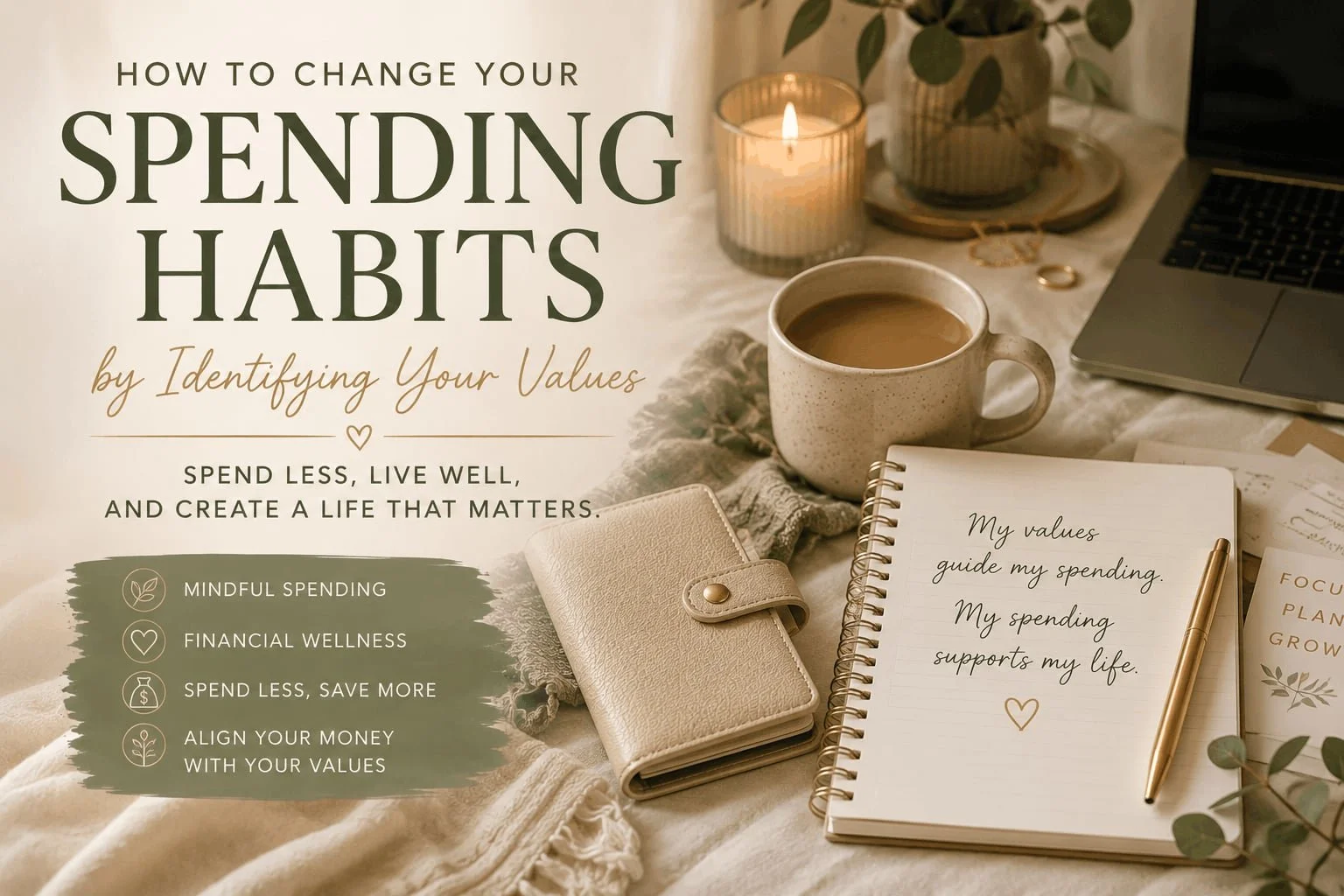
Why Spending Habits Are Emotional
One thing I’ve learned as a wealth coach is that money habits are rarely just about numbers.
They’re usually connected to emotions, beliefs, nervous system patterns, upbringing, identity, and values.
For example:
some people spend to feel comforted
some spend to feel accomplished
some spend to feel accepted
some spend to avoid difficult emotions
some spend because they never learned financial boundaries
some overspend because they grew up in scarcity and now fear missing out
And honestly, I think a lot of traditional financial advice ignores this entirely.
Research in behavioral economics has consistently shown that financial decisions are heavily influenced by emotion, habits, environment, and psychological triggers — not just logic alone.
Which makes sense.
Because if spending habits were purely logical, emotional spending wouldn’t exist.

What “Living Well Spend Less” Actually Means
I think people often assume spending less money automatically means living a smaller or less enjoyable life.
But honestly, I’ve found the opposite can be true.
The more intentional I became with my spending habits, the more fulfilling my life actually started feeling.
Because mindful spending is not about eliminating joy.
It’s about becoming more conscious about where your money actually goes and whether those purchases genuinely align with your values.
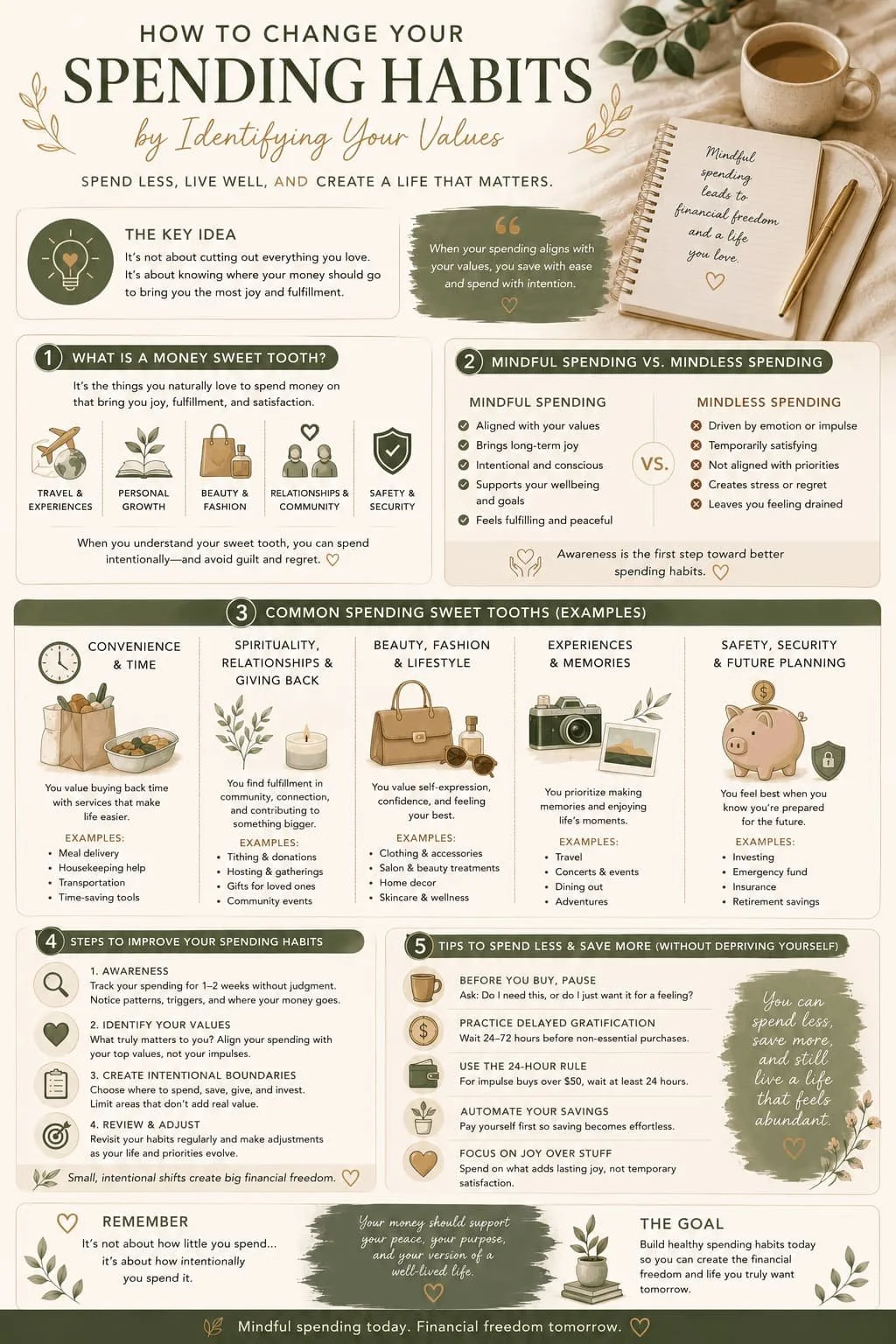
This is where the concept of a “Money Sweet Tooth” became so important for me.
We all have certain spending categories that naturally bring us more satisfaction, fulfillment, ease, or joy than others.
For some people, it’s travel.
For others, beauty and self-care.
For others, convenience.
For others, wellness.
For others, relationships and experiences.
For others, investing and security.
The goal isn’t to shame yourself for having preferences.
The goal is learning how to spend intentionally in the areas that genuinely improve your quality of life while reducing mindless spending in areas that don’t.
That’s what “living well spend less” means to me.
Not deprivation.
Alignment.
My Spending Habits Changed When I Identified My Values
One of the biggest mindset shifts I experienced financially happened when I stopped trying to budget like everyone else.
For a long time, I thought “good” financial habits meant cutting every non-essential expense possible.
But eventually I realized:
Not all spending carries the same emotional value.
There are certain purchases that genuinely improve my life, energy, wellbeing, and productivity in meaningful ways.
For example, one of my own spending priorities is convenience and time.
I deeply value buying back time when possible because my schedule, creativity, and mental bandwidth matter to me. That means I’m often willing to spend more on things like meal delivery services, transportation convenience, or systems that reduce unnecessary stress.
And honestly?
I don’t regret those purchases.
Because they align with my actual values.
At the same time, there are other categories where I naturally spend very little because they simply don’t matter to me emotionally.
This is why generic budgeting advice often fails people.
Because financial wellness is deeply personal.

Spending Less Money Doesn’t Mean Cutting Everything
I think many people approach budgeting with an “all or nothing” mindset.
Either:
they overspend freely
orthey restrict themselves aggressively
And usually, extreme restriction only creates cycles of burnout and rebound spending later.
This is why sustainable spending habits matter so much.
When you completely deprive yourself constantly, your nervous system often responds by eventually swinging in the opposite direction:
impulsive purchases
emotional spending
binge spending
guilt cycles
avoidance around money
Instead, I think spending less money works best when it feels supportive rather than punishing.
For example:
maybe you cook at home more often but still prioritize weekly coffee dates with friends
maybe you reduce impulse shopping but continue investing in wellness
maybe you cut subscriptions you barely use while keeping experiences that genuinely improve your life
maybe you buy fewer clothes overall but invest in pieces you truly love
The goal is not perfection.
It’s intentionality.
The Difference Between Mindful Spending & Mindless Spending
Mindless spending often happens automatically.
You buy things because:
you’re stressed
bored
anxious
emotionally overwhelmed
influenced by social media
trying to impress others
avoiding emotions
chasing dopamine
And usually those purchases create temporary emotional relief but not long-term satisfaction.
Mindful spending feels different.
It involves slowing down enough to ask:
Does this genuinely improve my life?
Is this aligned with my values?
Am I buying this intentionally or emotionally?
Will this still matter to me later?
Am I purchasing this for myself or for validation?
And honestly, this awareness alone can transform your spending habits dramatically over time.
Because once you start understanding why you spend, your relationship with money becomes much clearer.
The Hidden Cost of Lifestyle Inflation
One thing I’ve become increasingly aware of over the years is how normalized lifestyle inflation has become.
As people make more money, expenses often rise automatically too.
Bigger apartments.
More subscriptions.
More luxury spending.
More convenience spending.
More pressure to maintain appearances.
And social media intensifies this constantly.
You’re exposed every day to:
influencer lifestyles
luxury aesthetics
travel content
beauty trends
designer products
“that girl” productivity culture
And subconsciously, it can create the feeling that you’re always supposed to be upgrading your life externally.
But honestly, I think one of the healthiest spending habits you can develop is learning the difference between:
what genuinely improves your wellbeing
andwhat simply performs success visually
Because those are not always the same thing.

Spend Less Save More Without Scarcity Energy
I personally don’t believe financial wellness should feel rooted in constant fear.
I don’t think “spend less save more” has to come from:
guilt
shame
hyper-restriction
fear-based scarcity
obsessiveness
I think saving money can actually become an act of self-care and future support.
Saving creates:
safety
options
freedom
flexibility
peace of mind
nervous system regulation
And honestly, once I reframed saving as supporting my future self instead of depriving my current self, my relationship with money changed significantly.
Because I stopped viewing financial responsibility as punishment.
I started viewing it as protection.
Your Spending Habits Reflect Your Priorities
One of the most honest things money does is reveal priorities.
Not in a judgmental way.
Just honestly.
Your spending patterns often reveal:
what you value
what you avoid
what brings comfort
what creates identity
what feels emotionally important
where your energy flows
And honestly, I think that awareness can become incredibly empowering.
Because once you understand your patterns, you can begin changing them intentionally instead of unconsciously.
That’s why I always encourage people to reflect on questions like:
What purchases genuinely improve my life?
What spending leaves me feeling drained afterward?
What am I emotionally seeking through money?
What does “living well” actually mean to me personally?
What kind of future am I financially supporting?
Those questions matter far more than blindly following generic budgeting rules.
Changing Spending Habits Starts With Awareness
At the end of the day, improving your spending habits isn’t about becoming perfect with money overnight.
It’s about becoming more conscious.
More intentional.
More emotionally aware.
More aligned with your actual values instead of external pressure.
And honestly, I think financial wellness becomes much more sustainable when it’s rooted in self-awareness instead of self-punishment.
Because the goal isn’t simply to spend less money.
The goal is building a life where your money supports your wellbeing, your peace, your goals, your relationships, and your future in ways that genuinely feel meaningful to you.
That’s real wealth to me.
Further Reading
Continue Exploring Money Mindset & Financial Wellness
If you're working on improving your spending habits, building mindful financial routines, and creating a healthier relationship with money, these articles may support you further.
Free Resource To Share
If you’re currently trying to improve your spending habits, spend less without feeling deprived, or become more intentional with your money, the Wealth Well Tracker can help you create more awareness around your financial patterns in a supportive way.
I created it to help people build healthier money habits without shame or perfectionism. Because financial wellness is not about becoming restrictive — it’s about creating systems that support your actual life, values, and goals long term.
Product Recommendation
A huge part of changing spending habits is becoming more intentional about what actually adds value to your life. The Well(th) List includes some of my favorite wellness, productivity, financial, and personal growth tools that genuinely support my daily life and wellbeing.
I think mindful spending becomes much easier when you stop buying impulsively and start investing more intentionally in resources, habits, and experiences that truly align with your values.
FAQs
How can I improve my spending habits?
Improving your spending habits starts with awareness. Pay attention to your emotional triggers, values, priorities, and spending patterns so you can make more intentional financial decisions instead of impulsive ones.
What are unhealthy spending habits?
Unhealthy spending habits can include emotional spending, impulse purchases, overspending for validation, avoiding budgets, lifestyle inflation, and spending money from stress or boredom rather than intentionality.
How do I spend less without feeling deprived?
The key is focusing on mindful spending instead of extreme restriction. Prioritize purchases that genuinely improve your wellbeing while reducing spending in areas that don’t add meaningful value to your life.
What does “living well spend less” mean?
Living well spend less means creating a lifestyle that feels fulfilling and aligned without overspending unnecessarily. It focuses on intentional spending, financial balance, and prioritizing what truly matters most to you.
Why do emotions affect spending habits?
Money is deeply connected to emotions, identity, comfort, stress, and self-worth. Many spending habits are driven by emotional patterns rather than purely logical financial decisions.
How can I spend less and save more?
You can spend less and save more by identifying your priorities, reducing mindless spending, budgeting intentionally, limiting lifestyle inflation, and creating financial goals that feel emotionally meaningful.
What is mindful spending?
Mindful spending means making intentional financial decisions based on your values, goals, and long-term wellbeing rather than impulse, pressure, or emotional reactions.
