
8 Entrepreneurship Myths That Stop People From Starting a Business
When I first started my business, I believed a lot of the entrepreneurship myths floating around online. I thought successful entrepreneurs worked 24/7, did everything themselves, posted constantly on social media, and somehow magically figured everything out without support. And honestly? Those common lies in business made entrepreneurship feel way harder, more overwhelming, and more emotionally exhausting than it needed to be. Over time, I realized that many small business myths are rooted in hustle culture, performative success, and survival mode — not sustainable wealth building.
I think one of the hardest parts about entrepreneurship today is figuring out what advice is actually true.
Because online, business culture can feel incredibly noisy.
Everyone seems to have an opinion.
Everyone claims to know the “secret.”
Everyone is selling a blueprint.
And honestly, a lot of entrepreneurship myths get repeated so often that people start accepting them as facts.
Especially new entrepreneurs.
I know I did.
When I first started building my business, I absorbed so many lies in business without even realizing it. I thought entrepreneurship meant working constantly, sacrificing balance, doing everything alone, and somehow becoming successful overnight through sheer hustle and determination.
And while yes, building a business absolutely requires effort, I think many small business myths create unrealistic expectations that quietly lead people toward burnout, financial stress, imposter syndrome, and disappointment.
Because entrepreneurship is already challenging enough without adding unnecessary pressure and unrealistic narratives on top of it.
So I want to talk honestly about some of the most common lies in business that I think hold entrepreneurs back — emotionally, financially, and energetically.
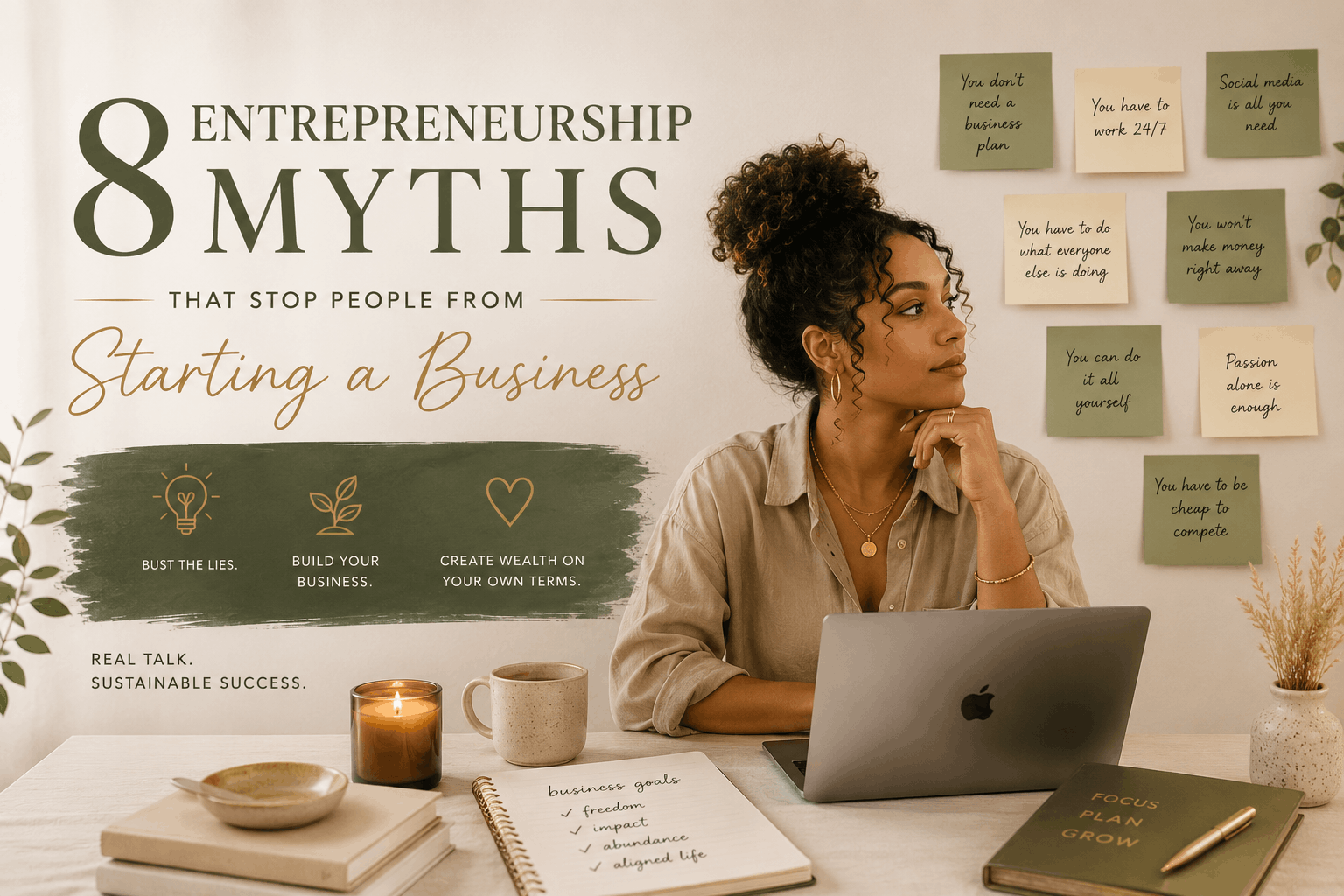
Entrepreneurship Myth #1: You Don’t Need a Business Plan
I think social media has romanticized the idea of “winging it” in business.
People love the narrative of someone randomly starting a business with no strategy and becoming wildly successful overnight. And while spontaneous success stories do happen occasionally, I honestly think this is one of the most harmful entrepreneurship myths for long-term sustainability.
Because without direction, it becomes very easy to waste:
time
money
energy
marketing efforts
opportunities
A business plan does not need to be a rigid corporate document filled with complicated jargon. But having clarity around your offers, audience, finances, marketing strategy, goals, and systems matters deeply.
Otherwise, you’re constantly reacting instead of building intentionally.
One thing that helped me tremendously was creating systems and dashboards that allowed me to actually track what was happening in my business instead of relying purely on emotion or guesswork.
Because clarity creates better decisions.
And honestly, entrepreneurship becomes far less overwhelming when your business is organized instead of chaotic.
Entrepreneurship Myth #2: Running a Business Means Working Constantly
This is probably one of the most normalized lies in business.
The idea that successful entrepreneurs are supposed to be exhausted all the time.
That if you are not working 24/7, sacrificing your health, or constantly grinding, you are somehow “not serious enough” about success.
And honestly?
I deeply reject that narrative now.
Yes, entrepreneurship often requires seasons of hard work, especially in the beginning. But I think many people accidentally recreate toxic work environments for themselves because hustle culture glorifies burnout.
I’ve personally learned that constantly overworking does not automatically make someone a better entrepreneur.
Sometimes it just makes them emotionally depleted.
The entrepreneurs I admire most are not necessarily the busiest people.
They are often the most intentional.
They build systems.
They automate.
They delegate.
They prioritize sustainability.
They protect their energy and creativity.
And honestly, I think rest is one of the most underrated business strategies.
Because burnout impacts:
decision-making
creativity
emotional regulation
leadership
finances
relationships
long-term growth
You cannot build holistic wealth while constantly abandoning your wellbeing.

Entrepreneurship Myth #3: Social Media Is All You Need
I think this is one of the most dangerous small business myths today because so many entrepreneurs build their entire businesses on platforms they do not actually own.
And social media can absolutely be powerful.
It can create visibility, community, and opportunities.
But relying on social media alone is risky.
Algorithms change constantly.
Platforms decline.
Accounts get hacked.
Engagement fluctuates.
Trends shift overnight.
And honestly, I think many business owners become emotionally dependent on social validation too.
Likes become tied to self-worth.
Views become tied to confidence.
Engagement becomes tied to perceived success.
But sustainable businesses usually diversify their marketing.
That can include:
SEO
email marketing
networking
partnerships
referrals
blogging
YouTube
podcasts
community-building
long-form content
One of the biggest mindset shifts for me was realizing that visibility and sustainability are not always the same thing.
You can go viral and still have an unstable business.
Entrepreneurship Myth #4: You Have to Follow What Everyone Else Is Doing
Comparison culture quietly destroys so much creativity in entrepreneurship.
Especially online.
You see someone else launching a course, so suddenly you think you need one too.
You see someone scaling quickly, so you question your own timeline.
You see trends performing well, so you feel pressure to copy them even if they do not align with your brand or values.
But honestly, I think one of the biggest lies in business is the idea that success comes from blending in.
The businesses that often stand out long-term usually have:
distinct perspectives
authentic branding
emotional connection
originality
clarity
consistency
And I think entrepreneurship becomes exhausting when you constantly shape-shift yourself trying to fit whatever strategy is trending online that week.
Not every business needs to look the same to succeed.
Not every entrepreneur wants the same lifestyle.
Not every business model aligns with every nervous system.
Not every definition of success should look identical.
That realization freed me tremendously.
Entrepreneurship Myth #5: Businesses Take Forever to Make Money
Now to be fair, businesses absolutely require patience.
But I also think many people internalize the belief that struggle is mandatory for years before success is allowed.
And honestly?
That mindset can become self-fulfilling sometimes.
I think there’s a difference between understanding realistic growth timelines and romanticizing unnecessary suffering.
For me personally, investing in mentorship and support significantly accelerated my business growth.
Because sometimes entrepreneurship myths convince people they must figure out everything alone before they deserve success.
But support can shorten learning curves tremendously.
At the same time, I also think social media creates unrealistic income expectations. People see overnight success stories constantly without seeing:
privilege
prior experience
connections
financial support
marketing budgets
timing
luck
years of invisible work
Sustainable business growth usually happens through consistency, strategy, adaptability, and long-term trust-building.
Not magic.
Entrepreneurship Myth #6: You Have to Do Everything Yourself
This one hits deeply for so many entrepreneurs.
Especially women.
Especially people from marginalized communities.
Especially people with hyper-independence trauma.
Many of us were taught that asking for help means weakness. So we try to become:
the CEO
the marketer
the accountant
the content creator
the strategist
the assistant
the customer service team
the designer
the emotional support system
All at once.
And eventually?
That becomes unsustainable.
I think one of the most healing mindset shifts in entrepreneurship is realizing that delegation is not failure.
It’s capacity-building.
Even small forms of support can create enormous relief:
virtual assistants
accountants
automation tools
therapists
coaches
community support
collaborative partnerships
You were never meant to hold every single part of your business alone forever.

Entrepreneurship Myth #7: Passion Is Enough
I know this one can feel uncomfortable because passion absolutely matters.
I love passion.
I think purpose matters deeply.
But passion alone is not a business strategy.
One of the most common small business myths is the belief that loving something automatically guarantees profitability.
And unfortunately, that is not always true.
Businesses also require:
financial literacy
marketing
sales
communication
systems
strategy
customer understanding
adaptability
I’ve seen incredibly talented people struggle financially because they avoided learning the business side of entrepreneurship entirely.
And honestly, I understand why.
Many creative people feel intimidated by money conversations.
But financial wellness matters in entrepreneurship too.
Because your business needs:
cash flow
boundaries
pricing strategy
budgeting
sustainability
Passion can fuel your business.
But structure helps sustain it.
Entrepreneurship Myth #8: You Have to Be Cheap to Compete
One of the biggest lies in business is the belief that lowering your prices automatically makes your business more attractive.
And honestly, constantly underpricing often creates resentment, burnout, and instability instead.
Especially for women entrepreneurs.
Especially for service providers.
Especially for creators and healers.
I think many entrepreneurs price themselves based on fear instead of value.
Fear of rejection.
Fear nobody will buy.
Fear they are “too expensive.”
Fear of taking up space confidently.
But competing solely on low prices usually attracts:
misaligned clients
overwork
emotional exhaustion
unsustainable business models
People are often willing to pay more for:
expertise
trust
emotional connection
premium experiences
quality service
alignment
And honestly, I think pricing should support your wellbeing too.
Because if your business constantly drains you financially and emotionally, it becomes very difficult to sustain long-term.
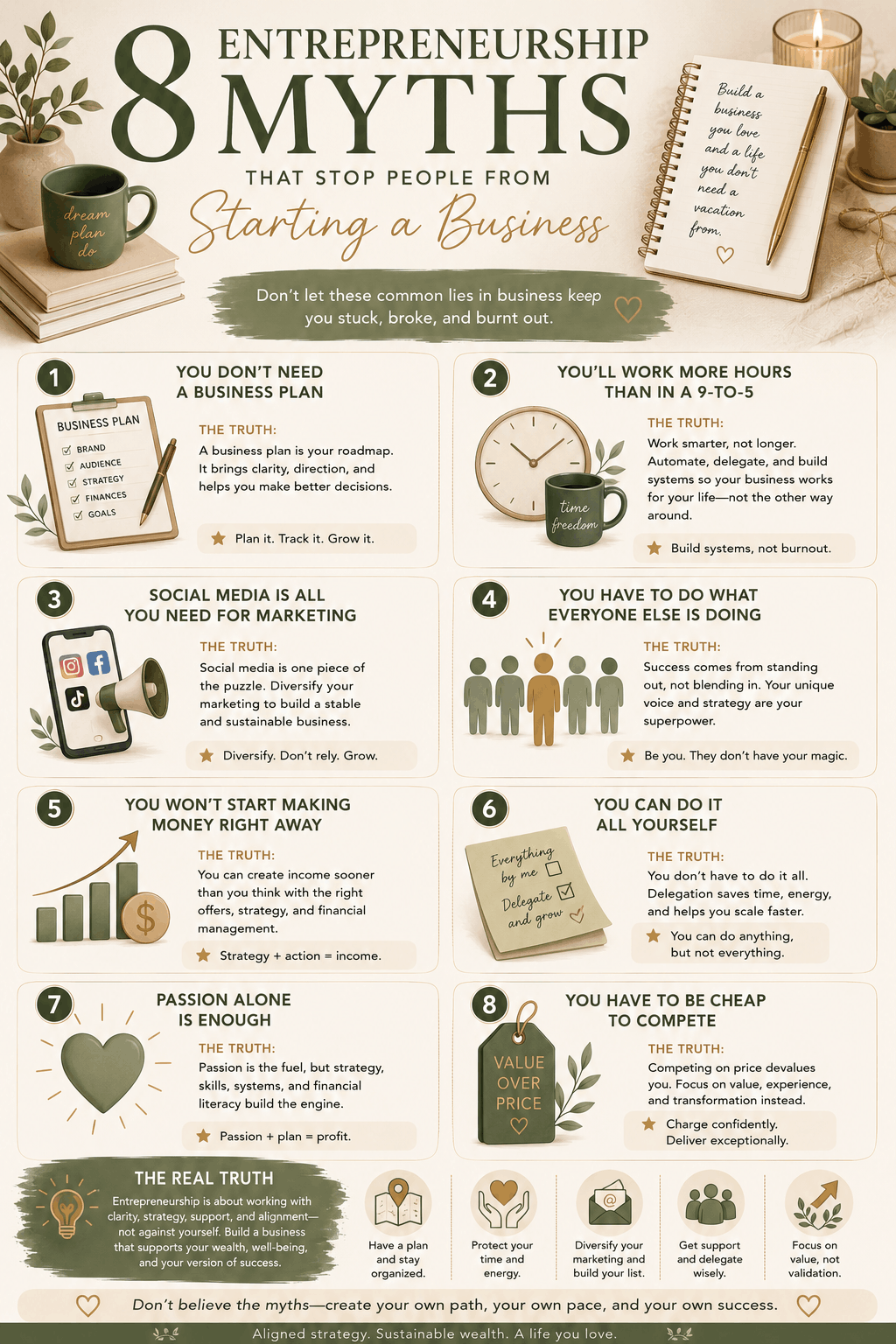
Stop Believing These Lies in Business
I think entrepreneurship becomes so much healthier when we stop romanticizing struggle constantly.
Because yes, entrepreneurship requires courage.
It requires growth.
It requires discomfort sometimes.
But it should not require self-destruction.
You do not need to burn yourself out to prove you are ambitious.
You do not need to do everything alone to prove you are capable.
You do not need to suffer endlessly before you are allowed success.
You do not need to mimic everyone else online to build something meaningful.
And honestly, I think the healthiest businesses are often built slowly, intentionally, sustainably, and in alignment with the actual life you want to live.
Not just the image of success you feel pressured to perform online.
Further Reading
Continue Exploring Entrepreneurship, Wealth & Sustainable Success
If you're building a business while trying to avoid burnout, overwhelm, and hustle culture, these articles may support you further.
Free Resource To Share
If entrepreneurship myths have left you feeling overwhelmed, financially confused, or unsure how to build sustainable wealth through business, my Financial Clarity Webinar may help simplify things.
I created it to help entrepreneurs and professionals build a healthier relationship with money, financial planning, and long-term wealth without shame, burnout, or hustle culture pressure.
Product Recommendation
Entrepreneurship can become incredibly overwhelming when you feel like you need to figure everything out alone. The Well(th) List includes some of my favorite productivity, wellness, business, and personal growth resources that have genuinely supported me throughout my entrepreneurial journey.
I think sustainable success is built through support, systems, and intentional habits — not constant burnout.
FAQs
What are the biggest entrepreneurship myths?
Some of the biggest entrepreneurship myths include believing you must work constantly, do everything alone, rely only on social media, lower your prices to compete, or struggle for years before making money.
Why are entrepreneurship myths harmful?
Entrepreneurship myths can create unrealistic expectations that lead to burnout, financial stress, imposter syndrome, poor business decisions, and unsustainable work habits.
Do you need a business plan to succeed?
While business plans do not need to be overly complicated, having clarity around your finances, audience, offers, goals, and marketing strategy can significantly improve long-term business sustainability.
Is passion enough to build a successful business?
Passion is important, but successful businesses also require financial literacy, strategy, marketing, systems, customer understanding, and sustainable operations.
Why is hustle culture harmful for entrepreneurs?
Hustle culture often glorifies burnout, overworking, and constant productivity while ignoring mental health, creativity, rest, and long-term sustainability.
Should small business owners delegate tasks?
Yes. Delegation helps entrepreneurs focus on higher-impact activities, reduce burnout, create capacity, and build more sustainable businesses over time.
Is social media enough for business growth?
No. While social media can support visibility and marketing, businesses often grow more sustainably when they diversify through SEO, email marketing, referrals, partnerships, networking, and long-form content.
