
Mindful Spending: How to Align Your Spending With Your Values
In today’s world, spending money has become almost effortless. Ads follow us everywhere, social media constantly encourages consumption, and impulse purchases are only one click away. And honestly, I think that’s part of why so many people feel emotionally conflicted about money now. We want to enjoy life and treat ourselves, but at the same time, many of us carry guilt, anxiety, or stress around spending. That’s why mindful spending feels so important to me. It creates space for intentionality instead of shame. Instead of viewing money through extreme restriction or impulsive consumption, mindful spending asks a softer question: Does this purchase actually align with the life I’m trying to build?
I think one of the biggest misconceptions about financial wellness is the idea that “being good with money” means never spending anything unnecessary.
As if financial responsibility is supposed to feel emotionally restrictive all the time.
Save more.
Spend less.
Cut everything out.
Never indulge.
Always optimize.
And honestly?
I don’t think that mindset creates a healthy relationship with money for most people long term.
Because eventually, hyper-restriction can create resentment, emotional spending cycles, guilt, and burnout around finances too.
That’s why I think mindful spending matters so much.
Mindful spending is not about never buying things.
It’s not about perfection.
It’s not about guilt.
It’s about intentionality.
It’s learning how to spend money in ways that genuinely align with your values, priorities, emotional wellbeing, and long-term goals instead of spending reactively, impulsively, or from emotional pressure.
And honestly, I think that shift changes your relationship with money entirely.
What Is Mindful Spending?
Mindful spending means becoming more conscious about where your money goes and why.
Instead of spending automatically or emotionally, you pause long enough to ask:
Does this purchase genuinely matter to me?
Does this align with my values?
Will this improve my life meaningfully?
Am I buying this intentionally or impulsively?
Does this support the version of life I’m trying to build?
And honestly, I think mindful spending creates so much more peace because it removes the constant emotional tug-of-war many people experience around money.
When your spending aligns with your priorities, purchases often feel:
more fulfilling
less guilt-inducing
more sustainable
emotionally intentional
aligned with your long-term wellbeing
It becomes less about perfection and more about awareness.
Why So Many People Feel Guilty Spending Money
I honestly think spending guilt is incredibly common now.
Especially online, where financial conversations often swing between two extremes:
hustle culture and luxury consumption
orhyper-frugality and restriction
And somewhere in the middle, many people end up feeling confused about how to spend money “correctly.”
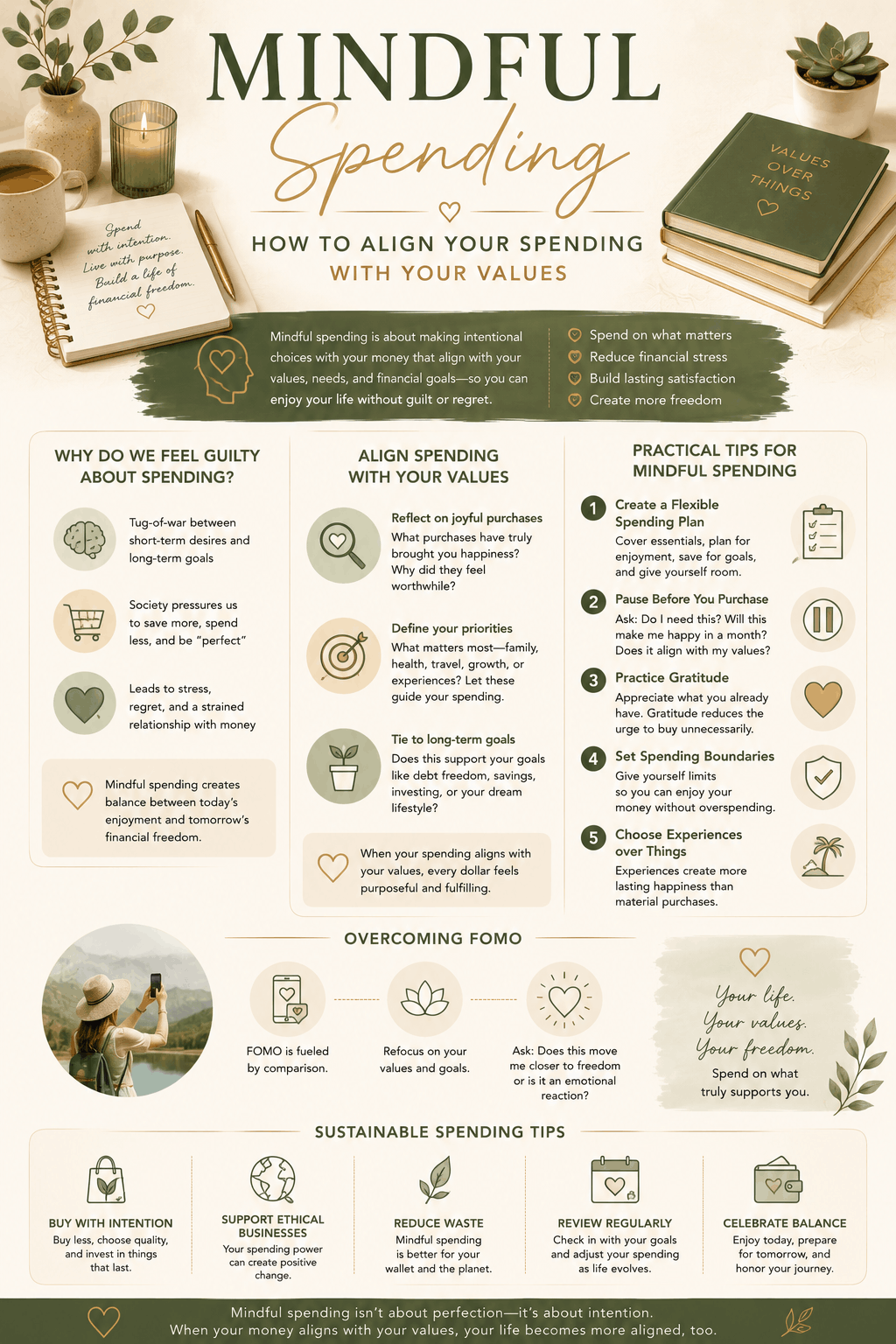
Part of this guilt comes from the tension between short-term enjoyment and long-term financial goals.
You want to enjoy your life now.
But you also want stability later.
You want freedom.
Security.
Experiences.
Rest.
Savings.
Pleasure.
Responsibility.
And balancing those desires can feel emotionally complicated sometimes.
Social media also intensifies this constantly.
You’re exposed daily to:
luxury lifestyles
influencer consumption
beauty trends
aesthetic culture
travel content
productivity culture
comparison-driven spending
And subconsciously, it can create pressure to consume in order to feel successful, worthy, or “caught up.”
But honestly, comparison-driven spending rarely creates lasting fulfillment.
How Mindful Spending Helps You Spend Less Naturally
One thing I’ve noticed personally is that mindful spending often leads people to spend less money naturally — not from deprivation, but from clarity.
Because once you become more aware of your emotional spending triggers, it becomes easier to recognize purchases that:
don’t actually improve your life
create temporary dopamine only
are rooted in comparison
come from stress or burnout
reflect external pressure instead of personal desire
Research in behavioral psychology has shown that emotional states, habits, and environmental triggers strongly influence spending behavior. Which honestly makes so much sense when you think about how often people shop while stressed, overwhelmed, lonely, anxious, or emotionally depleted.
Mindful spending interrupts that automatic cycle.
It creates space between:
the impulse
andthe decision
And that pause can be incredibly powerful financially.
How to Identify Your Spending Values
I think one of the healthiest financial exercises people can do is identifying what they genuinely value spending money on.
Because not every purchase carries the same emotional weight or personal meaning.
For some people, travel deeply enriches their life.
For others, it’s wellness.
Convenience.
Education.
Experiences.
Food.
Creativity.
Beauty.
Home environments.
Relationships.
Freedom.
Security.
One thing that helped me tremendously was reflecting on purchases that genuinely improved my quality of life instead of simply creating temporary excitement.
Some purchases brought:
peace
ease
time freedom
emotional wellbeing
inspiration
connection
growth
Others honestly just created clutter, stress, or regret later.
And I think becoming aware of that distinction changes spending habits dramatically over time.
Because once you understand your real values, it becomes easier to stop spending money trying to impress people or keep up with lifestyles that don’t actually align with you.

How to Identify Your Spending Values
I think one of the healthiest financial exercises people can do is identifying what they genuinely value spending money on.
Because not every purchase carries the same emotional weight or personal meaning.
For some people, travel deeply enriches their life.
For others, it’s wellness.
Convenience.
Education.
Experiences.
Food.
Creativity.
Beauty.
Home environments.
Relationships.
Freedom.
Security.
One thing that helped me tremendously was reflecting on purchases that genuinely improved my quality of life instead of simply creating temporary excitement.
Some purchases brought:
peace
ease
time freedom
emotional wellbeing
inspiration
connection
growth
Others honestly just created clutter, stress, or regret later.
And I think becoming aware of that distinction changes spending habits dramatically over time.
Because once you understand your real values, it becomes easier to stop spending money trying to impress people or keep up with lifestyles that don’t actually align with you.
Intentional Spending vs Emotional Spending
I think there’s a big difference between intentional spending and emotional spending.
Intentional spending usually feels grounded.
Conscious.
Aligned.
Thoughtful.
Emotional spending often feels reactive.
You buy because:
you’re stressed
bored
lonely
overwhelmed
emotionally exhausted
trying to feel productive
seeking comfort
trying to feel worthy
comparing yourself to others
And honestly, emotional spending is deeply human.
I don’t think people should shame themselves for it.
But I do think awareness matters.
Because when spending becomes your primary coping mechanism for emotional discomfort, it can quietly create financial stress, clutter, guilt, and disconnection from your long-term goals.
Mindful spending helps you pause long enough to ask:
“What am I actually needing right now?”
Sometimes the answer is not the purchase itself.
Sometimes the answer is:
rest
support
connection
emotional regulation
boundaries
comfort
self-care
nervous system support
And honestly, I think that emotional awareness is part of holistic wealth too.

How to Spend Money Without Feeling Guilty
I genuinely believe guilt-free spending becomes possible when your spending is intentional.
Not perfect.
Intentional.
One thing I personally love about mindful spending is that it allows room for joy.
You do not need to deprive yourself constantly to be financially responsible.
You are allowed to:
enjoy your money
travel
buy beautiful things
invest in experiences
prioritize convenience
spend on wellness
create comfort
celebrate yourself
The key is making sure your spending aligns with your actual values instead of unconscious pressure or emotional avoidance.
And honestly, I think financial wellness becomes much more sustainable when people stop approaching money through shame.
Because shame rarely creates lasting behavioral change.
Self-awareness does.

How to Overcome Fear of Spending Money
I also want to acknowledge that not everyone struggles with overspending.
Some people struggle with the opposite.
Fear of spending anything at all.
Especially people who grew up around:
financial instability
scarcity
debt
unpredictability
survival mode
For some people, spending money triggers anxiety, guilt, or fear even when they can technically afford the purchase.
And honestly, mindful spending can help here too.
Because intentional spending reminds you that money is not only meant to be hoarded.
It is also meant to support your life.
Financial wellness is not just about saving endlessly.
It’s about creating balance between:
present wellbeing
andfuture security
That balance matters emotionally too.
Sustainable & Ethical Spending
One thing I’ve become more conscious of over time is how mindful spending can also extend beyond personal finances into collective wellbeing and sustainability.
Mindful spending can look like:
buying higher-quality items less frequently
supporting ethical businesses
investing in durability over impulse trends
reducing wasteful consumption
prioritizing sustainability when possible
And honestly, I think intentional spending often creates more appreciation too.
Because when you buy fewer things more intentionally, you tend to value them differently.
Mindful Spending Is Really About Alignment
At the end of the day, I don’t think mindful spending is about creating rigid financial rules.
It’s about alignment.
Alignment between:
your money
your values
your emotional wellbeing
your future goals
your lifestyle
your priorities
And honestly, I think financial peace often comes less from perfection and more from intentionality.
Because when your spending reflects the life you genuinely want to build, money starts feeling less like a source of guilt and more like a tool for supporting your wellbeing, freedom, and long-term vision.
That’s what mindful spending means to me.
Further Reading
Continue Exploring Intentional Spending & Financial Wellness
If you're learning how to build a healthier relationship with money, spending, and financial wellbeing, these articles may support you further.
Free Resource To Share
If you’re currently trying to become more intentional with your money, improve your spending habits, or reduce financial stress, the Wealth Well Tracker can help you create more awareness around your financial patterns in a supportive and sustainable way.
I created it to help people build healthier money habits rooted in self-awareness rather than shame or perfectionism.
Product Recommendation
Mindful spending becomes so much easier when you become intentional about what genuinely adds value to your life. The Well(th) List includes some of my favorite wellness, productivity, financial, and personal growth resources that support intentional living and holistic wellbeing.
I think one of the healthiest financial shifts we can make is moving away from impulse spending and toward purchases that genuinely align with our values and lifestyle.
FAQs
What is mindful spending?
Mindful spending means making intentional financial decisions based on your values, priorities, emotional wellbeing, and long-term goals instead of impulse, pressure, or emotional reactions.
How can I spend money more intentionally?
You can spend money more intentionally by pausing before purchases, identifying your values, reflecting on emotional triggers, creating spending boundaries, and focusing on purchases that genuinely improve your life.
Why do I feel guilty spending money?
Spending guilt often comes from the tension between wanting to enjoy life now while also worrying about future financial security, savings, debt, or societal pressure around money.
What is the difference between mindful spending and emotional spending?
Mindful spending is intentional and aligned with your values, while emotional spending is often reactive and driven by stress, boredom, comparison, anxiety, or emotional discomfort.
How can mindful spending help me save money?
Mindful spending helps reduce impulsive purchases and encourages intentional decision-making, which naturally leads many people to spend less money while feeling more satisfied with their purchases.
What are examples of intentional spending?
Intentional spending can include investing in wellness, education, meaningful experiences, quality items, convenience that improves your life, or purchases that support your values and long-term goals.
Can mindful spending improve mental health?
Yes. Mindful spending can reduce financial stress, spending guilt, emotional overwhelm, and impulsive shopping patterns while helping people feel more aligned and in control of their finances.
