
The Complete Guide to Money Management That Actually Works
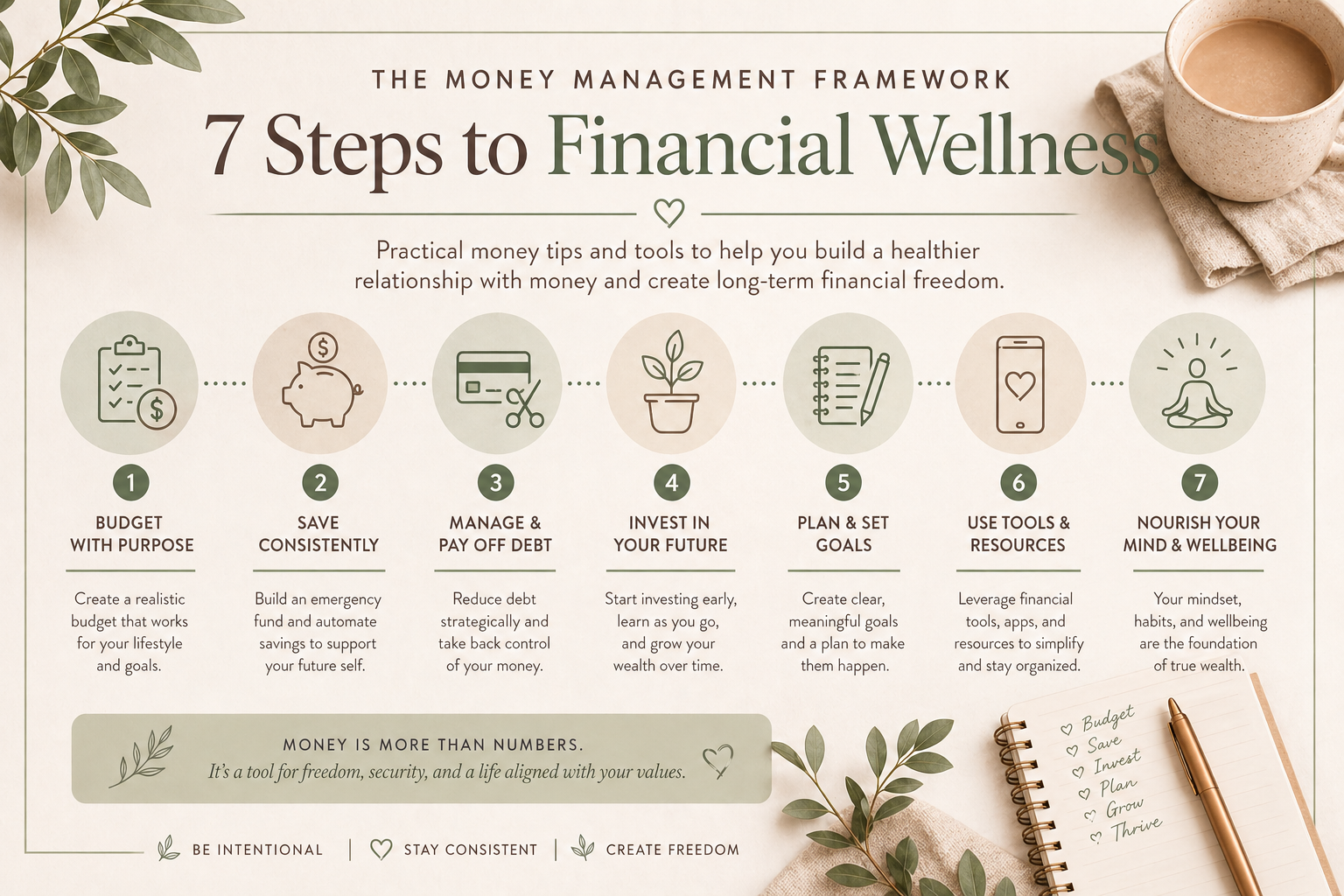
Money management can feel overwhelming when nobody really teaches you how to budget, save money, pay off debt, or plan for the future in a way that actually feels sustainable. Most of us are expected to somehow “figure it out” while navigating rising costs, financial anxiety, emotional spending, and the pressure to constantly keep up.
The truth is, building wealth rarely happens through perfection. It happens through awareness, consistency, supportive systems, and learning how to make intentional financial decisions over time.
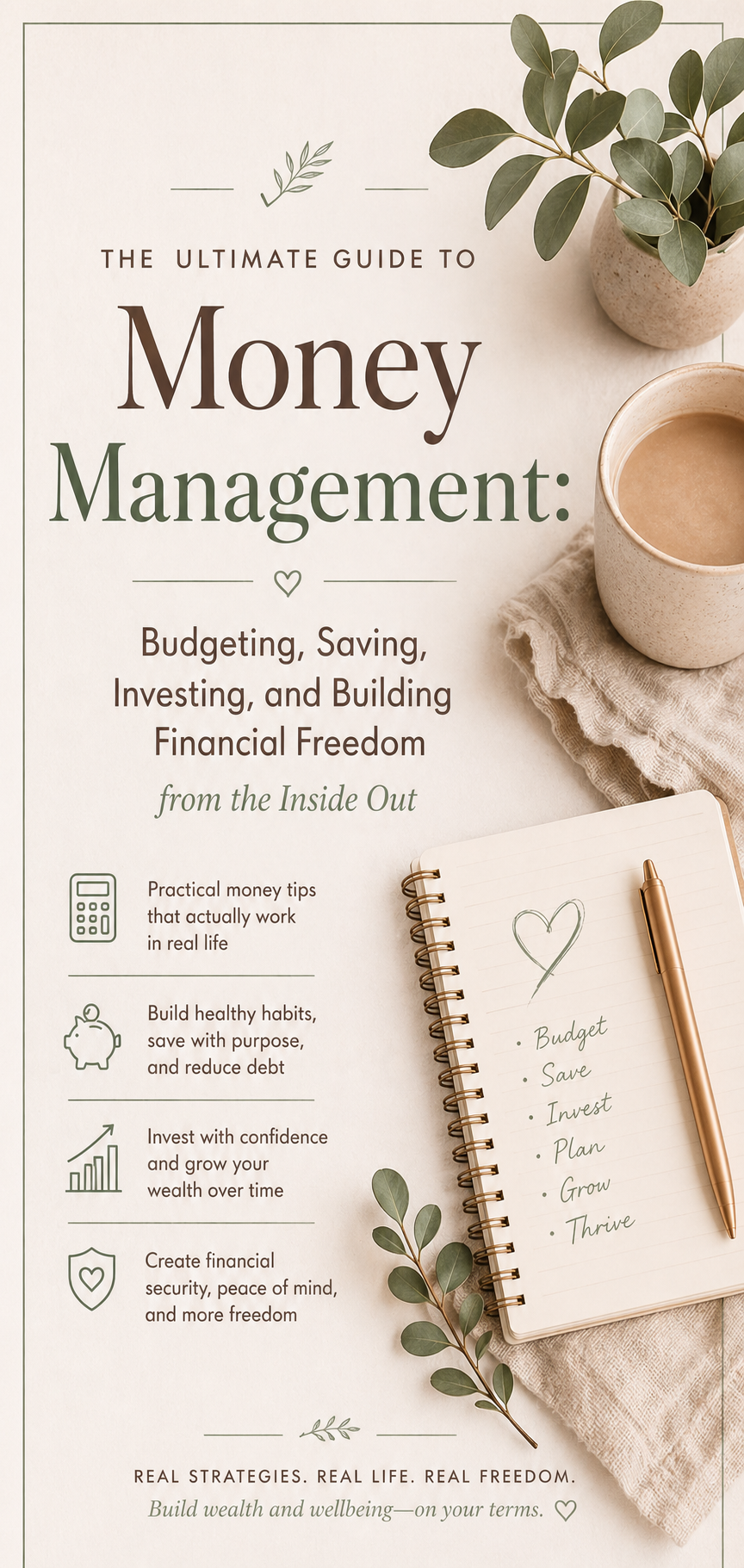
This guide breaks down practical money management tips that actually work in real life — from budgeting and saving strategies to debt management, emergency funds, financial planning, and investing with purpose. Whether you’re just starting your financial literacy journey or trying to rebuild a healthier relationship with money, this article is here to help you feel more confident, informed, and financially empowered moving forward.
Financial Literacy, Budgeting, and Wealth Building Starts Here
Money management can feel incredibly overwhelming when nobody really teaches you how to budget, save money, pay off debt, invest, or financially plan for your future in a way that actually feels sustainable.
Most of us are simply expected to “figure it out” somewhere between getting our first paycheque and trying to survive adulthood. And honestly, that process can feel exhausting.
One moment you’re trying to understand budgeting and financial literacy, and the next you’re navigating rising living costs, emotional spending, debt repayment, financial anxiety, burnout, investing, and the pressure to somehow still enjoy your life at the same time.
No wonder so many people feel disconnected from their finances.
Because the truth is, managing money isn’t purely mathematical. Yes, numbers matter. But so do your habits, your environment, your stress levels, your upbringing, your nervous system, and the emotional relationship you’ve developed with money over time.
That’s why so much traditional financial advice falls flat for people. Most money management tips focus heavily on discipline while completely ignoring the human side of finances. The reality is, you can know exactly what you “should” be doing financially and still struggle to consistently follow through if your systems, habits, mindset, or emotional wellbeing aren’t being supported alongside it.
And honestly, I don’t believe financial wellness should feel rooted in shame, restriction, perfectionism, or constant self-punishment.
I believe it should feel supportive.
This guide was created to help you build a healthier, more sustainable relationship with money through realistic money management tips that actually work in everyday life. We’re going to cover budgeting fundamentals, saving money consistently, debt management strategies, emergency funds, financial planning, investing with purpose, and financial tools that can help support your long-term wellbeing and wealth building journey.
Not from a place of fear.
But from a place of awareness.
Because money management isn’t really about becoming obsessed with money.
It’s about creating more freedom, flexibility, peace, stability, opportunity, and alignment within your life over time.
And no matter where you currently are financially, it is never too late to improve your financial knowledge, strengthen your financial literacy, and create systems that better support both your present self and your future self.

Why Money Management Matters
Money Impacts More Than Just Your Bank Account
Money is one of the biggest driving forces behind many of our everyday decisions. Whether we realize it consciously or not, it influences where we live, how we eat, the opportunities we have access to, how safe we feel, and even how much rest we allow ourselves to experience.
Without money, life becomes significantly harder to navigate.
Money is required to pay for food, shelter, transportation, healthcare, and honestly… to ensure we walk outside with more than just a loincloth (nothing against loincloths if that’s your choosing, just saying).
Now yes, technically you could argue that humans don’t need money to survive. But unless you live completely off-grid in some remote forest or island — which honestly, even that requires some level of financial privilege nowadays — money matters. Especially within modern capitalist societies where almost every basic need has been monetized in some way.
That’s why we spend so much of our lives working for it.
From around the age of 16 to 65 is roughly the average timeline many people spend working before they can hopefully retire comfortably and finally call it quits. That’s decades of exchanging time, energy, creativity, and labour for income. Some people work traditional jobs their entire lives, while others decide to start businesses or freelance and work for themselves. Either way, most of us will not get through life without having to work in some capacity.
You work to earn money… until ideally, you earn enough money that you no longer have to work for money.
And maybe that’s part of why money feels so emotionally charged for so many people. We spend years trying to earn it, but very little time actually learning how to manage it once we finally do.
Financial literacy is still something many people are expected to “just know,” despite rarely being taught it properly in school or even at home. Most people are simply thrown into adulthood expected to figure out budgeting, debt, taxes, saving, investing, and financial planning through trial and error.
Which is honestly a pretty overwhelming way to learn something that impacts nearly every area of your life.
Research continues to show that financial stress is one of the leading causes of anxiety among adults, with many people regularly losing sleep over money. And it makes sense. Money affects survival, security, relationships, confidence, and future opportunities. It’s not “just money” when your quality of life is attached to it.
That’s why improving your relationship with money matters just as much as improving your income.
Financial Literacy Creates Freedom
Figuring out how to make money is one thing. The first thing, really. But once you do, a whole new world opens up.
Because now you have choices.
Choices on how to spend your money, save it, invest it, share it, or build with it. And chances are, like many people, nobody really taught you how to manage this new level of responsibility in a way that actually feels sustainable or supportive.
Some people prefer saving every dollar for a rainy day. Others prefer living fully in the moment. Most people exist somewhere in between. And honestly, there isn’t always a right or wrong approach.
The problem usually begins when the financial decisions you’re making consistently move you further away from peace, flexibility, stability, and long-term wealth.
My goal as a financial wellness coach has always been to help people recognize the gold they’re already working with — and then help them learn how to mine for more.
But how do we build wealth when most of us were never truly taught how?
In order to build wealth, the first key step after earning an income is learning how to manage it efficiently. Often, this starts with something simple: making more money than you spend. But eventually, you realize that earning more income alone doesn’t automatically create more freedom if all of your time and energy are still being consumed in the process.
Because in my eyes, wealth reaches its peak once you slowly stop doing the thing capitalism constantly demands of us: endlessly exchanging time for money.
You can only grind for so long before it starts affecting your body, your relationships, your nervous system, and your overall wellbeing. And we’re seeing this collectively now more than ever. People are burnt out. More hours are being dedicated to work, while less time is being spent with loved ones, creativity, hobbies, rest, and joy.
Wealth is supposed to reward you with freedom, flexibility, peace, and time.
Not just expensive things.
When your money starts working for you instead of you constantly working for it, that’s where another level of financial freedom unlocks.
It’s like reaching the final level in a video game where you finally face the ultimate boss. But getting there requires an entire journey first. A journey of becoming more intentional with your money, clarifying your values, creating goals, budgeting realistically, learning how to save money consistently, paying off debt, and eventually investing with purpose.
That’s the real strategy for saving money and building long-term wealth.
Not perfection.
Not hustle culture.
Not pretending you’ll suddenly wake up one random Monday morning financially disciplined forever.
It’s systems.
Awareness.
Repetition.
Financial knowledge.
Supportive habits.
And small decisions made consistently over time.
Financial Independence Changes You
When you begin putting supportive financial systems into place, you naturally start feeling more in control of your finances. And I don’t mean the fake kind of control that leaves you obsessively checking your bank account every hour or panicking over every purchase.
Real financial confidence usually feels much quieter than people expect.
It feels grounded.
The kind of grounded control built on preparation, self-awareness, flexibility, and trust in your ability to navigate challenges as they come.
Because the truth is, you cannot control everything that happens in life. Unexpected expenses, layoffs, heartbreak, emergencies, inflation, health issues — life will always “life.” But what you can control is how you prepare for those situations and how intentionally you respond when they happen.
Money management isn’t about becoming perfect with money. It’s about becoming more intentional with it.
It’s learning how to guide your money instead of constantly feeling like your money is guiding you.
The better you get at managing your money, the more you begin realizing just how much power you actually have in shaping the quality of your life. Good money management tips aren’t only about becoming “rich.” They’re about creating options.
The ability to:
leave unhealthy environments
take time off when needed
invest in your health
start a business
travel more
support your family
rest without panic
pursue opportunities without constantly feeling financially trapped
Flexibility is one of the most underrated forms of wealth.
Take it from me — finally being able to stop asking my parents for shopping money after landing my first job felt like a major life upgrade.
I was 16 years old working my first job at Tim Hortons, and when I got that very first paycheque, I genuinely felt happier almost instantly. Not because I was suddenly wealthy, but because I finally had some independence. I could make decisions for myself. I didn’t have someone constantly telling me “no.”
Now… did I save any of that money? Absolutely not.
Every dollar I made in high school went right back into food, makeup, clothes, hair, and Sephora hauls. But we can unpack emotional spending another time.
What I do know is that while there may have been a price attached to those shopping bags, there was no price on the feeling of freedom I experienced from earning my own money.
To earn money is a privilege. To choose how you spend it is another.
And financial independence looks different for everyone. Some people are unable to work due to disabilities or health challenges and may depend on others financially. Some people choose dependence because it feels safer or less stressful. Others deeply value autonomy, flexibility, and self-sufficiency.
Personally, independence wins for me every time.
Not because asking for help is bad, but because there’s something deeply empowering about knowing you can support yourself, make your own choices, and create a life aligned with your values.
There are absolutely seasons in life where building wealth collaboratively with family, partners, or community is necessary and beautiful. But eventually, understanding what financial independence can offer you — emotionally, mentally, and practically — becomes life changing.
Because at the end of the day, money management isn’t really about restriction.
It’s about creating a life that feels safer, freer, more peaceful, and more aligned with who you actually want to become.
And that’s really where financial wellness begins.
Not with perfection.
Not with becoming a millionaire overnight.
Not with depriving yourself of every little thing you enjoy.
But with awareness.
With understanding where your money is going, what your habits are costing you emotionally and financially, and learning how to create systems that genuinely support the kind of life you’re trying to build.
Because once you understand the “why” behind money management, budgeting, and financial planning stop feeling like punishment and start feeling like self-respect.
This is something I talk more about in How to Improve Your Relationship With Money (So It Finally Feels Safe), especially when it comes to shifting your mindset around money from fear and avoidance into clarity and confidence. And if you’re beginning to realize that relying on one income stream alone may no longer feel sustainable in today’s economy, I also dive deeper into that in Passive Income for Beginners.

Budgeting Fundamentals
Why Most Budgeting Advice Fails
Budgeting is one of those things almost everybody knows they should be doing, yet so many people struggle to actually stick to it consistently. And honestly? I don’t think the problem is that people are “bad with money” nearly as much as they’ve been taught budgeting in ways that feel restrictive, unrealistic, overwhelming, or completely disconnected from their actual lifestyle and personality.
Most budgeting advice online sounds like it was created for robots with perfect discipline and unlimited energy.
Track every dollar.
Cut out all unnecessary spending.
Meal prep every Sunday.
Never buy coffee again.
Open seventeen spreadsheets.
Colour-code your finances.
Meanwhile, real life is happening.
You’re tired.
You’re overstimulated.
You’re emotionally spending sometimes.
You forget things.
Your nervous system is dysregulated.
Your income fluctuates.
You’re trying to survive inflation while also attempting to enjoy your life a little.
Of course budgeting can start feeling exhausting under those conditions.
And I think that’s why budgeting fails for so many people. Not because budgeting itself doesn’t work, but because people are often trying to force themselves into financial systems that were never designed for them specifically.
Budgeting usually fails because:
you’ve only tried one budgeting method
you don’t currently make enough income to comfortably cover your expenses
your expenses consistently exceed your income
your system creates too much resistance or overwhelm
you’re prioritizing the wrong things financially
you don’t have a consistent rhythm for tracking your money
you avoid looking at your numbers due to anxiety or shame
you’re making financial decisions from an emotionally dysregulated state
And honestly, budgeting can really only “fail” in two situations:
there’s no income coming in
your expenses are consistently greater than your income
Outside of that, budgeting usually isn’t failing you — you’re simply trying to budget in a way that isn’t aligned with your personality, lifestyle, needs, or capacity.
For example, if you’re someone who’s very hands-off, lives a busy lifestyle, struggles with executive functioning, or genuinely cannot keep up with manually updating spreadsheets every few days… stop trying to force yourself to do that.
Thankfully, we live in a technological era that gives us far more options than just spreadsheets and cash envelopes.
And honestly, as a financial wellness coach, I don’t even budget in the traditional sense myself.
I’ve tried the spreadsheets.
I’ve tried the envelopes.
I’ve tried hyper-detailed tracking systems.
My neurodivergent brain gives up before I even start.
What does work for me is much simpler.
I do bare-bones tracking every week or so by periodically checking my bank accounts, knowing my minimum fixed expenses, and ensuring my income exceeds those expenses enough for me to save the difference, invest, or pay down debt.
That’s it.
Even as someone without perfectly stable income through entrepreneurship and self-employment, I still know roughly what I need to make every month to comfortably maintain my lifestyle. Since my fixed expenses rarely change, there’s no reason for me to obsessively micromanage every dollar daily. And if my expenses do significantly change, that’s usually the only time I revisit my notes or wealth tracker more deeply.
I’ve also experimented with budgeting apps, which can be incredibly helpful for people who want more automation and less manual effort. There are so many different budgeting methods now, which is why I always tell women to stop trying to manage money based solely on how their parents, friends, or society tells them they “should.”
There is no universal perfect budgeting system.
There’s only the system that realistically supports you.
And it took me years of trial and error to finally find a rhythm that feels supportive, sustainable, and easy enough to maintain consistently. You’re allowed to take the same approach.
Because consistency will always outperform perfection when it comes to money management tips that actually work long term.
Finding a Budgeting Style That Works for You
There are so many different ways to budget:
cash envelopes
budgeting apps
automated tracking tools
reviewing monthly bank statements
spreadsheets
handwritten budgeting journals
bare-minimum expense tracking
But what matters even more than the budgeting method itself is understanding which style works best for your personality and lifestyle.
A good budgeting system should support your life — not consume it.
So before choosing a budgeting method, ask yourself:
Are you more hands-on or hands-off?
How much time realistically can you dedicate to reviewing your finances?
Do detailed numbers calm you down or overwhelm you?
How do you emotionally feel when you think about checking your finances?
Do you prefer automation or manual control?
Do you need simplicity or structure?
These questions matter because budgeting is deeply behavioural and emotional. Studies in behavioural finance have repeatedly shown that emotions and stress heavily influence spending habits, financial avoidance, and long-term financial decision making.
That’s why someone can technically “know” what to do financially but still struggle to consistently follow through.
The truth is, the #1 way to start improving your financial literacy and money management skills is simply by looking at your numbers more often.
Not obsessively.
Not judgmentally.
Just honestly.
And yes, at first this can feel uncomfortable.
Especially if you’ve avoided your finances for a long time, carry shame around money, grew up around financial instability, or feel overwhelmed by debt or inconsistent income.
But over time, you’ll notice something interesting starts happening:
the more often you look at your finances, the less emotionally charged they become.
Avoidance creates anxiety.
Awareness creates clarity.
You stop wondering where your money is going because you actually know.
And from there, you can begin making decisions from a grounded place instead of constantly reacting emotionally in the moment.
Tracking Your Money Creates Financial Awareness
It’s always better to start somewhere than continue avoiding your finances altogether.
Because not tracking your money flow can quietly lead to:
increased debt
missed bill payments
overdraft fees
unnecessary stress
overspending
missed saving opportunities
delayed financial goals
overall financial mismanagement
Even if in the moment it doesn’t feel like a big deal.
Honestly, it reminds me a lot of nutrition.
We all know eating vegetables contributes to better long-term health. But it’s much easier to constantly choose foods high in sugar, fats, and processed carbs because they offer immediate gratification and require less effort. Over time though, neglecting your health compounds into larger issues.
The same thing happens financially.
The more you abandon managing your money, the harder it becomes to build wealth, reduce stress, and create long-term financial stability.
And no, this doesn’t mean you need to become obsessed with money or hyper-restrictive overnight.
It simply means creating enough awareness around your finances that you can make intentional decisions instead of constantly operating on autopilot.
Because budgeting, at its core, isn’t really about restriction.
It’s about awareness.
And awareness is often the first real step toward financial freedom.
The goal of budgeting isn’t to obsess over every dollar or make yourself feel guilty every time you buy something nice for yourself.
It’s to create enough awareness around your finances that you can support both your present life and your future self at the same time.
And honestly, that balance takes practice.
There will probably be months where you overspend, forget to track things properly, avoid your banking app for a week, or feel like you’re starting over again completely. That doesn’t mean you’ve failed. It just means you’re human.
Budgeting is a skill.
And like any skill, it gets easier the more consistently you practice it.
If budgeting has always felt restrictive or impossible for you to stick to, I talk more about this in 5 Budgeting Benefits That Will Transform Your Financial Life, because a lot of traditional budgeting advice completely ignores the emotional and behavioural side of money management. I also break this down further in 8 Budgeting Challenges (And How to Overcome Them) and How to Fix Your Budget When It Isn’t Working
especially if you’re still trying to figure out which budgeting style actually works best for your lifestyle and personality.

How to Save Money Consistently
Saving Money Is More Psychological Than Most People Think
Saving money sounds simple in theory.
Spend less.
Save more.
Done.
But if it were truly that easy, far more people would feel financially secure.
The reality is, saving money is deeply psychological and emotional. It’s not just about numbers on a screen. It’s about habits, impulses, stress levels, identity, nervous system regulation, lifestyle pressures, and the environment you’re constantly surrounded by.
We live in a consumer society where marketing is not accidental. Entire industries spend billions of dollars studying human behaviour and psychology to convince us to buy more things, faster and more often. Every scroll online feels like someone trying to sell you a new skincare product, lifestyle aesthetic, vacation, wellness trend, or “must-have” item.
And when you combine that with stress, burnout, loneliness, emotional spending, or the pressure to keep up with everyone online, saving money can start feeling almost impossible sometimes.
Which is why one of the biggest shifts you can make financially is reducing temptation wherever possible instead of constantly relying on willpower alone.
For example, I’m currently paying off debt that I accumulated during a period where my income was much lower than it is now. And one of the things I recently did was literally cut up my credit cards.
Not because credit cards are inherently evil, but because I know myself well enough to know that if they’re easily accessible, I’ll probably justify using them.
That’s what I mean when I say good money management tips should be supportive of your actual behaviour and tendencies — not based on fantasy versions of yourself.
Sometimes the best financial strategy isn’t increasing discipline.
Sometimes it’s creating less temptation.
And honestly, saving money also becomes much easier when you stop trying to move at someone else’s pace.
Social media has made people feel like if they’re not saving $1,000 a month immediately, they’re somehow failing financially. Meanwhile, saving $20 consistently is still infinitely better than saving nothing at all.
Small amounts compound over time.
Consistency compounds over time.
Confidence compounds over time.
There is no shame in starting small.
One of the biggest mistakes people make when trying to save money is assuming every financial goal has to happen instantly. But wealth building is usually much slower, quieter, and less glamorous than people expect.
You also don’t need to fall for every scarcity or FOMO marketing trap online.
There will always be another sale.
Another trend.
Another “limited-time” launch.
Another influencer telling you that your life will somehow improve if you buy the exact thing they’re selling.
Most things are not emergencies.
And most purchases lose their emotional excitement much faster than we expect them to.
That’s why being clear on why you want to save money matters so much.
Saving becomes significantly easier when you have emotional attachment to the goal behind it.
Maybe you’re saving:
to move out
to leave an unhealthy relationship
for emergencies
to travel
to start a business
for future children
for peace of mind
for financial independence
Your “why” creates emotional motivation during moments where saving feels inconvenient or difficult.
And interestingly enough, research has shown that having emergency savings — even relatively small amounts — is associated with lower stress levels and improved emotional wellbeing. Because financial security doesn’t just impact your bank account. It impacts your nervous system too.
Automating Your Savings Makes Everything Easier
One of the easiest ways to consistently save money is by removing as much manual effort from the process as possible.
Automation creates less resistance.
Less overwhelm.
Less decision fatigue.
And honestly, that matters more than people realize.
Think about the invention of the microwave for a second. Before microwaves, you had to be much more attentive to cooking food on a stove. You couldn’t really walk away from it for long without risking burning your meal. But with a microwave, you throw your food in, set the timer, and come back a few minutes later with your dinner ready.
Automated savings work similarly.
Instead of manually transferring money every single week and relying on memory, motivation, or discipline, the system quietly does the work for you in the background.
That’s why “pay yourself first” is one of the most effective saving strategies out there.
As soon as your paycheque comes in, allocate a portion toward:
savings
investing
debt repayment
emergency funds
first.
Not last.
Because when saving becomes the leftover category after spending, there’s usually very little left.
Most banks now allow recurring transfers into savings accounts automatically. And if your current bank doesn’t offer this feature, honestly, it may be worth considering switching to one that does. You can even call your bank directly and ask someone to walk you through setting up automated transfers if technology or online banking feels overwhelming at first.
And the beautiful thing about automation is that it’s flexible.
You can:
increase contributions later
decrease them temporarily if needed
pause them during harder seasons
send extra money whenever you’re financially able to
Automation isn’t meant to trap you.
It’s meant to support you.
You can also automate:
high-interest savings contributions
retirement investing
stock investments
sinking funds
bill payments
which creates even more financial stability and consistency over time.
And honestly, the less energy you have to spend manually managing every tiny financial task, the easier it becomes to stay consistent long term.
Because saving money shouldn’t constantly feel like an uphill battle against yourself.
Saving Money Is an Act of Self-Trust
I think one of the reasons saving money can feel emotionally difficult is because it requires delayed gratification in a world obsessed with immediate gratification.
We’re constantly encouraged to consume now and figure out the consequences later.
But every time you save money consistently, even in small amounts, you’re sending yourself a message that your future matters too.
That your future self deserves support.
Deserves safety.
Deserves flexibility.
Deserves options.
And no, saving money doesn’t mean you can never enjoy your life in the present.
You’re still allowed to:
travel
buy nice things
go out with friends
enjoy experiences
celebrate yourself
This isn’t about deprivation.
It’s about balance.
It’s about learning how to support both your present self and your future self at the same time instead of constantly sacrificing one for the other.
And the more consistently you save — even imperfectly — the more confidence you start building in your ability to take care of yourself financially.
That confidence changes everything.
If you struggle with consistently saving money, I talk more about this in Pay Yourself First: The Wealth Habit That Changes Everything, because one of the biggest mindset shifts is learning to prioritize your savings with the same level of importance as your rent or utilities. I also dive deeper into practical saving psychology in 2 Money Saving Strategies That Actually Work and share beginner-friendly strategies in 5 Easy Ways to Save Money and Build Wealth, if you’re looking for small habits that can make saving feel more manageable and realistic long term.
Debt Management Strategies
Debt Isn’t Always the Villain People Make It Out to Be
Debt sounds scary at first.
It’s something many of us are taught to fear, avoid, or run from completely — almost like it’s the most harrowing financial experience known to man. And honestly, owing somebody money and having that lingering over your head doesn’t always feel good. Debt can absolutely create stress, anxiety, shame, and pressure when it starts feeling unmanageable.
But let me tell you something most people don’t really think about:
Debt itself is not new.
In fact, debt has existed for centuries.
One of the earliest recorded examples of debt was actually tied to the first known human name we have documented: Kushim. In ancient Mesopotamia, records suggest he took out a loan for business purposes, promising repayment through future income generated from his work.
And honestly, when you think about it, that changed human society forever.
Without loans or debt systems, there would have been very little opportunity for upward mobility, expansion, entrepreneurship, or future planning beyond basic survival. Most people historically only earned enough to survive day-to-day. The idea that someone could borrow money now in hopes of generating greater future wealth completely shifted how economies functioned.
Debt became a tool.
A powerful one.
And when used strategically, debt could benefit both the borrower and the lender. The borrower gained access to opportunities, assets, housing, education, or business growth they otherwise may never have been able to afford upfront. The lender earned profit through interest over time.
The only real downside?
Things can get messy when debt becomes unmanageable or cannot be repaid.
And honestly, that’s usually where people’s fear around debt comes from.
Not debt itself, but the feeling of being trapped by it.
The good news is that most people quietly manage debt every single day. Research shows that the vast majority of adults carry some form of debt, whether through mortgages, student loans, car payments, credit cards, or business financing.
And if you look more closely at debt, people often separate it into two broad categories:
“good debt”
“bad debt”
Now personally, I think those labels can sometimes be a little oversimplified, but generally speaking:
debt that helps build future income, assets, or opportunities is often viewed more positively
debt attached to rapidly depreciating purchases or high-interest consumer spending tends to create more long-term financial strain
For example:
mortgages may help build equity and long-term wealth
student loans may increase future earning potential
business loans may help generate future income
while high-interest credit card debt can become financially draining if balances continue growing over time
What matters most though — regardless of the type of debt — is usually the interest rate.
Because interest is really where debt either becomes manageable… or starts becoming financially suffocating.
The higher the interest rate, the harder it becomes to pay debt down over time, especially if only minimum payments are being made.
And honestly, that’s where debt management starts feeling like financial Tetris.
How to Pay Off Debt More Strategically
So how do you actually manage debt effectively or begin paying it off faster?
At its core, debt repayment is actually fairly simple mathematically:
the more money you consistently put toward debt, the faster it disappears.
Of course emotionally and behaviourally, it’s usually much harder than that.
Especially when you’re balancing:
rising living costs
inconsistent income
emotional stress
emergencies
burnout
or trying to enjoy your life while still paying things down responsibly
Which is why having a strategy matters.
Two of the most common debt repayment methods are what we call:
the snowball method
the avalanche method
The snowball method focuses on paying off your smallest debt balances first while continuing minimum payments on everything else. Once the smallest debt is eliminated, you roll those payments into the next smallest debt, creating momentum over time.
This method works really well for people who feel motivated by quick wins and visible progress.
The avalanche method, on the other hand, focuses on paying off the debt with the highest interest rate first while maintaining minimum payments elsewhere. Once the highest-interest debt is eliminated, you move to the next highest.
Mathematically, this method usually saves more money long term because you reduce the amount lost to interest.
But honestly? Neither method is universally “better.”
It really comes down to:
your personality
your emotional relationship with money
your motivation style
your financial priorities
your nervous system capacity
Some people need emotional momentum.
Others prefer mathematical efficiency.
Both approaches are valid.
And if I’m being honest, paying off debt is rarely just about numbers anyway. It’s often deeply emotional.
Debt can carry:
shame
regret
guilt
embarrassment
frustration
survival stress
Especially if the debt was accumulated during difficult periods of life, low income, mental health struggles, emergencies, relationship changes, or seasons where you were simply trying to survive.
That’s why I think approaching debt repayment with both accountability and self-compassion matters.
Because shaming yourself constantly rarely creates healthier financial behaviours long term.
Debt Is a Tool — Not Your Identity
Managing debt responsibly is important because your debt history contributes heavily to your credit score and overall financial profile. Financial institutions use this information to determine how likely you are to repay borrowed money in the future.
Generally speaking, the better you are at:
making consistent payments
keeping debt balances manageable
maintaining low credit utilization
avoiding missed payments
the more likely lenders are to trust you financially.
But beyond credit scores and banking systems, I think it’s important to remember something deeper:
Debt is not your identity.
Having debt does not automatically mean you’re irresponsible, lazy, or “bad with money.”
Most people will carry some form of debt at various points throughout life.
Debt is simply a financial tool.
And like any tool, it can either support you or harm you depending on how it’s used and managed.
When used intentionally, debt can sometimes move you farther ahead in life than avoiding it completely ever could.
A mortgage may provide stability, privacy, and an appreciating asset over time.
Student loans may help create access to better career opportunities and higher future income.
Business loans may help fund ideas and opportunities that otherwise would never exist.
Even credit cards, when managed properly, can help build credit history, provide rewards, and increase financial flexibility.
The problem usually isn’t debt itself.
The problem is taking on debt without:
a repayment plan
income stability
financial awareness
or understanding the long-term impact of interest
That’s why financial literacy matters so much.
Because the more financially informed you become, the more intentionally you can decide:
what debt is worth taking on
what debt is hurting you
and how to strategically pay off debt loans in ways that support your long-term financial goals instead of sabotaging them.
And honestly, one of the most empowering feelings financially is realizing that debt doesn’t have to control your future forever.
Progress may happen slowly.
But slowly does not mean unsuccessfully.
If you’re currently focused on debt repayment, I share more realistic strategies in 4 Debt Payoff Strategies That Help You Become Debt Free Faster, especially if you’re trying to create a debt payoff plan that feels sustainable instead of overly restrictive or shame-based.
Emergency Funds and Financial Safety
Financial Resilience Matters More Than People Realize
Sometimes living too much in the present may not always be the healthiest thing financially.
And I know that sounds slightly ironic in a world where mindfulness, Buddhist philosophy, and stoic principles are constantly trending online. We’re often told to stay present, not overthink the future, and avoid worrying about things outside of our control.
And honestly, I agree with that to a certain extent.
But I also believe there are necessary moments where we need to reflect on both our past and our future in order to create more financial wellbeing in the present.
Not to obsess.
Not to spiral.
Not to catastrophize.
But to get honest about:
why our finances look the way they currently do
where we want our future to go
and what systems we can build now to support that future version of ourselves later
Building an emergency fund is one of those systems.
And honestly, most people avoid thinking about emergency savings because they’re so focused on simply surviving right now. They’re trying to pay rent, groceries, bills, debt, childcare, transportation, and maintain some form of joy or stability in the middle of all of that.
So future planning gets pushed aside.
We think:
“I’ll deal with it later.”
“I’ll save once I make more money.”
“I’ll worry about emergencies when they happen.”
But when it comes to money, one of the greatest privileges we actually do have is the ability to prepare ahead of time for potential future outcomes.
Both good and bad.
Because life is unpredictable.
And financial resilience is really about creating enough stability that when life inevitably “lifes,” you’re not completely emotionally, mentally, and financially destroyed every single time.
Emergency Funds Create Financial Safety
Having adequate savings to shelter you from life’s downturns is incredibly important.
And we all know what I mean when I say:
life lifes.
Like my favourite teen book series growing up, A Series of Unfortunate Events, life will absolutely hand us unexpected challenges at some point. Job loss, health issues, breakups, economic downturns, family emergencies, accidents, rising costs of living — these things happen whether we financially prepare for them or not.
The difference is simply how much financial cushioning exists when they arrive.
I always think of emergency savings like trying to prepare for meteors entering the atmosphere of your finances.
If scientists suddenly discovered a meteor heading toward Earth and gave no warning beforehand, the damage would obviously be far greater. But if people had time to prepare, create systems, and reduce risk, fewer people would suffer catastrophic consequences.
Our finances work similarly.
Emergency funds don’t stop bad things from happening.
They simply reduce the damage when they do.
And honestly, one of the biggest financial misconceptions people believe is that their current income or job is guaranteed forever.
Many people are raised believing:
work hard,
stay loyal,
keep your job until retirement,
and eventually everything works out.
But life doesn’t always follow linear plans.
Unexpected layoffs during recessions have left millions of people without income almost overnight. Others experience burnout, illness, company restructuring, workplace conflict, or simply outgrow careers that once felt aligned.
And when someone isn’t financially prepared for these types of disruptions, that’s often when debt starts compounding rapidly.
People begin relying on:
credit cards
personal loans
lines of credit
payday loans
borrowed money
simply to survive.
Not because they’re irresponsible.
But because they lacked financial cushioning during seasons where they did have extra money available to prepare ahead of time.
And honestly, I understand why saving for emergencies can feel emotionally difficult sometimes.
It’s hard to prioritize saving for something you can’t immediately see or emotionally connect to.
But once you realize your income is never fully guaranteed, emergency savings stop feeling pessimistic and start feeling empowering.
Because the goal isn’t to live in fear.
The goal is to create peace of mind knowing that if your ability to earn income suddenly changed tomorrow, you could still financially support yourself for a period of time.
That’s financial resilience.
Different Types of Savings Funds You May Need
One thing I think confuses people sometimes is that not all savings accounts are meant for the same purpose.
Different financial goals require different saving strategies depending on:
your lifestyle
priorities
income
responsibilities
future goals
and overall financial strategy plan
Emergency Fund (Long-Term Financial Protection)
Your emergency fund is meant to support you during larger financial disruptions or periods of instability.
I always tell people to ask themselves:
“How long would I realistically want to survive without income if I absolutely had to?”
Then build from there.
You also want to consider:
Do you own a car or home requiring maintenance?
Do you have children?
Are you self-employed?
Does your country provide free healthcare?
Do you support family financially?
How stable is your current income source?
All of these factors help determine how much emergency savings may realistically make sense for you.
Some people aim for:
3 months of expenses
6 months
12 months
or even more depending on their circumstances
There’s no perfect universal number.
The goal is simply increasing your ability to financially recover from unexpected disruptions without immediately falling into crisis.
Rainy Day Fund (Short-Term Unexpected Expenses)
A rainy day fund is slightly different.
This type of savings is usually meant for smaller unexpected expenses that pop up throughout everyday life.
Things like:
surprise car repairs
replacing a broken phone
unexpected vet bills
buying a last-minute birthday gift
surprise gratuities at an expensive dinner
higher utility bills one month
These aren’t necessarily emergencies.
They’re just normal inconveniences life throws at us occasionally.
And having money set aside for them prevents smaller expenses from constantly disrupting your larger financial goals.
Travel Savings
Travel is actually something I’ve only recently started approaching in a healthier financial way.
For years, I would heavily rely on credit cards to fund my travels, telling myself I’d simply “pay it off later.” And while I’ve had some incredible experiences traveling to over 20 countries — mostly solo — funding travel through debt can create unnecessary financial stress if you don’t plan for it intentionally beforehand.
Now, I try to reverse engineer my travel goals instead.
For example, let’s say I know I want at least one larger trip per year.
I already know transportation and accommodations will likely be my largest expenses:
flights
Airbnbs or hotels
trains
rental cars
So if I estimate:
$2,100 for accommodations
$1,000 for flights
another $2,000 for food, activities, shopping, and emergencies
then I know I may want to save roughly $5,000 for that trip overall.
Broken down weekly, that’s about $92 saved per week.
And suddenly the goal feels far less overwhelming because it’s attached to a tangible plan instead of random wishful thinking.
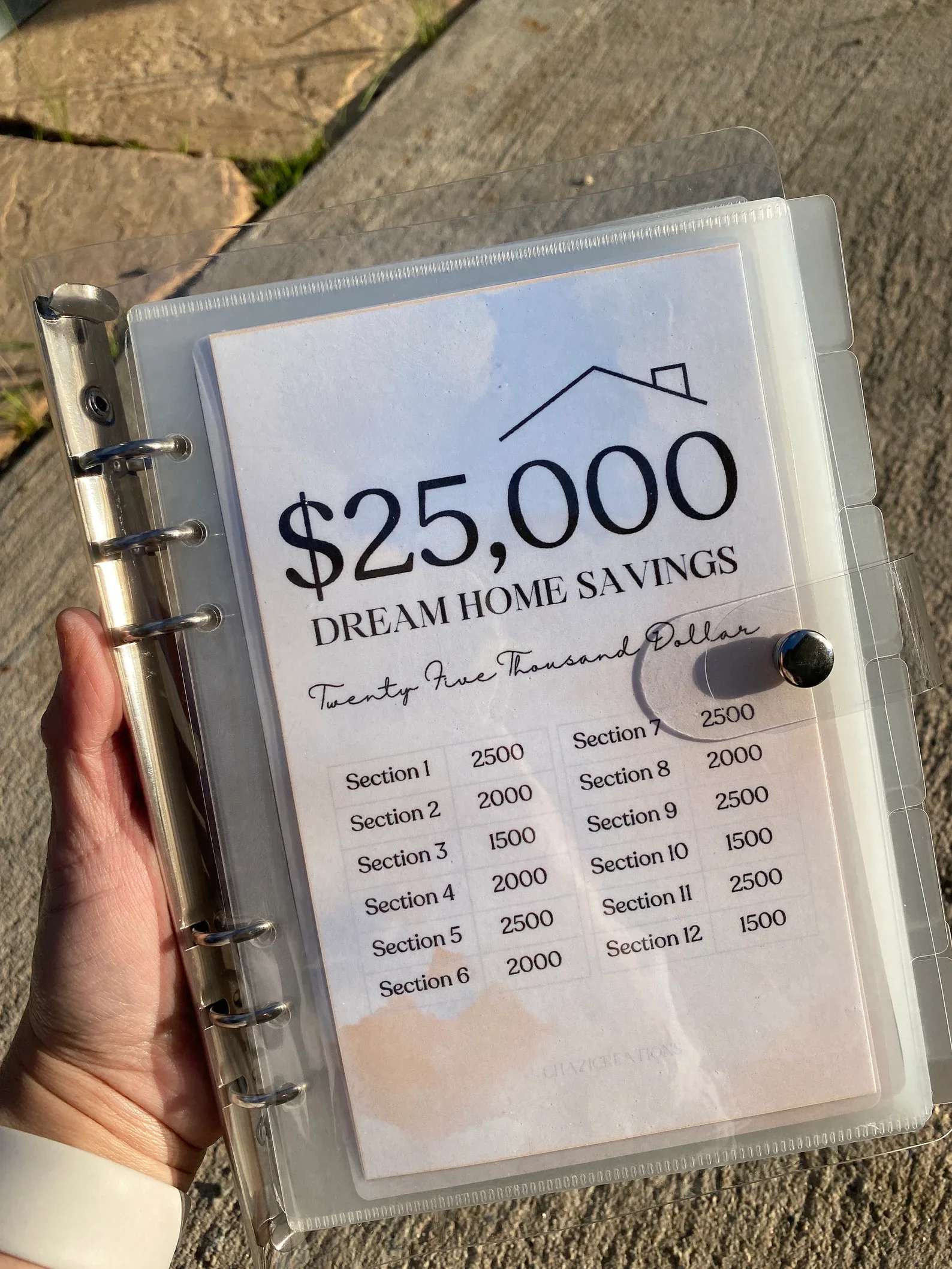
Down Payment Savings
Saving for a home is another financial goal that requires reverse engineering.
For most people, the hardest part of purchasing property isn’t necessarily affording the monthly mortgage — it’s accumulating the down payment required to qualify in the first place.
And depending on where you live, housing markets can vary drastically.
For myself personally, I know my ideal starter home would probably range somewhere between $300,000–$500,000, so I’d realistically aim to save somewhere between 5–20% toward a down payment over time based on Canadian lending requirements.
But beyond the numbers themselves, it’s important to think about:
where you want to live
what type of home fits your lifestyle
current interest rates
whether the market is buyer-friendly or seller-friendly
and what monthly costs would realistically feel sustainable for you
The higher interest rates rise, the more expensive borrowing becomes overall.
That’s why preparing early can make such a significant difference financially.
Wedding Savings
Weddings are another area where there’s honestly no universal “correct” number to save.
First of all, not everyone wants marriage.
Second, not everyone prioritizes weddings financially.
But if marriage is important to you, getting intentional about what kind of wedding you actually want can help prevent unnecessary stress later on.
Questions like:
How big do you want the wedding to be?
Would it be local or overseas?
Will food be catered?
What type of venue do you want?
How important are decor, jewelry, outfits, photography, and entertainment?
All of these details influence cost significantly.
The average wedding in North America can easily cost tens of thousands of dollars — sometimes rivaling the cost of a down payment on a home.
Which is honestly why so many people joke about the “mortgage or marriage” dilemma.
But personally, I’m not someone who believes people should avoid spending money on meaningful life experiences simply because divorce could happen someday. That mindset feels very fear-based and emotionally avoidant to me.
What I do believe in is preparing responsibly.
That includes:
saving intentionally
minimizing high-interest wedding debt
having honest conversations with your partner
and discussing things like prenups without shame or fear
And honestly, I think prenups are often misunderstood.
To me, they’re less about planning for divorce and more about creating clarity, transparency, and protection for both people involved.
For example, I personally have inheritance assets connected to my father’s home country of Trinidad and Tobago. Those are things I would likely legally protect going into a marriage while still creating fair agreements around anything built together moving forward.
These conversations may feel uncomfortable initially, but avoiding important financial discussions usually creates far more hurt, resentment, and confusion long term.
Sometimes short-term discomfort creates long-term peace.
Retirement Savings
Retirement is one of the most overlooked forms of long-term financial planning, especially when retirement feels emotionally “far away.”
But the earlier you begin contributing toward retirement savings or investing with purpose, the more time compound growth has to work in your favour.
Even small contributions made consistently over decades can create significant long-term wealth over time.
And honestly, retirement savings isn’t just about eventually “stopping work.”
It’s about preserving future freedom, health, flexibility, dignity, and choice later in life.
Sometimes financial experts categorize many of these larger future savings goals under what are called “sinking funds.” But for the sake of this article, I wanted to separate them individually because each one serves a different emotional and financial purpose.
At the end of the day, determining how much to save for each category depends entirely on your personal goals, values, priorities, and lifestyle.
There is no perfect financial formula that applies equally to everyone.
There’s only learning how to create systems that realistically support the life you are trying to build.
If you’re currently trying to decide whether you should prioritize investing or emergency savings first, I dive deeper into that inSaving vs Investing: Which Should You Focus on First?. I also talk more about the emotional and practical side of financial safety in How to Improve Your Relationship With Money (So It Finally Feels Safe), especially if you’re trying to build wealth in a way that supports both your financial health and overall wellbeing.
Financial Tools and Apps
The Right Financial Tools Can Change Everything
One thing I’ve learned over the years is that managing your money becomes significantly easier when you stop trying to rely purely on memory, motivation, or willpower alone.
Tools matter.
And honestly, I think people sometimes underestimate just how much the right tools, systems, and technologies can improve not only your finances, but also your emotional relationship with money.
Good financial tools help create:
more organization
more clarity
less overwhelm
less decision fatigue
and more confidence around your financial habits over time
They help optimize your financial experience through better management, understanding, awareness, and even nervous system regulation.
Because the calmer and more supported you feel financially, the easier it becomes to make healthier financial decisions consistently.
And this is something I say all the time:
being “good with money” is a skill — not a personality trait.
Nobody is born magically knowing how to budget, invest, save money, or build wealth.
These are learned behaviours.
Yes, some people may naturally gravitate toward organization, delayed gratification, or financial planning more easily than others. But there are so many factors that influence someone’s relationship with money:
upbringing
trauma
education
environment
stress levels
culture
neurodivergence
personality
financial access
emotional regulation
It’s rarely as simple as:
“some people are good with money and some people aren’t.”
Personally, I’m very much in the camp of practice makes progress.
Even the most talented people still have to consistently work at what they’re good at. And often, the people who appear “naturally disciplined” are simply the people who’ve built strong systems and repeated behaviours long enough for those habits to become automatic.
That’s why I believe if you’re willing to consistently show up for yourself and integrate supportive financial tools into your routines over time, progress is almost inevitable.
Not overnight.
But gradually.
And honestly, gradual progress is still progress.
The Financial Tools I Personally Use
When people think about financial tools, they often only think about budgeting apps or spreadsheets.
But financial wellness is much broader than that.
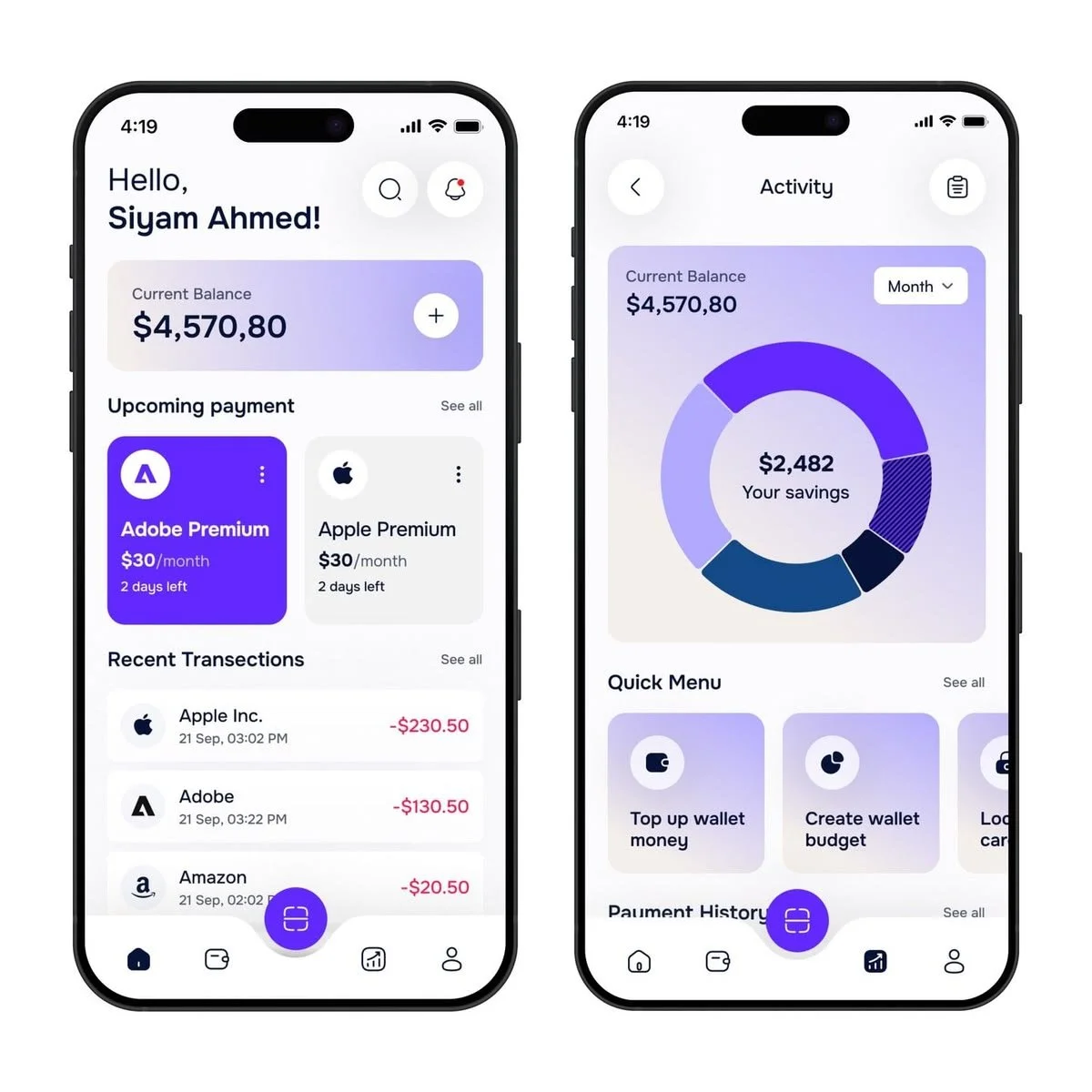
Some of the tools I personally use include:
budgeting and finance apps
wealth trackers
reading books about money and psychology
watching documentaries
AI tools for organization and education
mindfulness techniques
meditation
EFT tapping
nervous system regulation practices
Because sometimes the thing negatively impacting your finances isn’t lack of information.
It’s stress.
Burnout.
Overwhelm.
Emotional spending.
Financial avoidance.
Fear.
Dysregulation.
And those things often need emotional tools just as much as financial ones.
That’s also why I think financial literacy should be approached more holistically than it often is online. A lot of financial advice only focuses on surface-level numbers while completely ignoring the emotional, behavioural, and psychological side of money.
But the emotional side matters.
A lot.
For example, one thing that unexpectedly helped improve my productivity and overall wellbeing was learning how to better track my menstrual cycle and understand my body more deeply.
I realized that maybe I shouldn’t be trying to aggressively grind during my period or even the week leading up to it. That perhaps those phases of my cycle were actually invitations to slow down, rest more, reflect, and reduce pressure on myself instead of constantly forcing productivity.
And interestingly enough, when I started working with my body instead of against it, I often became more productive overall during the phases where I naturally had more energy available.
Reducing stress became especially important to me after dealing with a psychosomatic nervous system disorder called BFS back in 2022. It was one of the biggest wake-up calls of my life around how deeply stress can impact the body physically.
Because honestly, it didn’t matter how much money I had if I no longer had the physical or mental health required to maintain it.
I ended up taking nearly a full year away from working consistently so I could focus on healing, regulating my nervous system, and addressing the root causes of what my body was trying to communicate to me.
And during that time, one of the biggest things that protected me financially was the savings I had previously built through years of financial discipline.
That experience completely changed how I view money.
It taught me that money is about so much more than simply earning for the sake of earning.
True wealth creates:
future protection
emotional safety
flexibility
rest
healing
freedom
and the ability to live life more on your own terms
And honestly, what that looks like will be different for everybody.
Building Your Own Financial Support System
One of the biggest mistakes people make when trying to improve their finances is assuming they need to suddenly become hyper-disciplined overnight.
You don’t.
You just need to slowly build systems that support better financial habits over time.
That may look like:
using a budgeting app
automating savings
reading one finance book a month
journaling your financial goals
creating a weekly money check-in routine
using mindfulness to reduce emotional spending
listening to finance podcasts
working with a coach
using AI tools to stay organized
or tracking your habits more intentionally
The goal isn’t perfection.
The goal is support.
And honestly, the more supported your nervous system feels financially, the easier it becomes to stay consistent with your money management long term.
That’s why I always encourage people to experiment with different financial tools until they find systems that genuinely feel sustainable for their lifestyle and personality.
Not every financial tool will work for every person.
And that’s okay.
If you’re looking for a place to start, I’d recommend beginning with simple systems that increase awareness and reduce overwhelm rather than trying to overhaul your entire financial life overnight.
That’s also why I created tools like my Money Mindset Ebook and Wealth Tracker — because sometimes people don’t need more shame or pressure around money. They just need more clarity, support, and structure.
If you’re currently looking for practical financial tools and apps to support your finances, I share more recommendations in The Best Money Apps I Actually Use to Manage, Save, and Grow My Moneyand Financial Wellness Apps for Women: 13 Tools That Support Your Life, Not Just Your Money, especially if you’re trying to create systems that make managing your money feel simpler, calmer, and more sustainable long term.
Money Management Is About More Than Just Money
At the end of the day, money management is about so much more than budgeting spreadsheets, credit scores, savings accounts, or trying to optimize every dollar perfectly. It’s really about learning how to create a life that feels safer, calmer, freer, and more aligned with who you actually want to become.
And honestly, that process rarely happens overnight.
Building wealth is usually much slower, quieter, and less glamorous than social media makes it seem. Most of the time, it’s small decisions repeated consistently over time. It’s checking your bank account instead of avoiding it. Automating your savings. Paying down debt slowly. Creating financial goals. Learning new financial skills. Becoming more intentional with your spending. Continuing to show up for yourself financially, even when progress feels slower than you hoped it would.
That’s the real strategy behind long-term financial wellness. Not perfection. Not hustle culture. Not becoming hyper-restrictive or obsessively disciplined. But awareness, consistency, supportive systems, self-trust, and intentional action repeated over time.
Because true wealth isn’t only measured by how much money you earn. It’s also reflected in how secure you feel, how much flexibility you have, how prepared you are for life’s challenges, how aligned your spending is with your values, and how much freedom your finances allow you to experience.
And honestly, that version of wealth will look different for everybody.
For some people, wealth means traveling the world. For others, it means owning a home, raising a family, leaving survival mode, starting a business, retiring comfortably, supporting loved ones, or simply being able to rest without constant financial anxiety sitting quietly in the background of their lives. None of those goals are wrong.
The important thing is creating a financial strategy plan that genuinely supports your version of a meaningful life instead of constantly chasing someone else’s definition of success.
Because money itself is simply a tool. And the more intentionally you learn to manage it, the more power you have to create stability, opportunities, healing, protection, flexibility, and future wellbeing for yourself over time.
That’s the beauty of financial literacy.
Not that it makes life perfect, but that it gives you more choice in how you move through it.

Frequently Asked Questions
What are the best money management tips for beginners?
Some of the best money management tips for beginners include learning how to budget realistically, tracking your spending habits, automating savings, building an emergency fund, paying down high-interest debt, and improving your financial literacy over time. The most important thing is creating systems that feel sustainable for your actual lifestyle instead of trying to follow overly restrictive financial advice that’s impossible to maintain long term.
Why do most budgeting methods fail?
Most budgeting methods fail because they don’t take human behaviour, lifestyle, emotional spending habits, or nervous system regulation into account. Many people try to force themselves into rigid budgeting systems that create overwhelm, guilt, or resistance. Successful budgeting usually happens when you create a financial system that aligns with your personality, income, capacity, and everyday routines.
How can I save money consistently?
Saving money consistently becomes easier when you automate the process, reduce unnecessary temptation, create realistic savings goals, and become emotionally connected to why you’re saving in the first place. Even small amounts saved consistently over time can create significant long-term financial progress and reduce financial stress.
How much should I keep in an emergency fund?
The amount you should keep in an emergency fund depends on your lifestyle, income stability, responsibilities, and overall financial situation. Many people aim to save between 3–6 months of essential living expenses, while others may choose to save more depending on factors like self-employment, dependents, health concerns, or housing costs.
What’s the difference between good debt and bad debt?
Generally speaking, “good debt” refers to debt that may help build future income, assets, or opportunities, such as mortgages, student loans, or certain business loans. “Bad debt” is typically associated with high-interest consumer debt that depreciates in value over time, such as unmanaged credit card debt. However, debt itself is ultimately a financial tool, and how it’s managed matters more than the label itself.
Why is financial literacy important?
Financial literacy helps people make more informed decisions about budgeting, saving, investing, debt management, and long-term financial planning. Improving your financial knowledge can reduce financial anxiety, increase confidence, strengthen money habits, and create more financial freedom and flexibility over time.
What is the best strategy for paying off debt?
Two of the most common debt repayment strategies are the snowball method and the avalanche method. The snowball method focuses on paying off the smallest balances first for motivational momentum, while the avalanche method prioritizes the highest-interest debt first to reduce long-term interest costs. The best strategy depends on your financial priorities, personality, and behavioural tendencies.
How do I create financial goals that actually stick?
Creating financial goals that actually stick usually requires keeping them simple, measurable, and realistic. Breaking larger goals into smaller daily, weekly, or monthly actions can make them feel far less overwhelming. It’s also important to ensure your goals genuinely align with your personal values instead of simply reflecting societal pressure or comparison.
If you’d like to keep journeying together…
→ Start Here: free tools and reflections to help you feel grounded, clear, and more confident with your money.
→Work With Me: private coaching, strategy sessions, and programs designed to help you build wealth that feels aligned, stable, and sustainable.
→ Subscribe to the Channel: If this resonated, come hang out with me on YouTube where I break this down in real life — the habits, the mindset shifts, and what this actually looks like day-to-day.
→ Or Join My Email List: This is where I share deeper insights, behind-the-scenes thoughts, and the kind of conversations we don’t always have publicly.
